
About Camilla Ravera
Lived 1889 – 1988 (aged 98). Camilla Ravera was an Italian politician and editing staff.
Camilla Ravera (18 June 1889 – 14 April 1988) was an Italian politician and the first female lifetime senator. She was also among the driving forces behind Italian feminism.
Ravera participated in the founding of the Italian Communist Party in 1921. She was General Secretary of the party from 1927 until 1930 following the arrest of Antonio Gramsci.
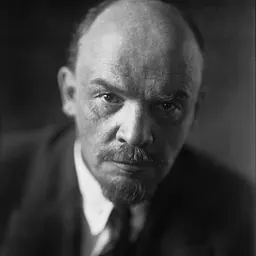
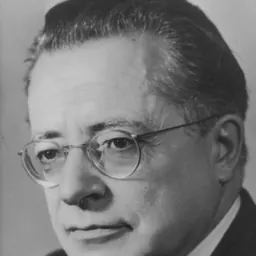
Ravera attended various congresses of Comintern, meeting both Vladimir Lenin and Joseph Stalin in person. She was arrested in 1930 and was sentenced to 15 years. After her arrest, she was succeeded as General Secretary by Palmiro Togliatti. Along with Umberto Terracini, she was expelled from the Italian Communist Party for opposing the Molotov–Ribbentrop Pact in 1939 and was not allowed to rejoin until 1945.
Early life Ravera first entered socialist circles after delivering her brother Cesare's dues to the Italian Socialist Party, of which she later became a member. Ravera began writing essays promoting socialism, and later moved to Turin to become a teacher. Her writings attracted the attention of Antonio Gramsci, who invited her to write columns for his newspaper L’Ordine Nuovo. In July 1921, she joined the paper's editorial board.
Political career
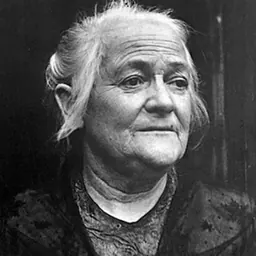
Communist Party of Italy In November 1922, Ravera attended Comintern’s Fourth Congress as a delegate for the Communist Party of Italy. Here she met important figures within the communist movement, including Clara Zetkin, Khristo Kabakchiev, Joseph Stalin, and Vladimir Lenin. After the March on Rome, the Communist Party was forced underground, with Ravera becoming a wanted figure under Mussolini's regime. She became the General Secretary of the party in 1927. She partook in Comintern's Sixth Congress in 1928 in Moscow, and was offered permanent residency in the city, which she declined. On 10 July 1930, at Lake Maggiore, Ravera was arrested.
Italian Communist Party After World War II, Ravera became a part of the Italian Communist Party, the successor to the Communist Party of Italy. She served as a member of the Italian Parliament as a member of the party, where she signed onto bills, including those which focused on the protection of mothers and equal wages for women. Ravera retired from this role in 1958.
Honours In 1982, Italian President Sandro Pertini made Camilla Ravera a Senator for Life.
Electoral history ElectionHouseConstituencyPartyVotesResult 1948 Chamber of Deputies Turin–Novara–Vercelli FDP 68,716 Elected 1953 Chamber of Deputies Turin–Novara–Vercelli PCI 43,650 Elected
Don’t just read it —
keep it.
Full-length biographies made to live with: read them, listen on the way to work, watch them tonight.
- E-book
- Audio
- Video
Instant download · yours to keep · every purchase keeps this site free
Important facts
People in Camilla Ravera's life
Named in this biography and alive at the same time




Related people
Same field, nearest in time




Contemporaries
People whose lives overlapped Camilla Ravera's




Frequently asked questions
Who was Camilla Ravera?
Italian politician (1889-1988)
When was Camilla Ravera born?
Camilla Ravera was born on 18 June 1889 in Acqui Terme.
When did Camilla Ravera die?
Camilla Ravera died on 14 April 1988 in Rome.
What was Camilla Ravera's occupation?
Camilla Ravera was a politician and editing staff.
What nationality was Camilla Ravera?
Camilla Ravera was Italian.
Sources & further reading
Cite this page
APA: Biography.guide. (2026). Camilla Ravera. https://biography.guide/camilla-ravera/
MLA: "Camilla Ravera." Biography.guide, https://biography.guide/camilla-ravera/.
Chicago: "Camilla Ravera." Biography.guide. https://biography.guide/camilla-ravera/.
Data last updated: 2026-09-20 · Spot an error? Report a correction.
Page generated 2026-09-27 05:28 UTC