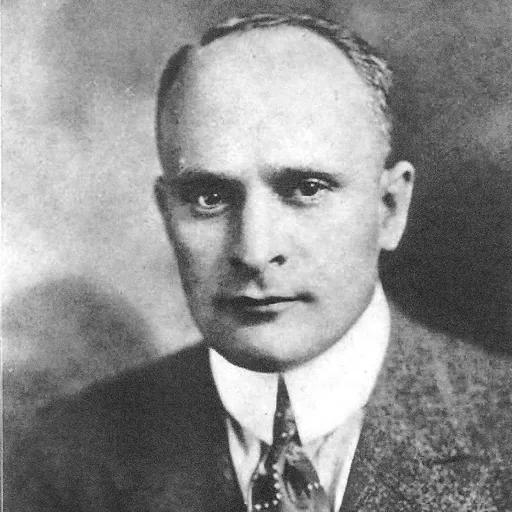
About C. Gardner Sullivan
Lived 1884 – 1965 (aged 80). C. Gardner Sullivan was an American screenwriter, film producer, writer and film editor.
Charles Gardner Sullivan (September 18, 1884 – September 5, 1965) was an American screenwriter and film producer. He was a prolific writer with more than 350 films among his credits. In 1924, the magazine Story World selected him on a list of the ten individuals who had contributed the most to the advancement of the motion picture industry from its inception forward. Four of Sullivan's films, The Italian, Civilization (1916), Hell's Hinges (1916), and All Quiet on the Western Front (1930), have been listed in the National Film Registry.
Early years Sullivan was born in Stillwater, Minnesota, and educated in the public schools of St. Paul, Minnesota. Interviewed in 1916, Sullivan said he was "not precisely what one would call a college man, although I had some training at the University of Minnesota. Shortly afterward, Sullivan was assigned to write a column that he later said "was supposed to be a humorous column." By that time, Sullivan had married and was uncertain about moving to California. However, he accepted and for the next decade became the "dean" of Hollywood's screenwriters.
Sullivan began his career in Hollywood writing stories for Ince's two-reel films. He then progressed to full-length feature films, and his stories contributed much to the fame of stars including Dorothy Dalton, Enid Bennett, Louise Glaum and Constance Bennett.
His early films were mostly in the western genre, but also included historical dramas such as The Witch of Salem (1913) and The Battle of Gettysburg (1913), and comedies such as "The Adventures of Shorty" two-reelers from 1914 through 1917. However, after the entry of the United States into the war, the film was pulled from distribution.
In February 1924, the Los Angeles Times reported that the number of feature films produced from the original stories or adaptations of Mr. Sullivan totaled 311 in eight years. The Times noted: "This record undoubtedly is unrivaled among screen authors. Mr. Sullivan's work is all the more remarkable because of the recognition which it has achieved for unvarying quality and variety." At that time, Sullivan described the rule he applied in the selection of a story for the screen:Is it human, is it true to life, is it sincere? If you can conscientiously satisfy yourself on these things, you won't have to worry as to whether the public will like the story or not. If you are genuinely moved by it, you may be sure that the public will respond in like manner. ... Give the public a story that touches the heart and is true to life, and, to paraphrase Emerson, 'the world will make a beaten path to the theater box office.' Indeed, Sullivan's scripts detailed locations, the number of actors, costumes, and even the blocking of the shoot. and If Marriage Fails, both based on screenplays written by Sullivan.
In the late 1920s, Sullivan signed on with Cecil B. DeMille as a producer. While working with DeMille, Sullivan made such films as The Yankee Clipper. In 1927, he was referred to as "the man who knows box office":C. Gardner Sullivan, creator of 365 box-office hits, maker of 'The Yankee Clipper,' ... as well as of 'White Gold,' ... producer for the De Mille studios, whose reputation is that of 'the man who knows box office,' is the man who chose to film a story as truth rather than as 'mush for the morons' ...
Sullivan remained active as a screenwriter in the 1930s with works including DeMille's 1938 adventure film The Buccaneer. His final film credit was the story of Jackass Mail, a 1942 western directed by Norman Z. McLeod and starring Wallace Beery.
Personal life and death Sullivan married actress Ann May on February 14, 1925, in Santa Ana. They had four children together; daughter Sheilah Dree, and sons Charles Gardner, Michael Patrick, and Timothy Reese. He was an avid golfer and crossword puzzle enthusiast.
In September 1965, Sullivan died of a heart attack at age 80 at his home in West Hollywood, California.
Role in film history In 1924, the magazine Story World selected a list of the ten individuals who had contributed the most to the advancement of the motion picture industry from the time of its inception. The list included Gardner (the only screenwriter on the list), director D.W. Griffith, actors Charlie Chaplin and Mary Pickford, Carl Laemmle (founder of Universal Studios), Charles Francis Jenkins (inventor of the motion picture projector), producer Thomas H. Ince, and art director Wilfred Buckland.
Four of Sullivan's films, The Italian (1915), Civilization (1916), Hell's Hinges (1916) and All Quiet on the Western Front (1930), have been listed in the National Film Registry.
Filmography
Her Polished Family (1912) - the first story sold by Sullivan to Edison When Lee Surrenders (1912) (scenario) The Altar of Death (West, 1912) (co-director, writer with T. Ince) The Army Surgeon (F. Ford, 1912) (writer) The Invaders (F. Ford and T. Ince, 1912) (uncredited) The Dead Pay (1912) (scenario) A Shadow of the Past (T. Ince, 1913) (scenario) Days of '49 (T. Ince, 1913) (scenario) The Witch of Salem (West, 1913) (writer) Will o' the Wisp (1913) (writer) The Reaping (1913) (story) The Seal of Silence (1913) (scenario) The Boomerange (1913) (scenario) The Battle of Gettysburg (T. Incee, 1914) (titles) The Telltale Hatband (1913) (scenario) The Paymaster's Son (1913) (scenario) The Bargain (Barker, 1914) The Wrath of the Gods (1914) (writer) One of the Discarded (1914) (writer) Two-Gun Hicks (Hart, 1914) (writer) In the Sage Brush Country (1914) (scenario, story) The Hour of Reckoning (1914) (written by) Shorty and the Fortune Teller (1914) (story) Shorty and Sherlock Holmes (1914) Mother of the Shadows (Osborne, 1914) Destiny's Night (1914) Not of the Flock (Sidney, 1914) (producer) Markia, aka The Fall of Carthage (1914) The City of Darkness (1914) Breed o' the North (1914) (writer) Willie (1914) (scenario) The Worth of a Life (1914) (story) The World of His People (1914) (story) Satan McAllister's Heir (1915) (writer) The Last of the Line (T. Ince, 1915) (scenario) The Roughneck (Hart and Smith, 1915) (writer) The Ruse (Hart and Smith, 1915) (writer) Pinto Ben (Hart, 1915) Mr. 'Silent' Haskins (1915) (writer) The Cross of Fire (1915) (written by) In the Land of the Otter (1915) (written by) The Grudge (1915) (writer) The Darkening Trail (1915) (writer) On the Night Stage (Barker, 1915) (story) On the High Seas (1915) The Shoal Light (1915) The Tools of Providence (1915) (scenario) The Floating Death (1915) (scenario) The Reward (scenario) Hostage of the North (1915) The Man from Nowhere, aka The Silent Stranger (1915) (scenario, story for The Silent Stranger) The Cup of Life (West, 1915) (writer) The Painted Soul (Sidney, 1915) (writer) The Man Who Went Out (1915) Matrimony (Sidney, 1915) (scenario) In the Switch Tower (1915) (scenario) The Girl Who Might Have Been (1915) (writer) The Man from Oregon (1915) (scenario) The Toast of Death (1915) (scenario) The Mating (1915) (scenario) Between Men (1915) (screenplay, story) The Winged Idol (1915) (scenario) The Golden Claw (Barker, 1915) (scenario) The Forbidden Adventure (1915) (scenario) The Edge of the Abyss (1915) (scenario) The Scourge of the Desert (1915) (writer) The Italian (Barker, 1915) (story) - ranked #15 at the box office in 1915 The Valley of Hate (1915) The Coward (Barker, 1915) The Aryan (Hart and Smith, 1915) (screenplay, story) Peggy (Giblyn, 1915) (writer) The Beckoning Flame (1916) (scenario) The Conqueror (Barker, 1916) (scenario) Honor's Altar (1916) (scenario) The Last Act (1916) (scenario) The Moral Fabric (1916) (scenario) The Stepping Stone (Barker, 1916) (scenario) Civilization's Child (Giblyn, 1916) (writer) The No-Good Guy (Edwards, 1916) (scenario) The Dividend (1916) (writer) The Beggar of Cawnpore (Swickard, 1916) (scenario) Not My Sister (Giblyn, 1916) (writer) The Market of Vain Desire (Barker, 1916) (story) The Bugle Call (Barker, 1916) (scenario) The Eye of the Night (Edwards, 1916) (writer) The Payment (West, 1916) (scenario) Home (1916) (scenario) A Corner in Colleens (Miller, 1916) (scenario) The Dawn Maker (Hart, 1916) (screenplay, story) Plain Jane (Miller, 1916) (scenario) The Criminal (Barker, 1916) (scenario) The Corner (1916) (screenplay, story) Shell 43 (Barker, 1916) (writer) Hell's Hinges (Hart and Swickard, 1916) (screenplay, story) The Girl, Glory (1917) (scenario) The Crab (1917) (scenario) Those Who Pay (Wells, 1918) (scenario) Without Honor (1918) (story) Keys of the Righteous (1918) (screenplay, story) Love Me (Neill, 1918) (scenario) The Cast-Off (1918) (scenario) Selfish Yates (Hart, 1917) (screenplay, story) Shark Monroe (Hart, 1918) (screenplay, story) Vive la France! (1918) (scenario) The Border Wireless (Hart, 1918) (writer) When Do We Eat? (1918) (screenplay, story) Branding Broadway (Hart, 1918) (writer) Stepping Out (Niblo, 1919) The Market of Souls (De Grasse, 1919) John Petticoats (Hillyer, 1919) (scenario, story) Wagon Tracks (Hillyer, 1919) (screenplay, story) Happy Though Married (Niblo, 1919) (writer) The Haunted Bedroom (Niblo, 1919) (screenplay, story) Other Men's Wives (Schertzinger, 1919) (screenplay, story) Sahara (Rosson, 1919) (story, scenario) The Virtuous Thief (Niblo, 1919) (screenplay, story) Sex (Niblo, 1920) (writer) The False Road (Niblo, 1920) (screenplay, story) Hairpins (Niblo, 1920) (screenplay, story) Good Women (Gasnier, 1921) (screenplay, story) Mother O' Mine (Niblo, 1921) (adaptation) Greater Than Love (Niblo, 1921) (writer) Hail the Woman (Wray, 1921) (writer) Soul of the Beast (Wray, 1923) (story) Dulcy (S. Franklin, 1923) (writer) The Dangerous Maid (Heerman, 1923) (writer) Long Live the King (Schertzinger, 1923) (adaptation) Strangers of the Night (Niblo, 1923) (adaptation) The Goldfish (Storm, 1924) (writer) The Marriage Cheat (Wray, 1924) (adaptation) Wandering Husbands (Beaudine, 1924) (screenplay, story) The House of Youth (R. Ince, 1924) (writer) The Only Woman (Olcott, 1924) (writer) Idle Tongues (Hillyer, 1924) (adaptation) The Mirage (Archainbaud, 1924) (adaptation) Dynamite Smith (R. Ince, 1924) (screenplay, story) Cheap Kisses (R. Ince and Tate, 1925) (screenplay, story, producer) The Monster (West, 1925) (titles) Playing with Souls (R. Ince, 1925) (adaptation) The Pinch Hitter (1925) (story) Wild Justice (C. Franklin, 1925) (screenplay, story) Tumbleweeds (Baggot, 1925) (adaptation) If Marriage Fails (J. Ince, 1926) (screenplay, story) Three Faces East (Julian, 1926) (adaptation) Bachelor Brides (Howard, 1926) (adaptation and scenario) Sparrows (Beaudine, 1926) (adaptation) Gigolo (Howard, 1926) (supervising story editor) Her Man o' War (1926) (supervisor) The Clinging Vine (1926) (presenter) Corporal Kate (1926) (supervisor) The Bugle Call (Sedgwick, 1927) (writer) Turkish Delight (1927) (supervisor) Vanity (supervisor) The Yankee Clipper (1927) (producer) Tempest (Taylor, 1928) (writer) The Woman Disputed (H. King and Taylor, 1928) (screenplay) Sadie Thompson (Walsh, 1928) (titles, editor) Alibi (West, 1929) (screenplay) The Locked Door (Fitzmaurice, 1929) (screen adaptation) All Quiet on the Western Front (1930) (supervising story chief) What Men Want (1930) (supervising story editor) Hell's Heroes (1930) (chief story supervisor) The Cuban Love Song (Van Dyke, 1931) (screenplay) Huddle (Wood, 1932) (dialogue continuity) Strange Interlude (Strange Interval) (Leonard, 1932) (dialogue continuity) Skyscraper Souls (Selwyn, 1932) (adaptation) Men Must Fight (Selwyn, 1933) (writer) Father Brown, Detective (Sedgwick, 1934) (writer) Car 99 (Barton, 1935) (screenplay) The Awakening of Jim Burke (1935) (story, production supervisor) Three Live Ghosts (Humberstone, 1936) (screenplay) The Robin Hood of El Dorado (1936) (uncredited) The Buccaneer (DeMille, 1938) (screenplay) Union Pacific (DeMille, 1939) (screenplay) North West Mounted Police (DeMille, 1940) (screenplay) Jackass Mail (McLeod, 1942) (story) The Buccaneer (1958) (based on Sullivan's 1938 screenplay)
Don’t just read it —
keep it.
Full-length biographies made to live with: read them, listen on the way to work, watch them tonight.
- E-book
- Audio
- Video
Instant download · yours to keep · every purchase keeps this site free
Important facts
Family & relationships
People in C. Gardner Sullivan's life
Named in this biography and alive at the same time





Related people
Same field, nearest in time


Contemporaries
People whose lives overlapped C. Gardner Sullivan's




Frequently asked questions
Who was C. Gardner Sullivan?
American screenwriter (1884–1965)
When was C. Gardner Sullivan born?
C. Gardner Sullivan was born on 18 September 1884 in Stillwater.
When did C. Gardner Sullivan die?
C. Gardner Sullivan died on 5 September 1965 in Los Angeles.
What was C. Gardner Sullivan's occupation?
C. Gardner Sullivan was a screenwriter, film producer, writer and film editor.
What nationality was C. Gardner Sullivan?
C. Gardner Sullivan was American.
Sources & further reading
· Wikipedia: C. Gardner Sullivan
· DBpedia: C. Gardner Sullivan
Cite this page
APA: Biography.guide. (2026). C. Gardner Sullivan. https://biography.guide/c-gardner-sullivan/
MLA: "C. Gardner Sullivan." Biography.guide, https://biography.guide/c-gardner-sullivan/.
Chicago: "C. Gardner Sullivan." Biography.guide. https://biography.guide/c-gardner-sullivan/.
Data last updated: 2026-09-22 · Spot an error? Report a correction.
Portrait: Wikimedia Commons · author & licence
Page generated 2026-09-27 04:58 UTC