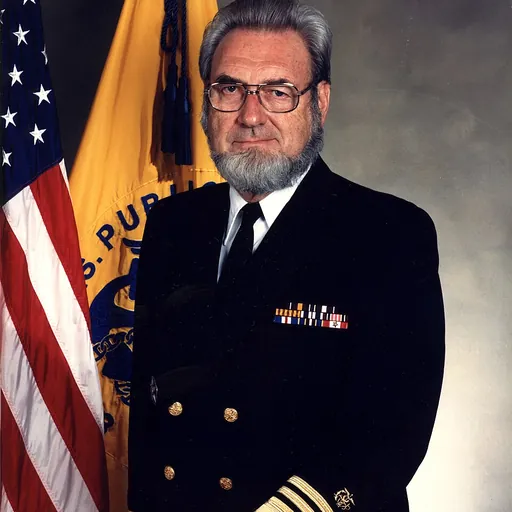
C. Everett Koop
American pediatric surgeon and public health administrator
About C. Everett Koop
Lived 1916 – 2013 (aged 96). C. Everett Koop was an American physician, pediatric surgeon and pediatrician.
Charles Everett Koop (October 14, 1916 – February 25, 2013)
Koop was known for his work on tobacco use, AIDS, and abortion, and for his support of the rights of children with disabilities.
Early life and education Koop was born in Brooklyn, New York, the only child of John Everett Koop (1883–1972), a banker and descendant of 17th-century Dutch settlers, and Helen (née Apel) Koop (1894–1970). He attended and graduated from Flatbush School. In 1937, he earned his Bachelor of Arts in zoology degree from Dartmouth College, His interest in medicine followed after a year spent in the hospital after a childhood skiing accident and brain hemorrhage. He earned his MD degree from Cornell Medical College in 1941 and Doctor of Science degree in medicine from the University of Pennsylvania in 1947. Koop was able to establish the nation's first neonatal surgical intensive care unit there in 1956. He helped establish the biliary atresia program at CHOP when Japanese surgeon Morio Kasai came to work with him in the 1970s. He also established the pediatric surgery fellowship training program at CHOP. During his tenure there he graduated 35 residents and 14 foreign fellows, many of whom went on to become professors of pediatric surgery, directors of divisions of pediatric surgery, and surgeons-in-chief of children's hospitals.
Koop became a professor of pediatric surgery in 1959 and professor of pediatrics in 1971 at the University of Pennsylvania School of Medicine. and then, again, in 1974 by the separation of two ischiopagus twins (conjoined at the spine) sharing a liver, colon, and parts of the intestines with their entire trunks merged.
Koop was active in publishing articles in the medical literature. Koop later wrote that: Koop helped rectify this by publishing his own findings and results. Additionally, he became the first editor of the Journal of Pediatric Surgery when it was founded in 1966.
President Ronald Reagan, shortly after his first inauguration, appointed Koop Deputy Assistant Secretary for Health in February 1981. Many liberal politicians and women's groups opposed the nomination because of Koop's very conservative views and strong anti-abortion beliefs. He was sworn into office on January 21 the following year. he declined to state that abortion procedures performed by qualified medical professionals posed a substantial health risk to the women whose pregnancies were being terminated, despite political pressure to endorse such a position. He said it was not a public health issue but a moral one. Koop assigned an assistant, George Walter, the task of researching the matter. Walter obtained a list of articles from the Centers for Disease Control and Prevention (CDC), authored mainly by CDC abortion-surveillance staff, and consulted with Alan Guttmacher Institute personnel. Walter wrote a draft report on his findings and gave it to Koop.
In a January 10, 1989, letter to Reagan, Koop said there was insufficient evidence to substantiate issuing the finding desired by the administration. He also commented about how some of the president's advisers thought that "it was a foregone conclusion that the negative health effects of abortion on women were so overwhelming that the evidence would force the reversal of Roe v. Wade".
Tobacco In his 1988 Report of the Surgeon General, it was reported that nicotine has an addictiveness similar to that of heroin or cocaine. Koop's report was somewhat unexpected, especially by those who expected him to maintain the status quo in regard to his office's position on tobacco products.
"He railed against their advertising approaches, their marketing to children, their bogus research operation, their unwillingness to come clean on nicotine addiction. He said their product was more addictive than heroin. He called their leadership "morally corrupt". He informed the public about the dangers of second hand smoke, smoking while pregnant, and smoking in public places, including hospitals. He was relentlessly provocative, and used tobacco to test his theories about hands-on, public health campaigning."
During his tenure, in 1984, Congress passed legislation providing new, rotated health warning labels on cigarette packs and required advertising to include the labels. Those labels remain unchanged today. The FDA announced new labels containing graphic depictions of smoking-caused illness and death, but they were put on hold pending the outcome of the tobacco industry's legal challenges. Koop challenged Americans in 1984 to "create a smoke-free society in the United States by the year 2000." As Surgeon General, he released eight reports on the health consequences of tobacco use, including the first report on the health consequences of involuntary tobacco smoke exposure. During Koop's tenure as Surgeon General, smoking rates in the United States declined significantly from 38% to 27%.
AIDS
Koop was Surgeon General when public health authorities first began to take notice of AIDS. For his first four years in office, Koop, the nation's top health officer, was prevented from addressing this health crisis for reasons he insisted were never apparent to him but that were no doubt political. Koop wrote the official U.S. policy on the disease, and in 1988 he took unprecedented action in mailing AIDS information to every U.S. household. Health advocates and organizations expressed dissatisfaction with the focus on same-sex activity and anal sexual intercourse as primary vectors for disease transmission. Surgeon General Koop maintained that these activities posed significantly higher risks than other transmission methods. In addition, some religious groups raised concerns about the pamphlet’s candid discussion of sexual practices and its promotion of condom use, leading to calls for Koop's resignation. Koop also infuriated some former supporters by advocating sex education in schools, possibly as early as the third grade, including later instruction regarding the proper use of condoms to combat the spread of AIDS. While a straightforward telling to the public about the disease was controversial, Koop was also criticized by some health activists who claimed that his office had not gone far enough to develop a cure or vaccine, reducing his office's role in educating the public on health concerns.
Disability
In April 1982, a child born in Bloomington, Indiana, was diagnosed with Down syndrome as well as esophageal atresia with tracheoesophageal fistula. Six days later, after court involvement and parental discussion involving disagreement among physicians about whether or not to treat the baby or let him die, the baby died, having been denied surgical treatment to correct his esophageal atresia and tracheoesophageal fistula. Baby Doe, as he would be known, became a symbol for newborns with congenital disabilities, children with disabilities, and the debate over infanticide. Koop was not initially involved with the Baby Doe case but had a special interest in it. As a pediatric surgeon in Philadelphia, he and his colleagues had operated on 475 such babies during his 35 years there, with ever-increasing survival rates. During his last eight years in active practice, Koop never lost a full-term baby upon whom he had operated to correct esophageal atresia. Due to this background, he became actively involved in championing policies to protect the rights of newborns with disabilities, which led to Congress passing the Baby Doe Amendment.
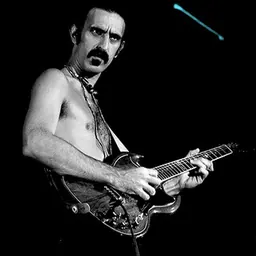
Style These four issues, combined with Koop's personality and his willingness to make use of mass media, brought to the office of Surgeon General a higher public profile than it previously had; he is, for instance, the first Surgeon General to have been the subject of a popular song: "Promiscuous" by Frank Zappa. He was interviewed by Ali G for comedic effect.
Of his high-profile role, Koop said in a 1987 interview, "I am the surgeon general of the heterosexuals and the homosexuals, of the young and the old, of the moral or the immoral, the married and the unmarried. I don't have the luxury of deciding which side I want to be on. So I can tell you how to keep yourself alive no matter what you are. That's my job."
Koop was well known for his mustache-less beard and colorful bow ties. He was a vice admiral in the U.S. Public Health Service Commissioned Corps (U.S. PHSCC). Koop hosted a documentary television series on NBC simply titled C. Everett Koop, M.D. It aired for five episodes in June 1991, and explored health and healthcare issues of concern to Koop, with a special focus on children.
Koop and other investors established drkoop.com in 1997, during the dot-com bubble. Years later, he and his wife wrote a book called Sometimes Mountains Move to help others who had lost a child. Koop's other son, the Reverend Norman Koop, attended Eastern Baptist College (now Eastern University) and graduated in 1969. The following year, the elder Koop was elected to the board of trustees, becoming the first non-Baptist member of the board.
In February 2007, Elizabeth Koop, his wife of nearly 70 years, died. On April 17, 2010, at the age of 93, he married Cora Hogue, a former staff member of Tenth Presbyterian Church in Philadelphia. Koop died on February 25, 2013, at the age of 96 at his home in Hanover, New Hampshire. According to a Koop aide, he had been ill for several months and had suffered kidney failure the previous week.
Remarking on Koop's death, American Medical Association president Jeremy Lazarus commented, "Because of what he did, and the way he did it, he had a dramatic impact on public health." The Associated Press called his impact "great", while The Philadelphia Inquirer called him "a courageous and brilliant pediatric surgeon who pioneered techniques ... and became an outspoken surgeon general". Writing for The New Yorker, Michael Specter said, "I don't think I have ever met anyone for whom I had more respect... In this era, during which progress, facts, and science are under unrelenting siege, it is thrilling to remember that even ideologues can love the truth."
In popular culture
Koop had a cameo role, appearing as himself, in the 1990 film The Exorcist III. In The Simpsons season 5, episode 1, "Homer's Barbershop Quartet", Koop is mentioned in the episode as the subject of a song sung by Homer's group. The Simpsons season 12, episode 16 "Bye Bye Nerdie" features Koop as a member of the audience in the final scene, where Lisa demonstrates her findings about bullies. In Futurama season 4, episode 16, "Three Hundred Big Boys", a brand of cigars known as "Royal Kooparillo" shows the likeness of Koop. Koop's likeness appears again in season 8, episode 9, "Fry Am the Egg Man", as the head on Fry's Pez dispenser of heart attack medicine. In Seinfeld season 3, episode 18, "The Boyfriend", Part II, Jerry likens Elaine to C. Everett Koop, because she breaks up with Keith Hernandez for being a smoker. In King of the Hill season 1, episode 6, "Hank's Unmentionable Problem", Peggy watches an advertisement on TV featuring C. Everett Koop. Later she dreams of Hank's funeral, in which C. Everett Koop is giving the eulogy. In season 9, episode 3, "Death Buys a Timeshare", Cotton asks Bill who he thinks is uglier, Hank's wife or C. Everett Koop In Psych season 2, episode 7, "If You're So Smart, Then Why Are You Dead?", the Headmaster of a prestigious high school explains that Shawn and Gus beat out C. Everett Koop for the position of annual guest lecturer, in which they taught a class on paranormal studies. According to the Headmaster, "[Koop] was crushed he didn't get it." In The Golden Girls season 4, episode 15, “Valentine’s Day” In Da Ali G Show, interviewed by Sacha Baron Cohen's character Ali G. Frank Zappa parodied Koop's public persona in the song "Promiscuous" from his 1988 album Broadway the Hard Way. Koop was portrayed by Clancy Brown in the 2024 film Audrey's Children.
Awards and honors
Public Health Service Distinguished Service Medal Public Health Service Meritorious Service Medal Surgeon General's Medallion Surgeon General's Exemplary Service Medal Public Health Service Citation Medal Public Health Service Outstanding Unit Citation Presidential Medal of Freedom (1995) Public Welfare Medal from the National Academy of Sciences (1990) Albert Schweitzer Prize for Humanitarianism (1991) Tyler Prize for Environmental Achievement (1991) Leopold Griffuel Prize (1989) Emmy Award in the News and Documentary category for "C. Everett Koop, MD," a five-part series on health care reform (1991) The 2nd Annual Heinz Award in Public Policy (1996) Member of the American Academy of Arts and Sciences (1990) Member of the American Philosophical Society (1992)
Don’t just read it —
keep it.
Full-length biographies made to live with: read them, listen on the way to work, watch them tonight.
- E-book
- Audio
- Video
Instant download · yours to keep · every purchase keeps this site free
Important facts
People in C. Everett Koop's life
Named in this biography and alive at the same time







Related people
Same field, nearest in time

Contemporaries
People whose lives overlapped C. Everett Koop's



Frequently asked questions
Who was C. Everett Koop?
American pediatric surgeon and public health administrator (1916–2013)
When was C. Everett Koop born?
C. Everett Koop was born on 14 October 1916 in Brooklyn.
When did C. Everett Koop die?
C. Everett Koop died on 25 February 2013 in Hanover (NH).
What was C. Everett Koop's occupation?
C. Everett Koop was a physician, pediatric surgeon and pediatrician.
What nationality was C. Everett Koop?
C. Everett Koop was American.
Sources & further reading
Cite this page
APA: Biography.guide. (2026). C. Everett Koop. https://biography.guide/c-everett-koop/
MLA: "C. Everett Koop." Biography.guide, https://biography.guide/c-everett-koop/.
Chicago: "C. Everett Koop." Biography.guide. https://biography.guide/c-everett-koop/.
Data last updated: 2026-09-22 · Spot an error? Report a correction.
Portrait: Wikimedia Commons · author & licence
Page generated 2026-09-27 05:02 UTC