
Byron Edmund Walker
Canadian banker, art collector and philanthropist
About Byron Edmund Walker
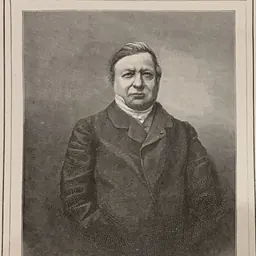
Lived 1848 – 1924 (aged 75). Byron Edmund Walker was a Canadian businessperson, philanthropist, banker and art collector.
Sir Byron Edmund Walker, CVO (14 October 1848 – 27 March 1924) was a Canadian banker. He was the president of the Canadian Bank of Commerce from 1907 to 1924, and a generous patron of the arts, helping to found and nurture many of Canada's cultural and educational institutions, including the University of Toronto, National Gallery of Canada, the Champlain Society, Appleby College, Art Gallery of Ontario and Royal Ontario Museum.
In 1910, King George V knighted Walker for his contributions to business and the arts.
Early years Byron Edmund Walker was born on 14 October 1848 on the outskirts of Caledonia in Seneca Township, Haldimand County, Canada West.
The Art Gallery of Ontario
Walker's relationship with George Agnew Reid led to the founding of the Art Gallery of Ontario. On 15 March 1900, Reid, then president of the Ontario Society of Artists, brought a group of citizens together to consider the formation of an art gallery for Toronto. At that meeting, a Provisional Art Museum Board was set in place with Walker as chairman and Reid as secretary. Through effective lobbying and fundraising ($5,000 each from 10 benefactors), the Ontario Legislature later that year passed a bill incorporating the Art Museum of Toronto. Walker became president of its board of trustees and served until his death.
The initial challenge was to find a home for the new institution. It was Walker who convinced his friends, writer Dr. Goldwin Smith and his wife, the former Mrs. William Henry Boulton, to leave their historic house, "The Grange", to the new museum. Before the news became public, Walker bought surrounding land so that the museum would have space for future expansion. The Art Museum of Toronto (later renamed the Art Gallery of Toronto and then the Art Gallery of Ontario) officially opened its first galleries in The Grange in April 1913. In 1926, two years after his death, when the gallery was expanding, the Canadian Bank of Commerce donated the funds to build the magnificent room that bears his name, the Walker Court.
The Royal Ontario Museum
The campaign for a world-class public museum for Toronto was led by Walker, philanthropist Sir Edmund Boyd Osler, then director of the Canadian Pacific Railway and president of The Dominion Bank, and Dr. Charles Trick Currelly, the first curator of the Royal Ontario Museum of Archaeology. An archaeologist, Currelly had been doing fieldwork in Egypt, Crete and Asia Minor for the purpose of collecting artifacts as a core collection for the small museum he established at Victoria College in 1907. But he wanted a larger museum for the university and others soon became involved. Walker, Osler and others provided funds and solicited financial support from the government.
Together, Osler and Walker created an organizational structure for the museum, including how funding was to be shared between the university and the government. In 1912, the Royal Ontario Museum Act was passed. A Board of Trustees was created, with appointments shared equally by university and government. Walker was its first chairman.
The Royal Ontario Museum opened on 19 March 1914. Currelly became director in 1914 until his retirement in 1946 and Walker remained chairman of the Board of Trustees until his death. In the ensuing years he contributed financially, and assisted through generous lines of credit from the Canadian Bank of Commerce, notably for Currelly's substantial acquisitions of Chinese artifacts. Walker's fossil collection became the nucleus of the museum's paleontology collection, and resulted in a dinosaur, Parasaurolophus walkeri, being named after him in 1922. His interest and support of paleontology had led to an earlier association with the Royal Canadian Institute, another scientific institution of which he was president from 1898 to 1900.
The National Gallery of Canada
At the first official exhibition of the Royal Canadian Academy of Arts on 6 March 1880, Canada's Governor General, the Marquis of Lorne, established the National Gallery of Canada at the Clarendon Hotel in Ottawa. An Advisory Arts Council was formed in 1907 and consisted of Sir George Drummond, president of the Bank of Montreal, as chairman; the senator from Montreal, Arthur Boyer, as secretary; and Sir Edmund Walker, then just newly appointed president of the Canadian Bank of Commerce, as member. The council was charged with advising the government on architecture and decoration of public buildings and public monuments. It was responsible for selecting and purchasing artworks for the collection. Drummond favoured the acquisition of European works while Walker was adamant that Canadian art be included. On Drummond's death in 1909, Walker became chairman of the council. Walker's influence as a print collector was crucial in launching the gallery's Prints and Drawings Department, which opened in 1911.
Another responsibility of the council was to advise on the Victoria Memorial Museum (Ottawa's present Natural History Museum), which opened in 1913. The same year the National Gallery of Canada Act was passed with an independent Board of Trustees constituted; Walker was appointed chairman and served until his death. Its trustees were charged, among other duties, with the development, encouragement and cultivation of "correct artistic taste in the fine arts." By 1924, this collection had over 4,000 items.
Canada's "war pictures"
Walker was key in the creation of what today is the collection of First World War "war pictures" now housed in the Canadian War Museum in Ottawa. In 1915, the Canadian financier and expatriate, William Maxwell Aitken (later Lord Beaverbrook), was appointed the Canadian force's official records officer in England. Beaverbrook established the Canadian War Memorials Fund to record for posterity the events of that war. As both a member of the fund's committee and chairman of the Board of Trustees of the National Gallery, Walker insisted that the commissioned artists include Canadians, as well as the British artists Beaverbrook proposed. By 1918, a large number of Canadian artists, among them A.Y. Jackson and Frederick Varley, were in Europe sketching munitions factories and various theatres of operations where Canadians were active. Other artists, C.W. Jefferys among them, recorded the war effort at home in Canada. In 1921, the Beaverbrook-funded war collection was deposited with the National Gallery.
Walker also served on both the Canadian and British Commissions on War Records and Trophies, formed in 1918. In the Canadian plan, a gallery for the war pictures and a hall of trophies was to be built on Sussex Drive in Ottawa. Efforts to complete the building in 1922 and 1923 were unsuccessful and the paintings and trophies were loaned out. In 1971, the paintings were transferred from the National Gallery to the Canadian War Museum and now are displayed.
Innisfree
For weekend retreats, Walker began to purchase land in 1890 at De Grassi Point in Innisfil Township, Simcoe County. "Innisfree", as his wife named it, became the centre of Walker's family life. There, he built "Broadeaves" designed by leading Canadian architect Frank Darling. Darling was the architect of the University of Toronto and designed many buildings associated with Walker such as Convocation Hall and Trinity College at the University of Toronto and the Canadian Bank of Commerce (now Commerce Court North) on King Street West in Toronto. In 1913–14, Walker built "Innisfree Farm" to further his interest in livestock husbandry. Innisfree was left in trust to his descendants as a private land trust. Managed today with the assistance of the Ontario Ministry of Natural Resources, Innisfree is designated an Area of Natural and Scientific Interest for its prairie grassland and remnants of an old growth forest ecosystem.
Last years
Sir Byron Edmund Walker left his imprint on the financial, artistic, and intellectual development of Canada. A wizard of finance, skilled in the intricacies of exchange and international business, he molded a tiny bank into a national institution and was largely responsible for overhauling the Canadian banking system. Simultaneously he established a wide range of cultural icons - the National Gallery of Canada, the collection of "war pictures" forming the nucleus of the Canadian War Museum, the Art Gallery of Ontario, the Royal Ontario Museum, the Champlain Society, the federation of colleges that became the University of Toronto - and many more. An amateur paleontologist, he was also an author of note. He was knighted by King George V, was a Knight of Grace of the Order of the Hospital of St. John of Jerusalem, and Japan appointed him Honorary Japanese Consul-General. Walker died at the age of 75, on 27 March 1924. After his death, The Globe and Mail wrote this description of Walker: "Possibly no more versatile Canadian existed in his day and age; probably few others have done so much for Canada."
Legacy
An Ontario Historical Plaque was erected by the province to commemorate Sir Byron Edmund Walker, C.V.O., LL.D., D.C.L. 1848-1924's role in Ontario's heritage.
Don’t just read it —
keep it.
Full-length biographies made to live with: read them, listen on the way to work, watch them tonight.
- E-book
- Audio
- Video
Instant download · yours to keep · every purchase keeps this site free
Important facts
People in Byron Edmund Walker's life
Named in this biography and alive at the same time




Related people
Same field, nearest in time


Contemporaries
People whose lives overlapped Byron Edmund Walker's



Frequently asked questions
Who was Byron Edmund Walker?
Canadian banker, art collector and philanthropist (1848–1924)
When was Byron Edmund Walker born?
Byron Edmund Walker was born on 14 October 1848 in Haldimand County.
When did Byron Edmund Walker die?
Byron Edmund Walker died on 27 March 1924 in Toronto.
What was Byron Edmund Walker's occupation?
Byron Edmund Walker was a businessperson, philanthropist, banker and art collector.
What nationality was Byron Edmund Walker?
Byron Edmund Walker was Canadian.
Sources & further reading
· Wikipedia: Byron Edmund Walker
· DBpedia: Byron Edmund Walker
Cite this page
APA: Biography.guide. (2026). Byron Edmund Walker. https://biography.guide/byron-edmund-walker/
MLA: "Byron Edmund Walker." Biography.guide, https://biography.guide/byron-edmund-walker/.
Chicago: "Byron Edmund Walker." Biography.guide. https://biography.guide/byron-edmund-walker/.
Data last updated: 2026-09-20 · Spot an error? Report a correction.
Page generated 2026-09-27 05:21 UTC