
Bully Hayes
19th-century American sailor and blackbirder
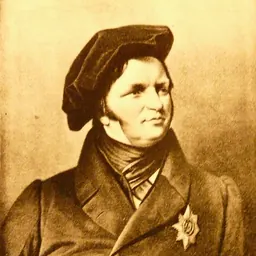
About Bully Hayes
Lived 1829 – 1877 (aged 47–48). Bully Hayes was an American trader, slave trader, pirate and blackbirding.
William Henry "Bully" Hayes (1827 or 1829 – 31 March 1877) was a notorious American ship's captain who engaged in blackbirding in the 1860s and 1870s.
Hayes operated across the breadth of the Pacific Ocean from the 1850s until his murder on 31 March 1877. He has been described as a South Sea pirate and "the last of the buccaneers". However, in their account of his life, James A. Michener and A. Grove Day warn that it is almost impossible to separate fact from legend regarding Hayes; they described him as "a cheap swindler, a bully, a minor confidence man, a thief, a ready bigamist", and commented that there is no evidence that he ever took a ship by force in the tradition of a pirate or privateer.
Early career He was born in Cleveland, Ohio, one of three sons of Henry Hayes, a grog-shanty keeper. Hayes operated in East Asia, carrying out various frauds on ship's chandlers over mortgaging ships, providing forged papers in payment for cargo, and selling cargo for his own account rather than for the account of the owners of the cargo.
Australia Hayes arrived in Fremantle, Western Australia in January 1857 as captain of the C. W. Bradley, Jr. (which was the Canton, repurchased and renamed). The Bradley had excellent cabin accommodation, and made two trips to Adelaide in March and June 1857 with passengers. The South Australian authorities were not pleased as many of these migrants were convicts with conditional pardons. The Singapore ships chandlers caught up with Hayes in Perth, Australia and forced the sale of his ship, bankrupting him. The Bradley was sold in Adelaide on 22 July and was later renamed Federation.
Hayes married the widow Amelia Littleton in the Clare Valley town of Penwortham on 20 August 1857, bigamously if, as is believed, Hayes had earlier married in the United States. On the return trip to Sydney, Hayes lost the Ellenita off Navigator Islands on 16 October 1859 and with the women and children and a skeleton crew reached Savaiʻi to raise the alarm. After considerable difficulties, the remaining passengers and crew were returned to Sydney by H.M. brig Elk. There Hayes evaded a charge of having indecently assaulted one of the passengers, Miss Cornelia Murray, aged 15.
Although Hayes lost the Ellenita in a storm and others to creditors, he always found new ships to command and new cargoes to fraudulently acquire and sell. Between maritime adventures Hayes became a member of a blackface minstrel troupe in New South Wales, Australia.
New Zealand Hayes was a notable early figure in the history of the Otago region of New Zealand. After facing bankruptcy in Australia in the late 1850s, he sailed to Otago in 1862 (at the time the region was the centre of a gold rush). He toured the region with a travelling company of vaudeville artists on a tour of New Zealand. In January 1863 they arrived at Arrowtown. Hayes married a widow Mrs Roma 'Rosie' Buckingham, whose four sons were vaudeville artists, performing as The Masters Buckingham. Hayes and Roma settled in Arrowtown where he opened a hotel, the "United States", later called "The Prince of Wales". The nearby Lake Hayes is indirectly named for him; originally called Hay's Lake after an early settler, the spelling changed over the years as locals came to associate the name with that of Bully Hayes.
Hayes had a falling out with the Buckingham family, who offered any barber £5 to cut his hair off short. Eventually this happened and it was revealed, as rumoured, that Hayes had been deprived of an ear in California where he had been caught cheating at cards. After this he was mocked in a popular play and, with his reputation gone, he and his wife left for Port Chalmers. Later he acquired a ship in Australia, the Black Diamond, which he hid in Croixelles Harbour, near Nelson. On 19 August 1864, while travelling in a borrowed yacht, the family was caught by a sudden squall and Rosie, her baby, her brother, and a nurse all drowned. Only Hayes survived.
He moved to Christchurch, where he married Emily Mary Butler in 1865. Hayes became notorious in the Pacific because of his "recruiting" of Pacific islanders to provide labour for the plantations of Tahiti, Fiji, Samoa, and Australia. While there was some voluntary recruitment of Pacific islanders, the activity predominantly involved kidnapping, coercion, and tricks to entice islanders onto ships, on which they were held prisoner until delivered to their destination.
On 17 April 1868, Hayes arrived off Suwarrow on the brig Rona, with 109 islanders from Niue (then known as Savage Island) who were being transported to Tahiti. He found Captain Handley B. Sterndale and a work crew of 18 men, 2 women, and 3 children, whose food supplies had run out. Hayes agreed to rescue Sterndale and the islanders, notwithstanding the Rona was already crowded, with Sterndale and the Islanders being delivered to Rakahanga (Reirson island), from where they eventually travelled to Tahiti. Sterndale sold the pearl shell, beche-de-mer, copra, and equipment to Hayes.
Accusations of rape and indecent assault Hayes had a long history of charges made against him for the sexual assault of underage females. In 1865 he tried to abduct a 17-year-old girl in New Zealand. However, the most shocking example was the brutal rape of a nine-year-old girl at Kosrae in 1872. In July of that year, Hayes went to the Micronesian island of Pingelap where he extorted the people to load his ship with 6,000 coconuts and to bring him a young girl. His demands were met and he sailed to his residence at the nearby island of Kosrae. Here it was reported through several verified written accounts that Hayes took the girl ashore and violently raped her. After Hayes had finished with her, the girl was taken back to the ship in severe pain, crying with blood running down her legs. She was still not able to walk properly after three months when she was returned to Pingelap. An inquiry by Captain A.E. Dupuis of on 26 September 1874 medically examined another victim for evidence against Hayes, but he escaped while being further questioned, as described in the next section. Hayes was known to treat other girls in a similar manner while at Kosrae.
Louis Becke and the wreck of the Leonora In 1874, 19-year old Australian Louis Becke sailed a ketch, the E.A. Williams from Apia, Samoa to Mili Atoll to deliver it to Hayes. Becke then joined the Leonora, at what is now the Utwe-Walong Marine Park on Kosrae.
After the wreck, Hayes brawled with the European traders on Kosrae and with his crew, with the islanders being subject to seven months of oppression and violence. Becke chose to stay with the islanders in the village of Leassé. In September of that year under Captain Dupuis arrived and Hayes was arrested, but escaped by a 14-foot boat built of timber from the wreck of the Leonora. He was arrested and ended up in prison in Manila, Philippines – at the time a colony of Spain. Hayes was eventually freed and landed in San Francisco without funds in early 1876. He persuaded a Mr. and Mrs. Moody to fund the purchase of a schooner the Lotus. Hayes tricked Mr. Moody into going ashore and sailed off with Mrs. Moody still on board. After arriving in Apia, Samoa, on 2 January 1877, the Lotus sailed to Kosrae, the island on which Leonora was wrecked, where Hayes intended to collect coconuts left at the time of the wreck. the mate of the Lotus, was that when leaving Kosrae on 31 March 1877, the ship's cook Peter Radeck, "Dutch Pete", responding to threats from Hayes, killed him. While the events are unclear, it is understood that Hayes was shot with a revolver, struck on the skull with an iron implement, and thrown overboard. The existence of this buried money is part of the myth that surrounds Hayes.
Legend of Bully Hayes Bully Hayes may not have ever taken a ship by force in the tradition of a pirate or privateer, acts of fraud having been his preferred means of gaining command of a ship; however, if the suspicion that he disposed of Ben Pease to gain command of the Pioneer is true then he may well have been a murderer.
Much of his legend is due to the writing of Louis Becke, who used his time with Hayes in his Pacific stories: Louis Becke, A Memory of the Southern Seas (1904); Captain 'Bully' Hayes; Concerning 'Bully' Hayes; and The Wreck of the Leonora: A Memory of 'Bully' Hayes In some he tells stories of Hayes that are based on first-hand experience, but there may be some fictional elements.
Don’t just read it —
keep it.
Full-length biographies made to live with: read them, listen on the way to work, watch them tonight.
- E-book
- Audio
- Video
Instant download · yours to keep · every purchase keeps this site free
Important facts
People in Bully Hayes's life
Named in this biography and alive at the same time

Related people
Same field, nearest in time



Contemporaries
People whose lives overlapped Bully Hayes's



Frequently asked questions
Who was Bully Hayes?
19th-century American sailor and blackbirder
When was Bully Hayes born?
Bully Hayes was born in 1829 in Cleveland.
When did Bully Hayes die?
Bully Hayes died on 31 March 1877 in Kosrae.
What was Bully Hayes's occupation?
Bully Hayes was a trader, slave trader, pirate and blackbirding.
What nationality was Bully Hayes?
Bully Hayes was American.
Sources & further reading
Cite this page
APA: Biography.guide. (2026). Bully Hayes. https://biography.guide/bully-hayes/
MLA: "Bully Hayes." Biography.guide, https://biography.guide/bully-hayes/.
Chicago: "Bully Hayes." Biography.guide. https://biography.guide/bully-hayes/.
Data last updated: 2026-09-26 · Spot an error? Report a correction.
Page generated 2026-09-27 05:16 UTC