
About Buffy Sainte-Marie
Born 1941. Buffy Sainte-Marie is an American actor, singer-songwriter, visual artist, record producer, composer and author.
Buffy Sainte-Marie (born Beverley Jean Santamaria; ) is an American singer-songwriter, musician, and social activist.
Sainte-Marie's singing and writing repertoire includes subjects of love, war, religion, and mysticism, and her work has often focused on issues facing Indigenous peoples of the United States and Canada. She won recognition, awards, and honors for her music as well as her work in education and social activism. In 1983, her song "Up Where We Belong", for An Officer and a Gentleman, won the Academy Award for Best Original Song at the 55th Academy Awards. The song also won the Golden Globe Award for Best Original Song that same year. Some Indigenous musicians and organizations called for awards she won while falsely claiming an Indigenous identity to be rescinded.
Early life and education Sainte-Marie was born at the New England Sanitarium and Hospital in Stoneham, Massachusetts, to Albert Santamaria and Winifred Irene Santamaria. The Santamarias were from Wakefield, Massachusetts. Her father's parents were born in Italy while her mother was of English ancestry. Her family changed their surname from Santamaria to the French-sounding "Sainte-Marie" due to anti-Italian sentiment following the Second World War.
Sainte-Marie taught herself to play piano and guitar before attending the University of Massachusetts Amherst.
Career 1960–1978: Rise to prominence
During the early 1960s, while still in college, her own songs such as "Ananias", the Indian lament "Now That the Buffalo's Gone", and also "Mayoo Sto Hoon" (a Hindi Bollywood song "Mayus To Hoon Waade Se Tere" originally sung by the Indian singer Mohammed Rafi from the 1960 movie Barsaat Ki Raat) were in her repertoire. This inspired the composition of her widely acclaimed protest song "Universal Soldier", released on her debut album It's My Way! on Vanguard Records in 1964. It was later a hit for both Donovan and Glen Campbell.
Her 1965 album Many a Mile included "Until It's Time for You to Go", which has been covered by Neil Diamond, Elvis Presley, Glen Campbell, Barbra Streisand, Andy Williams, and many others.
In 1965, Billboard named Sainte-Marie "Favorite New Female Vocalist" in the folk genre in a poll of disk jockeys. Some of her songs addressing the mistreatment of Native Americans, such as "Now That the Buffalo's Gone" (1964) and "My Country 'Tis of Thy People You're Dying" (1964, included on her 1966 album), were seen as controversial.
Sainte-Marie's other well-known songs include "Mister Can't You See" (a Top 40 U.S. hit in 1972); "He's an Indian Cowboy in the Rodeo"; and the theme song of the movie Soldier Blue. In 1969 she released Illuminations, an early quadraphonic album on which she used a synthesizer.
She appeared frequently on television in Canada and the US, including American Bandstand, Soul Train, The Johnny Cash Show, and The Tonight Show Starring Johnny Carson. She guest-starred in "The Heritage" episode of The Virginian in 1968, as a Shoshone woman sent to be educated at school, and acted and sang in "Mating Dance for Tender Grass", a 1970 episode of Then Came Bronson.
Sesame Street Sainte-Marie was hired in 1975 to present Native American programming for children for the first time on Sesame Street. Sainte-Marie wanted to teach the show's young viewers that "Indians still exist". She regularly appeared on Sesame Street from 1976 to 1981. Sainte-Marie breastfed her first son, Dakota "Cody" Starblanket Wolfchild in a 1977 episode, which according to Sainte-Marie was the first representation of breastfeeding aired on television. Sesame Street filmed several episodes at her home in Hawaii in 1978.
1979–1999: Established career In 1979, Spirit of the Wind, a docudrama scored by Sainte-Marie, was shown at the Cannes Film Festival. The American Indian Film Festival, which exhibited the film in 1980, recognizes accurate historical and contemporary portrayals of Native Americans.
"Up Where We Belong" (written by Sainte-Marie with Will Jennings and Jack Nitzsche) was performed by Joe Cocker and Jennifer Warnes for An Officer and a Gentleman. It received the Academy Award for Best Original Song in 1982. They also won the BAFTA film award for Best Original Song in 1984. On the Songs of the Century list compiled by the Recording Industry Association of America in 2001, the song was listed at number 323. In 2020, it was included on Billboard magazine's list of the "25 Greatest Love Song Duets". In the early 1980s, one of her songs was used as the theme song for the CBC's Native series Spirit Bay. She was cast for the TNT 1993 telefilm The Broken Chain. In 1989, she wrote and performed the music for Where the Spirit Lives, a film about Native children being abducted, forced into residential schools, and expected to give up their Native way of life.
Sainte-Marie voiced a Cheyenne character, Kate Bighead, in the 1991 made-for-TV movie Son of the Morning Star, telling the Indian side of the Battle of the Little Bighorn where the Sioux chief, Sitting Bull, defeated Lieutenant Colonel George Custer played by actor Gary Cole. In 1992, after a sixteen-year recording hiatus, Sainte-Marie released Coincidence and Likely Stories.
2000–2023: Later work
In 2000, Sainte-Marie gave the commencement address at Haskell Indian Nations University. In 2002 she sang at the Kennedy Space Center for Commander John Herrington, USN, a Chickasaw and the first Native American astronaut. In 2003 she became a spokesperson for the UNESCO Associated Schools Project Network in Canada. In 2002, a track written and performed by Sainte-Marie, titled "Lazarus", was sampled by Kanye West and performed by Cam'Ron and Jim Jones of The Diplomats under the title "Dead or Alive".
In 2008, a two-CD set titled Buffy/Changing Woman/Sweet America: The Mid-1970s Recordings was released, compiling the three studio albums that she recorded for ABC and MCA between 1974 and 1976 after departing Vanguard. In 2015, Sainte-Marie released Power in the Blood and appeared on Democracy Now! to discuss the record and her musical and activist career. Power in the Blood won the 2015 Polaris Music Prize. That same year, A Tribe Called Red released an electronic remix of Sainte-Marie's "Working for the Government".
Sainte-Marie was the subject of a 2022 documentary, Buffy Sainte-Marie: Carry It On. In the same year the National Arts Centre staged Buffy Sainte-Marie: Starwalker, a tribute concert of Sainte-Marie's songs.
Personal life In 1964, while on a trip to the Piapot Cree reserve in southern Saskatchewan for a powwow, she was adopted by the youngest son of Chief Piapot, Emile Piapot, and his wife, Clara Starblanket Piapot, in accordance with Cree Nation tradition.
In 1970, she founded the Native North American Women's Association whose aim was "to call attention to the injustices done to Indian women" adding that "I think we are worse off than any other minority group".
Although not an adherent, Sainte-Marie became an active friend of the Bahá'í faith, appearing at concerts for and conferences and conventions surrounding the religion. In 1992, she appeared in the musical event prelude to the Baháʼí World Congress, a double concert, "Live Unity: The Sound of the World" (1992) with video broadcast and documentary. In the video documentary of the event Sainte-Marie is seen on the Dini Petty Show explaining the Bahá'í teaching of progressive revelation. "I gave a lot of support to Bahá'í people in the '80s and '90s ... Bahá'í people, as people of all religions, is something I'm attracted to ... I don't belong to any religion. ... I have a huge religious faith or spiritual faith but I feel as though religion ... is the first thing that racketeers exploit. ... But that doesn't turn me against religion ..."
Sainte-Marie applied for Canadian citizenship through her Cree lawyer, Delia Opekokew, in 1980. In 2017, she stated that she does not have a Canadian passport and is a US citizen.
In 1968, Sainte-Marie married a surfing instructor, Dewain Bugbee, but later divorced. She was married to her co-writer on "Up Where We Belong", Jack Nitzsche, during most of the 1980s.
Claim of Indigenous identity and retirement Copy of Sainte-Marie's birth certificate issued by the town of Stoneham, Massachusetts, U.S.
Sainte-Marie's 2018 authorized biography asserted she was "probably born" on the Piapot 75 reserve in the Qu'Appelle Valley, Saskatchewan. An article about Sainte-Marie published in The Canadian Statesman in 1995 included biographical information which stated: "Born to Cree Indian parents on the Piapot Reserve in Saskatchewan, [she] was orphaned when she was only a few months old. Her adoptive parents moved her to Massachusetts."
Sainte-Marie claimed community ties to the Piapot First Nation and her adoption as an adult by Chief Emile Piapot and Clara Starblanket.
Members of the Sainte-Marie family attempted to clarify her ancestry in the 1960s and 1970s. Descendants of Piapot and Starblanket defended her in advance of the broadcast, stating: "We claim her as a member of our family and all of our family members are from the Piapot First Nation. To us, that holds far more weight than any paper documentation or colonial record keeping ever could." Their statement additionally characterized the allegations against Sainte-Marie as "hurtful, ignorant, colonial, and racist".
On October 27, 2023, The Fifth Estate demonstrated that Sainte-Marie's claims of Indigenous ancestry were false. The first mention of her being Cree came when the Vancouver Sun described Sainte-Marie as a "Cree Indian" in 1963,
Sainte-Marie released a video statement addressing the allegations after Buffy Sainte-Marie: Carry It On won at the International Emmy Awards. In response, she said: "My mother told me that I was adopted and that I was Native, but there was no documentation as was common for Indigenous children at the time", adding that "I don't know where I'm from or who my birth parents are, and I will never know." She also claimed: "I have never known if my birth certificate was real."
Later in November 2023, Sainte-Marie deleted from her website any claim of Cree heritage or of being born on Piapot First Nation. Lavallee then called for her to take a DNA test, saying: "That's something that anyone in my community can do and would not have fear of doing because we know who we are and what we are, and it's easily provable through a DNA test. If Buffy did that, that's one thing that could clear all this up." Cree author Darrel J. McLeod said that Sainte-Marie is an honorary member of the Piapot family, but that growing up with a white family allowed her to develop her talent and audience from a young age and that she should "apologize, come clean, stop gaslighting us and find a way to make amends".
In March 2025, Sainte-Marie told The Canadian Press that she returned her Order of Canada "with a good heart" and asserted that she had never lied about her identity. She claimed to have "made it completely clear" she was not Canadian to Rideau Hall, as well as to former prime minister Pierre Trudeau when he invited her to perform for Queen Elizabeth II in 1977. In the days that followed, her five Juno awards were revoked, along with other honors, including the Polaris Music Prize and her induction into the Canadian Music Hall of Fame.
Personal awards
Performance awards + Award Year Awarded Status Note Academy Award for Best Original Song for "Up Where We Belong" 1983 Canadian Aboriginal Music AwardsLifetime Achievement Award 2008 Awards now known asIndigenous Music Awards Governor General's Performing Arts Award 2010 Revoked 2025 Polaris Music Prize 2015 Revoked 2025 Revoked 2025 for Medicine Songs Canadian Songwriters Hall of Fame Inductee 2019 Revoked 2025 Polaris Heritage Prize for It's My Way! 2020 Revoked 2025 Canada Post stamp of Sainte-Marie in 2021
Award-related reactions following ancestry controversy After Sainte-Marie's claims to an Indigenous identity were disproven by The Fifth Estate, there were calls to rescind awards given her that were meant for Indigenous persons. Issiqut Anguk, sister of singer Kelly Fraser who lost the 2018 Juno Award for Indigenous Music Album of the Year to Sainte-Marie (and who died by suicide the following year), wrote that Fraser "respected Buffy so much and it hurts to hear that maybe, just maybe it would've changed Kelly's life if she won the Juno award and Buffy didn't." Tim Johnson, former associate director of the National Museum of the American Indian, said her Junos should be rescinded and the Indigenous musicians who lost to her should be considered her victims. Rhonda Head, an award-winning opera singer from the Opaskwayak Cree Nation says, "She won awards that were an accolade, that were meant for Indigenous musicians and that's what really hurts me the most. I would like to see that her awards be taken away forever, for her not being truthful and taking up space."
On February 7, 2025, the Government of Canada announced that Sainte-Marie was removed from the Order of Canada as of January 3, 2025. In March 2025, Sainte-Marie's Governor General's Performing Arts Award, Polaris Music Prizes, Juno Awards, and Canadian Music Hall of Fame induction were rescinded because she is not Canadian.
On May 14, 2026, CBC reported that the University of Toronto had rescinded Sainte-Marie’s honorary Doctor of Laws degree following a petition to revoke the honor.
Discography
Albums +List of albums, with selected chart positions Year Album AUS UK 1964 It's My Way! — — — 1965 Many a Mile — — — 1966 Little Wheel Spin and Spin — — 97 1967 Fire & Fleet & Candlelight — — 126 1968 I'm Gonna Be a Country Girl Again — — 171 1969 Illuminations — — — — 1971 She Used to Wanna Be a Ballerina — 47 — 182 1972 Moonshot — — — 134 1973 Quiet Places — — — —1974 Buffy — — — — 1975 Changing Woman — — — — 1976 Sweet America — — — — 1992 Coincidence and Likely Stories 63 — 39 — 1996 Up Where We Belong — — — — 2008 Running for the Drum — — — —2015 Power in the Blood — — — —2017 Medicine Songs — — — —
+List of collaboration albums Year Album 1985 Attla: A Motion Picture Soundtrack Album (with William Ackerman)
Compilation albums
Soundtrack appearances Year Song(s) Album 1970"Dyed, Dead, Red" and "Hashishin" with Ry Cooder Performance2019"The Circle Game" Once Upon A Time In Hollywood
Don’t just read it —
keep it.
Full-length biographies made to live with: read them, listen on the way to work, watch them tonight.
- E-book
- Audio
- Video
Instant download · yours to keep · every purchase keeps this site free
Important facts
People in Buffy Sainte-Marie's life
Named in this biography and alive at the same time

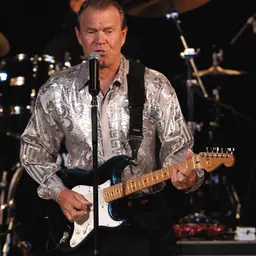

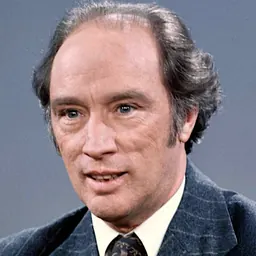

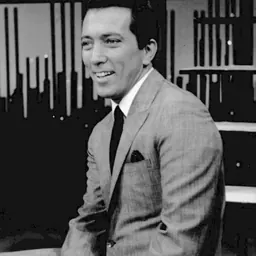


Related people
Same field, nearest in time
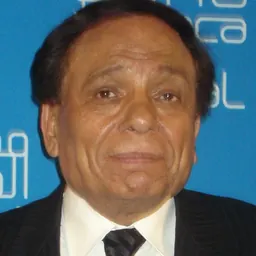
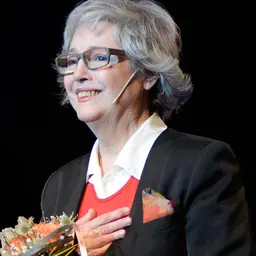


Contemporaries
People whose lives overlapped Buffy Sainte-Marie's
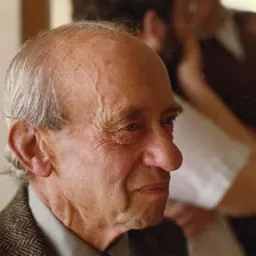
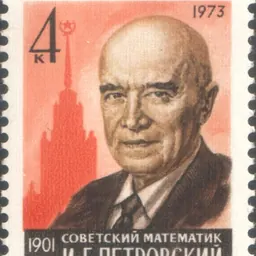

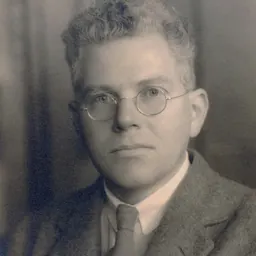
Frequently asked questions
Who is Buffy Sainte-Marie?
American musician
When was Buffy Sainte-Marie born?
Buffy Sainte-Marie was born on 20 February 1941 in Stoneham.
What is Buffy Sainte-Marie's occupation?
Buffy Sainte-Marie is an actor, singer-songwriter, visual artist, record producer, composer and author.
What nationality is Buffy Sainte-Marie?
Buffy Sainte-Marie is American.
Sources & further reading
· Wikipedia: Buffy Sainte-Marie
Cite this page
APA: Biography.guide. (2026). Buffy Sainte-Marie. https://biography.guide/buffy-sainte-marie/
MLA: "Buffy Sainte-Marie." Biography.guide, https://biography.guide/buffy-sainte-marie/.
Chicago: "Buffy Sainte-Marie." Biography.guide. https://biography.guide/buffy-sainte-marie/.
Data last updated: 2026-09-25 · Spot an error? Report a correction.
Page generated 2026-09-27 05:11 UTC