
Buddy DeSylva
American songwriter, film producer and record executive
About Buddy DeSylva
Lived 1895 – 1950 (aged 55). Buddy DeSylva was an American screenwriter, film producer, songwriter, writer and music executive.
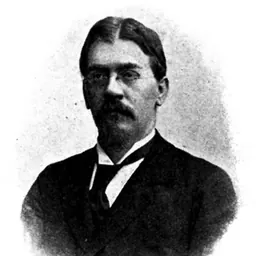
George Gard "Buddy" DeSylva (January 27, 1895 – July 11, 1950) was an American songwriter, film producer and record executive. He wrote or co-wrote many popular songs, and, along with Johnny Mercer and Glenn Wallichs, he co-founded Capitol Records.
Biography DeSylva was born in New York City, Aloysius was of multiracial ancestry, with his father being born in the West Indies and his mother being born in either England or Scotland. His father was Dr. James M. Fenwick, a Black physician who emigrated to the United States in 1865. In 1889, Aloysius legally changed his surname from Fenwick to De Sylva to pass as for white, more specifically, someone from Portugal.
Buddy's father was also a lawyer as well as an actor. His mother, Georgetta Miles Gard, was the daughter of Los Angeles police chief George E. Gard.
DeSylva's first successful songs were those used by Al Jolson on Broadway in the 1918 production of Sinbad, which included "I'll Say She Does". Soon thereafter, he met Jolson and in 1918 the pair went to New York and DeSylva began working as a songwriter in Tin Pan Alley. Together, they created the experimental one-act jazz opera Blue Monday set in Harlem, which is widely regarded as a forerunner to Porgy and Bess ten years later.
In April 1924, DeSylva married Marie Wallace, a Ziegfeld Follies dancer.
In 1925, DeSylva became one third of the songwriting team with lyricist Lew Brown and composer Ray Henderson, one of the top Tin Pan Alley songwriters of the era. The team was responsible for the song "Magnolia" (1927) which was popularized by Lou Gold's orchestra. The writing and publishing partnership continued until 1930, producing a string of hits and the perennial Broadway favorite Good News.
DeSylva joined ASCAP in 1920 and served on the ASCAP board of directors between 1922 and 1930. He became a producer of stage and screen musicals.
The Paramount all-star extravaganza Star Spangled Rhythm, which takes place at the Paramount film studio in Hollywood, features a fictional movie executive named "B.G. DeSoto" (played by Walter Abel) who is a parody of DeSylva.
In 1942, Johnny Mercer, Glenn Wallichs and DeSylva together founded Capitol Records.
Individual songs Desylva, Buddy, B. G. De Sylva, Lew Brown, and Ray Henderson. Seven Veils. 26 March 1927 Desylva, Buddy, B. G. De Sylva, Lew Brown, and Ray Henderson. Good News: vocal selection. [Place of publication not identified]: Chappell, n.d. Henderson, Ray, B. G. De Sylva, and Bud Green. "Alabamy Bound". New York: Shapiro, Bernstein & Co, 1925. De Sylva, B. G., Lew Brown, and Ray Henderson. "Magnolia". 1927. "Avalon" "April Showers" "The Best Things in Life Are Free" "The Birth of the Blues" "Button Up Your Overcoat" "California, Here I Come" "If You Knew Susie" "It All Depends on You" "Look for the Silver Lining" "Somebody Loves Me" "Sonny Boy" "The Varsity Drag" "You're the Cream in My Coffee"
Broadway credits 1919 – La La Lucille (music by George Gershwin) 1922 – George White's Scandals of 1922 (music by George Gershwin, and included premiere of one-act jazz opera Blue Monday) 1922 – Orange Blossoms (music by Victor Herbert) 1922 – The Yankee Princess (music by Emmerich Kalman) 1923 – George White's Scandals of 1923 (music by George Gershwin) 1924 – Sweet Little Devil (music by George Gershwin) 1924 – George White's Scandals of 1924 music by George Gershwin 1925 – Big Boy (music by Joseph Meyer and James F. Hanley) 1925 – Tell Me More! (co-lyricist with Ira Gershwin music by George Gershwin) 1925 – George White's Scandals of 1925 (DeSylva, Brown and Henderson) 1925 – Captain Jinks (music by Lewis Gensler) 1926 – George White's Scandals of 1926 (DeSylva, Brown and Henderson) 1926 – Queen High (music by Lewis Gensler) 1927 – Good News (DeSylva, Brown and Henderson) 1927 – Manhattan Mary (DeSylva, Brown and Henderson) 1928 – George White's Scandals of 1928 (DeSylva, Brown and Henderson) 1928 – Hold Everything! (DeSylva, Brown and Henderson) 1929 – Follow Thru (DeSylva, Brown and Henderson) 1930 – Flying High (DeSylva, Brown and Henderson) 1932 – Take a Chance (music by Nacio Herb Brown, Richard A. Whiting and Vincent Youmans)
Selected filmography Stepping Sisters (1932) My Weakness (1933) The Stork Club (1945)
In popular culture The 1956 Hollywood film The Best Things in Life Are Free, starring Gordon MacRae, Dan Dailey, and Ernest Borgnine, depicted the De Sylva, Brown and Henderson collaboration.
Don’t just read it —
keep it.
Full-length biographies made to live with: read them, listen on the way to work, watch them tonight.
- E-book
- Audio
- Video
Instant download · yours to keep · every purchase keeps this site free
Important facts
People in Buddy DeSylva's life
Named in this biography and alive at the same time
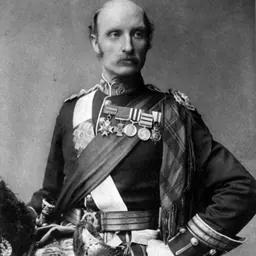

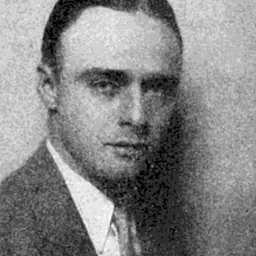


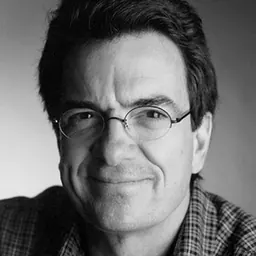
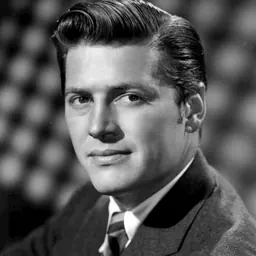

Related people
Same field, nearest in time


Contemporaries
People whose lives overlapped Buddy DeSylva's

Frequently asked questions
Who was Buddy DeSylva?
American songwriter, film producer and record executive (1895–1950)
When was Buddy DeSylva born?
Buddy DeSylva was born on 27 January 1895 in New York City.
When did Buddy DeSylva die?
Buddy DeSylva died on 11 July 1950 in Hollywood.
What was Buddy DeSylva's occupation?
Buddy DeSylva was a screenwriter, film producer, songwriter, writer and music executive.
What nationality was Buddy DeSylva?
Buddy DeSylva was American.
Sources & further reading
Cite this page
APA: Biography.guide. (2026). Buddy DeSylva. https://biography.guide/buddy-desylva/
MLA: "Buddy DeSylva." Biography.guide, https://biography.guide/buddy-desylva/.
Chicago: "Buddy DeSylva." Biography.guide. https://biography.guide/buddy-desylva/.
Data last updated: 2026-09-26 · Spot an error? Report a correction.
Page generated 2026-09-27 05:16 UTC