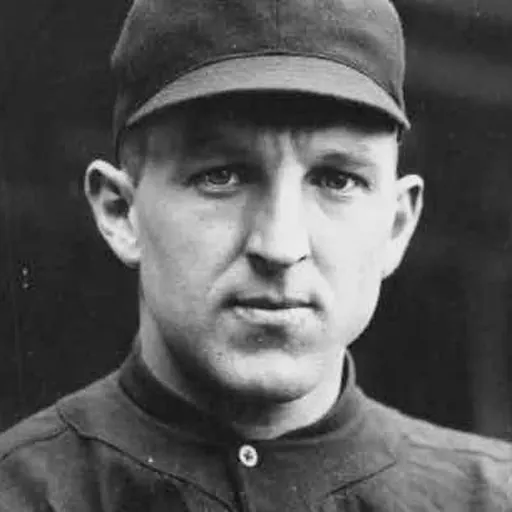
About Buck Herzog
Lived 1885 – 1953 (aged 68). Buck Herzog was an American baseball player.
Charles Lincoln "Buck" Herzog (July 9, 1885 – September 4, 1953) was an American infielder and manager in Major League Baseball who played for four National League clubs between 1908 and 1920: the New York Giants, the Boston Braves, the Cincinnati Reds, and the Chicago Cubs. His flexibility sets him apart from other major leaguers, as he demonstrated great skill as a second baseman, shortstop, and third baseman.
Born in Baltimore, Maryland, Herzog grew up on a farm in nearby Ridgely. After attending the Maryland Agricultural College, he played one season in the minor leagues before the Giants selected him in the Rule 5 Draft. Herzog batted .300 as a rookie but struggled in 1909 and was traded to Boston before 1910. He cemented himself as an everyday player over the next two years, then was reacquired by the Giants in 1911, with whom he would reach three straight World Series. He struggled to hit in the 1911 World Series but set a record that would stand for over 50 years with 12 hits in the 1912 World Series, though the Giants lost all three of the series. Traded to the Reds before the 1914 season, he served as a player-manager for the Reds through the first half of the 1916 season, though the team had a losing record in each of those years. The Giants reacquired him halfway through 1916, naming him the team captain. After a famous fight with Ty Cobb during 1917 spring training, he played in his fourth and final World Series, though he made a key error in Game 5 as the Giants were defeated in six games. Herzog spent 1918 with Boston, was traded to Chicago in the middle of 1919, and played one last year with the Cubs in 1920, a season that saw his reputation tarnished by unsubstantiated accusations of gambling on baseball games.
Following his playing career, Herzog managed the minor league Easton Farmers and coached the United States Naval Academy baseball team. Then, he worked for the Baltimore and Ohio Railroad and later at a race track. Penniless by the early 1950s, he died of tuberculosis in 1953.
Early life Charles Lincoln "Buck" Herzog was born on July 9, 1885, in Baltimore, Maryland. He was the descendant of German Presbyterians, though his facial features and last name would later cause people to think he was Jewish. During his childhood, his family moved to a farm in Ridgely, Maryland, where Herzog would spend much of his formative years.
New York Giants (first stint) (1908–1909) On September 1, 1907, the New York Giants selected Herzog in the Rule 5 Draft. He got along well with manager John McGraw the next March and made the team out of spring training. During the year, Herzog displayed "good form" according to McGraw, though there was still a "lot to learn" for the player. Not used much, he constantly pestered McGraw for more playing time, which irritated his manager. With the Doves, Herzog received regular playing time. He was the starting third baseman until July 6, after which he was suspended for insubordination. Seeking to replace Fred Lake as the team's manager, Herzog phoned McGraw and asked whether he should accept an offer for a two-year, $5,000 contract to manage Boston. McGraw felt this was underhanded and tipped Lake off as to what was going on. Braves vice president John Harris told Lake to handle the situation how he thought best, and Lake suspended Herzog.
Returning to action August 2, Herzog resumed the everyday third base job. In 106 games (380 at bats), he batted .250 with 51 runs scored, 95 hits, 20 doubles, three triples, three home runs, 32 RBI, and 13 stolen bases. Nevertheless, he got in trouble with manager Fred Tenney, who fined both Herzog and teammate Doc Miller for "laying down" during games. Facing the Philadelphia Athletics in the World Series, the Giants struggled to hit, and Herzog was no exception. He batted only .190 as the Giants were defeated in six games.
In 1912, Herzog remained New York's primary third baseman, used exclusively at the position.
The Giants won the pennant again, facing the Boston Red Sox in the World Series. Herzog's leadoff double in the fifth inning of Game 3 led to him scoring the Giants' second run in an eventual 2–1 victory. Herzog batted .400 and set a record with 12 hits in the series, though the Giants were defeated in eight games.
Injured early in the 1913 season, Herzog played sparingly in June and platooned at third base with Tillie Shafer for the rest of the season. His batting average was as high as .300 on July 4, and he batted .286 for the season. Herzog butted heads with both the players and the front office. His lone home run of the season came against Dan Griner on May 8, when he had two RBI in a 3–0 victory over the Cardinals. In 138 games, he batted .281 with 54 runs scored, 140 hits, 14 doubles, eight triples, and 40 RBI. Cincinnati did not do so well, finishing last in the NL with a 60–94 record.
Herzog again played primarily shortstop in 1915. He recorded his only home run of the season on May 1, in a 9–5 loss to the Cardinals. From July 4 through July 6, he played six games, as the Reds had a doubleheader scheduled on each of those dates. Herzog had three hits in the first game of each of the doubleheaders, though he had 14 innings to do so in the July 6 one. In 155 games (579 at bats), he batted .264 with 61 runs scored, 153 hits, one home run, and 42 RBI. With a 71–83 record, the Reds finished seventh in the NL this year, with the Giants the only team that was worse than them. Meanwhile, the Giants were again interested in his services. McGraw sent a telegram to Reds president Garry Herrmann, offering to journey personally to Cincinnati to make a trade for his ex-player. On July 20, the Giants acquired Herzog for the third time, sending future Hall of Famers Christy Mathewson, Bill McKechnie, and Edd Roush to the Reds along with $40,000 for Herzog and Bill Killefer. Herzog set an unusual record by playing 98 home games in one season: 50 of his 79 games for the Reds were at home, and 48 of his 77 with the Giants were at home.
During 1917 spring training, Herzog had his most famous fight when he battled Ty Cobb. After the Tiger outfielder showed up late for a Dallas spring training doubleheader because of a golf outing, Herzog and several of his teammates called him names from the Giant bench. Cobb retaliated by sliding into Herzog feetfirst and making contact with his spikes during the second game, prompting a bench-clearing brawl in which Cobb shoved Herzog's face into the dirt. The Dallas Police Department had to help stop the brawl, and Cobb was thrown out of the game. Both teams were staying at the Oriental Hotel, and at dinner that evening, Herzog walked up to Cobb and challenged him to a fight. The two met an hour later in Cobb's room, where the Tiger outfielder had prepared for the fight by moving furniture out of the way and pouring water on the floor. Cobb's leather-soled shoes enabled him to get better footing than Herzog, who wore tennis shoes. The fight lasted for 30 minutes, over the course of which Cobb knocked down Herzog about six times while Herzog only knocked Cobb down once. The scuffle left Herzog's face bloodied and his eyes nearly shut. "I got hell kicked out of me, but I knocked the bum down, and you know that swell head, he’ll never get over the fact that a little guy like me had him on the floor," Herzog declared afterwards. With McGraw vowing revenge, Cobb skipped the rest of the exhibition series against the Giants, heading to Cincinnati to train with the Reds, who were managed by Cobb's friend Mathewson. However, Cobb later expressed the deepest respect for Herzog because of the way the infielder had conducted himself in the fight. Playing all six of the games, Herzog batted .250 with one triple and two RBI. The White Sox went on to win Games 5 and 6 to clinch the series victory.
Herzog played second base for the Cubs in 1920 except for June and early July, when he was used mainly at third base. He became embroiled in controversy that August when he was one of a group of Cubs players accused of deliberately helping the team lose a game to the Phillies. No firm evidence connecting Herzog to the scandal was found, but he was seldom used after that. His only game in September was against the Giants on September 9. He was also an excellent bunter, and he displayed a good knowledge for the game, figuring out small things he could do that would help the team win. His final resting place was Denton Cemetery in Denton, Maryland, where he was buried next to his wife, Mattie, who had died 11 years before.
In 2008, a carriage house Herzog built in the early 1900s was saved from demolition and moved to the center of Ridgely.
Don’t just read it —
keep it.
Full-length biographies made to live with: read them, listen on the way to work, watch them tonight.
- E-book
- Audio
- Video
Instant download · yours to keep · every purchase keeps this site free
Important facts
People in Buck Herzog's life
Named in this biography and alive at the same time

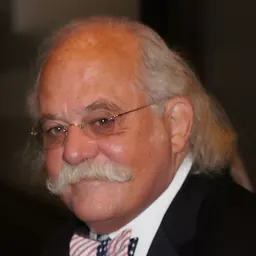

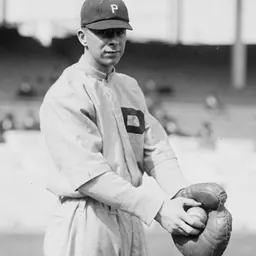
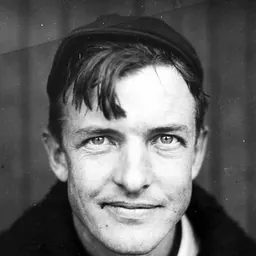
Related people
Same field, nearest in time


Contemporaries
People whose lives overlapped Buck Herzog's


Frequently asked questions
Who was Buck Herzog?
American baseball player, manager
When was Buck Herzog born?
Buck Herzog was born on 9 July 1885 in Baltimore.
When did Buck Herzog die?
Buck Herzog died on 4 September 1953 in Baltimore.
What was Buck Herzog's occupation?
Buck Herzog was a baseball player.
What nationality was Buck Herzog?
Buck Herzog was American.
Sources & further reading
Cite this page
APA: Biography.guide. (2026). Buck Herzog. https://biography.guide/buck-herzog/
MLA: "Buck Herzog." Biography.guide, https://biography.guide/buck-herzog/.
Chicago: "Buck Herzog." Biography.guide. https://biography.guide/buck-herzog/.
Data last updated: 2026-09-22 · Spot an error? Report a correction.
Portrait: Wikimedia Commons · author & licence
Page generated 2026-09-27 05:03 UTC