
About Bryce Bayer
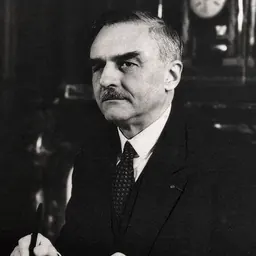
Lived 1929 – 2012 (aged 83). Bryce Bayer was an American physicist and inventor, known for Bayer filter.
Bryce Edward Bayer (/ˈbaɪər/; pronounced BYE-er, August 15, 1929 He has been called "the maestro without whom photography as we know wouldn't have been the same."
After receiving a bachelor's degree in engineering physics from the University of Maine in 1951, Bayer moved to Rochester, New York, to work as a research scientist at Eastman Kodak, where he would remain until his retirement in 1986. At Kodak he met Joan Fitzgerald, a fellow researcher; they were married in 1954. Bayer pursued further studies at the University of Rochester, from which he earned a master's degree in industrial statistics in 1960. Bayer documented his ideas in his KRL lab notebook on May 24, 1974, as shown in the figure. His entry includes a color sketch of his now famous "Bayer pattern" and states that "each of the red, green and blue records are sampled in regular arrays, with twice as many points for green, which is most important to sharpness”. In March 1975, Kodak filed a patent application, titled "Color imaging array", with Bayer as the sole inventor. The patent, which issued as U.S. patent 3,971,065 in July 1976, describes color patterns having luminance (e.g. green) elements arranged in a checkerboard pattern, which provides uniform luminance sampling in both the horizontal and vertical directions.
The Bayer color filter array pattern was first used in the Kodak DCS 200 camera, which was introduced in 1992. It is used today in almost all color cameras, including those in smartphones, computers, camcorders, and drones. In the Bayer pattern, half of the pixels collect green light, and the others are evenly divided between red and blue light. The resulting Nyquist domains for the green sampling maintains the same Nyquist frequency for horizontal and vertical spatial frequencies as a sensor having all green-sensitive elements.
"The pattern is very simple," Ken Parulski, former chief scientist for Kodak's digital camera division, told The New York Times after Bayer's death. "There are twice as many green elements as red or blue because this mimics the way the human eye provides the sharpest overall color image." Parulski added that although dozens of other patterns have since been devised, including some by Parulski himself, "the Bayer pattern has stood the test of time." Larry Scarff, a former chairman of the Camera Phone Image Quality Standards Group, told the Times that "Ninety-nine point nine-nine percent of all digital cameras — cellphones, pocket cameras, webcams and consumer digital video cameras — use the Bayer pattern to produce color pictures." As a leading scientist in the Information Technology Laboratory within the Physics Division of the Kodak Research Laboratories (KRL), Bryce demonstrated, in the early eighties, that computers could greatly enhance image quality. For example, he showed a large print of a dock scene made from a very small Disc camera negative. The image looked like it had been made from a much larger 35 mm negative. One could see the braids in the rope sitting on the dock.
About fifteen years earlier, in the mid-sixties, he developed a way to encrypt information in a way that the code could not be broken by others. Again, he developed this as a leader within the KRL Information Technology Laboratory. At the time, he was also studying Shannon's work on information theory and entropy, Shannon-Fano coding to use shorter codes for more frequent words or signals, etc. Bryce led a group in the areas of computer programming, applied statistics, information science, and applied mathematics. The group developed an automated way to selectively disseminate information to users based on their interest profiles and on their interest level feedback. This process is like processes used today by Google and Amazon.
In the mid-1960s, there was a group of similar size to Bryce's group working down the hall from Bryce's group. They were working on psycho-physics related to user assessment of digital image quality, color perception, etc. The Bayer filter enables a digital imaging system to do what the eye does. The extra green sensors provide more luminance information, as the rods in the eye do, when it is dark. When the digital imaging system and the eye encounter situations with low levels of illumination, both systems can provide and use more luminance information and less chrominance information.
Honors and awards
Bayer was awarded the Royal Photographic Society's Progress Medal in 2009 given "in recognition of any invention, research, publication or other contribution which has resulted in an important advance in the scientific or technological development of photography or imaging in the widest sense." In 2012, Bayer received the first Camera Origination and Imaging Medal from the Society of Motion Picture and Television Engineers.
Personal life and death
Bayer and his wife had two sons, Douglas and David, and a daughter, Janet. Bayer died on November 13, 2012, in Bath, Maine, of "a long illness related to dementia," his son Douglas told The New York Times.
Don’t just read it —
keep it.
Full-length biographies made to live with: read them, listen on the way to work, watch them tonight.
- E-book
- Audio
- Video
Instant download · yours to keep · every purchase keeps this site free
Important facts
People in Bryce Bayer's life
Named in this biography and alive at the same time


Related people
Same field, nearest in time


Contemporaries
People whose lives overlapped Bryce Bayer's

Frequently asked questions
Who was Bryce Bayer?
American physicist and inventor of the Bayer filter
When was Bryce Bayer born?
Bryce Bayer was born on 15 August 1929 in Portland.
When did Bryce Bayer die?
Bryce Bayer died on 13 November 2012 in Bath.
What was Bryce Bayer's occupation?
Bryce Bayer was a physicist and inventor.
What was Bryce Bayer known for?
Bryce Bayer was known for Bayer filter.
What nationality was Bryce Bayer?
Bryce Bayer was American.
Sources & further reading
Cite this page
APA: Biography.guide. (2026). Bryce Bayer. https://biography.guide/bryce-bayer/
MLA: "Bryce Bayer." Biography.guide, https://biography.guide/bryce-bayer/.
Chicago: "Bryce Bayer." Biography.guide. https://biography.guide/bryce-bayer/.
Data last updated: 2026-09-20 · Spot an error? Report a correction.
Page generated 2026-09-27 05:32 UTC