
About Bryan Mahon
Lived 1862 – 1930 (aged 68). Bryan Mahon was an Irish and British politician, military personnel and soldier.
Sir Bryan Thomas Mahon, (2 April 1862 – 29 September 1930) was an Irish general of the British Army, a senator of the short-lived Senate of Southern Ireland and a member for eight years of the Irish Free State Senate until his death.
Early life and military career Bryan Thomas Mahon was born at Belleville, County Galway, on 2 April 1862. After having served in the Galway Militia, into which he had been commissioned as a second lieutenant in April 1879, he transferred to the 21st Hussars in January 1883, before finally transferring to the 8th (King's Royal Irish) Hussars in February 1883. He was promoted to captain in April 1888.
After being seconded for service with the Egyptian Army in January 1893, he served in Sudan in the Dongola Expedition in 1896 as a staff officer to Major General Sir Herbert Kitchener, and was present at the Battle of Ferkeh and the operations at Hafir. He was promoted to major in October 1897.
In 1899, he took part in the final defeat of the Khalifa as Assistant Adjutant general in charge of Intelligence, and was mentioned in despatches (dated 25 November 1899) by Colonel Wingate with the following words: I cannot speak in sufficiently strong terms of the excellence of the services performed by this officer. I invariably placed him in general command of all the mounted troops; his personal disregard for danger, intrepid scouting, and careful handling of men, all fit him for high command; his bold and successful seizure of the position in front of Fedil's camp, and his conduct of the fight before I came up, show him to possessed of exceptional qualities as a commander.
In recognition of his service in the Sudan, he received a brevet promotion to colonel on 14 March 1900, and a substantive promotion to lieutenant colonel after transferring to the 12th Lancers (later the 12th Royal Lancers).
During the Second Boer War Colonel Mahon led a flying column, 2,000 strong, consisting mainly of South African volunteers from Kimberley, which came to the Relief of Mafeking. The town, which had been under siege for seven months by Boer forces, was facing starvation. Mahon was appointed a Companion of the Order of the Bath (CB) for his services during the operations, and was invested with the order by King Edward VII on 2 June 1902 after his return to the United Kingdom.
Mahon was appointed a Fellow of the Royal Geographical Society in May 1902, and was briefly governor of Khartoum in 1903. In April 1904, after serving on half-pay, he took command of a second class district in India, for which he was promoted to substantive colonel and re-promoted to temporary brigadier general while holding the appointment. In December 1906 he was, at the age of 44, promoted to major general while commanding a brigade in India. He was promoted to command a division in August 1909. He became colonel of his regiment, the 8th Hussars, in April 1910.
He was promoted to lieutenant general in September 1912, one of the youngest of his rank in the army.
First World War Lord Kitchener, on the right on horseback, reviewing the 10th (Irish) Division at Basingstoke, Hampshire, June 1915. Sat behind him is Lieutenant General Mahon, the division's GOC.
During the First World War, which began in the summer of 1914, he commanded the 2nd (Sialkot) Cavalry Brigade and in October was assigned to be the first general officer commanding (GOC) of the 10th (Irish) Division, a Kitchener's Army formation composed of civilian volunteers for the army. Despite being "both a protestant and a unionist", it was hoped "that his public image would boost recruitment". Furthermore, Hamilton chose to select Beauvoir De Lisle as the new commander of IX Corps, believing Mahon was not up to the task. Mahon, who "loathed" De Lisle, refused to serve under him and resigned his command.
Lieutenant-General Mahon and French General Maurice Sarrail, along with other senior officers, at Salonika, March 1916.
He was then appointed as the Commander-in-Chief, Ireland, in November 1916 in the lead up to the Irish War of Independence.
Postwar and final years He retired from the British Army at the end of August 1921, after having been promoted to the rank of full general the month before.
His home, Mullaboden in Ballymore-Eustace, County Kildare, was burned down by the IRA in February 1923 during the Irish Civil War. The most valuable furniture had been removed to Dublin after the destruction of Palmerstown, the residence of Lord Mayo, another Kildare member of the Irish Senate, the previous month. A gramophone and typewriter were stolen and one of Mahon's tunics was taken and worn by one of the republicans for a photo taken of the squad that carried out the arson.
He and his wife, Lady Mahon, formerly Lady Amelia Milbanke, widow of Sir John Milbanke, V.C., were not home at the time. In 1923, "malicious injury claims" by the Mahons were filed with Kildare County Council in the amount of more than £60,000; they were awarded £21,341.
Don’t just read it —
keep it.
Full-length biographies made to live with: read them, listen on the way to work, watch them tonight.
- E-book
- Audio
- Video
Instant download · yours to keep · every purchase keeps this site free
Important facts
People in Bryan Mahon's life
Named in this biography and alive at the same time



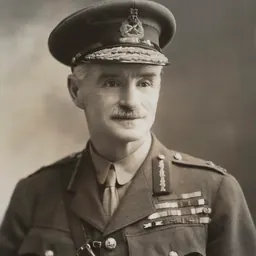
Related people
Same field, nearest in time

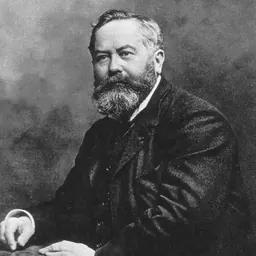



Contemporaries
People whose lives overlapped Bryan Mahon's

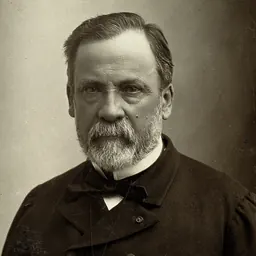



Frequently asked questions
Who was Bryan Mahon?
British Army general (1862–1930)
When was Bryan Mahon born?
Bryan Mahon was born on 2 April 1862 in Galway.
When did Bryan Mahon die?
Bryan Mahon died on 29 September 1930 in Dublin.
What was Bryan Mahon's occupation?
Bryan Mahon was a politician, military personnel and soldier.
What nationality was Bryan Mahon?
Bryan Mahon was Irish and British.
Sources & further reading
Cite this page
APA: Biography.guide. (2026). Bryan Mahon. https://biography.guide/bryan-mahon/
MLA: "Bryan Mahon." Biography.guide, https://biography.guide/bryan-mahon/.
Chicago: "Bryan Mahon." Biography.guide. https://biography.guide/bryan-mahon/.
Data last updated: 2026-09-25 · Spot an error? Report a correction.
Page generated 2026-09-27 05:08 UTC