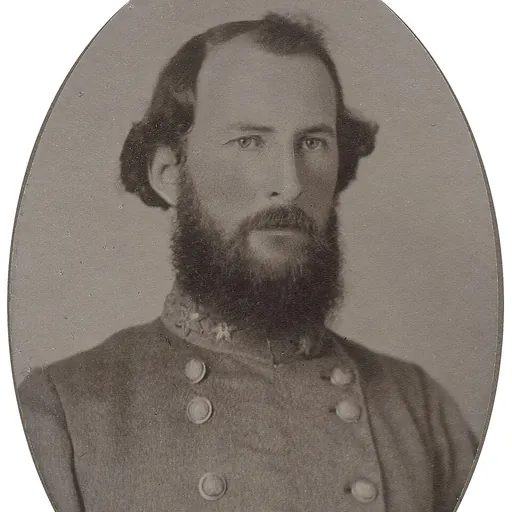
About Bryan Grimes
Lived 1828 – 1880 (aged 51). Bryan Grimes was an American military personnel and planter (American South).
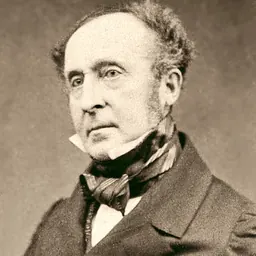
Portrait of Gen. Bryan Grimes, by William George Randall in North Carolina Museum of History. Bryan Grimes (November 2, 1828 – August 14, 1880) was a Confederate military officer during the American Civil War. He fought in nearly all of the major battles of the Eastern Theater.
Grimes was the last man in the Army of Northern Virginia to be appointed as a major general. He also led the last attack of that army not long before its surrender to Union forces at Appomattox Court House on the morning of April 9, 1865.
Early life and career Bryan Grimes Jr. was born on the ancestral family plantation, called "Grimesland Plantation," in Pitt County, North Carolina. It was added to the National Register of Historic Places in 1971. His father, Bryan Grimes Sr., was a prosperous planter. His mother, Nancy Grist, was the daughter of a prominent general from Georgia; she died when Grimes was only four months old, and his older sister for a time raised him. He attended school in Nash County and an academy in Washington, North Carolina, before attending a noted private school in Hillsborough. Grimes, at the age of fifteen, enrolled in the University of North Carolina, where he was a member of the Philanthropic Society. He graduated four years later in 1848. In 1849, his father gave him the Grimesland estate, along with control over its 100 slaves. On April 9, 1851, he married Elizabeth Hilliard Davis, but she would die only six years later. The couple had four children, one of whom, Bryan Grimes III, died in childhood. A grief-stricken Grimes later traveled to Europe.
Civil War service Upon his return to the United States, he was elected as a delegate to North Carolina's secession convention. He resigned from the commission after the passage of the Ordinance of Secession and joined the Confederate Army as the major of the newly formed 4th North Carolina Infantry on May 16, 1861. He saw his first combat action at the First Battle of Manassas in Virginia on July 21. Grimes was promoted to lieutenant colonel on May 1, 1862, and fought at the Battle of Seven Pines, during which he was wounded when his injured horse fell on top of him on May 31. On June 19, 1862, Grimes was promoted to the rank of colonel and given command of the 4th North Carolina Infantry, now part of the Army of Northern Virginia. Grimes led the regiment during the Peninsula Campaign, but missed the Maryland Campaign and the Battle of Sharpsburg due to a severe leg injury incurred when his horse kicked him on September 5 near Edward's Ferry in Maryland. Upon recovery Grimes returned to field duty in temporary command of an infantry brigade within the division of Maj. Gen. Daniel Harvey Hill. He fought with the rest of Stonewall Jackson's Second Corps at the Battle of Fredericksburg that December, where his men repelled a Union attack. He served in the trenches surrounding Petersburg and joined Robert E. Lee's retreat to the west that ended when the way was blocked by Federal columns near Appomattox Court House. Grimes led an attack that temporarily cleared Federals from the Lynchburg Road, briefly opening up a possible route of escape for a portion of Lee's army. However, Lee chose to surrender instead of risking useless further bloodshed.
Following the Appomattox Campaign, Grimes surrendered along with the rest of the Army of Northern Virginia on April 9, 1865, and was paroled at Appomattox Court House. He was pardoned by the U.S. government on June 26, 1866. Parker was later acquitted at his trial. However, a number of years later Parker returned to the area drunk and boasted of his killing Grimes but winning acquittal. He was arrested for drunk and disorderly. That night a mob entered the deserted jail house, grabbed Parker and lynched him. Nobody was ever tried for the act. Grimes was buried in the family cemetery on his plantation, Grimesland, about five miles northwest of Chocowinity, North Carolina. A monument (a cenotaph) to the fallen former Confederate stands in Trinity Churchyard Cemetery located in the village of Chocowinity.
Portions of the letters written home by Grimes throughout the Civil War were published after his death in 1883, entitled Extracts of Letters of Major Gen'l Bryan Grimes, to His Wife.
In memory In April 1898, the U.S. Army established "Camp Bryan Grimes" in Raleigh and named it for the former Confederate general. It served as a mustering point for North Carolina troops in the Spanish–American War.
The Sons of Confederate Veterans local camp in Greenville, North Carolina, was designated as the Major General Bryan Grimes Camp 1988.
Friends and family erected a cenotaph at Trinity Episcopal Cemetery in Chocowinity, North Carolina, with his accomplishments and Civil War service inscribed upon it.
Don’t just read it —
keep it.
Full-length biographies made to live with: read them, listen on the way to work, watch them tonight.
- E-book
- Audio
- Video
Instant download · yours to keep · every purchase keeps this site free
Important facts
People in Bryan Grimes's life
Named in this biography and alive at the same time

Related people
Same field, nearest in time

Contemporaries
People whose lives overlapped Bryan Grimes's





Frequently asked questions
Who was Bryan Grimes?
Confederate Army general (1828–1880)
When was Bryan Grimes born?
Bryan Grimes was born on 2 November 1828 in Pitt County.
When did Bryan Grimes die?
Bryan Grimes died on 14 August 1880 in Pitt County.
What was Bryan Grimes's occupation?
Bryan Grimes was a military personnel and planter (American South).
What nationality was Bryan Grimes?
Bryan Grimes was American.
Sources & further reading
Cite this page
APA: Biography.guide. (2026). Bryan Grimes. https://biography.guide/bryan-grimes/
MLA: "Bryan Grimes." Biography.guide, https://biography.guide/bryan-grimes/.
Chicago: "Bryan Grimes." Biography.guide. https://biography.guide/bryan-grimes/.
Data last updated: 2026-09-23 · Spot an error? Report a correction.
Portrait: Wikimedia Commons · author & licence
Page generated 2026-09-27 05:07 UTC