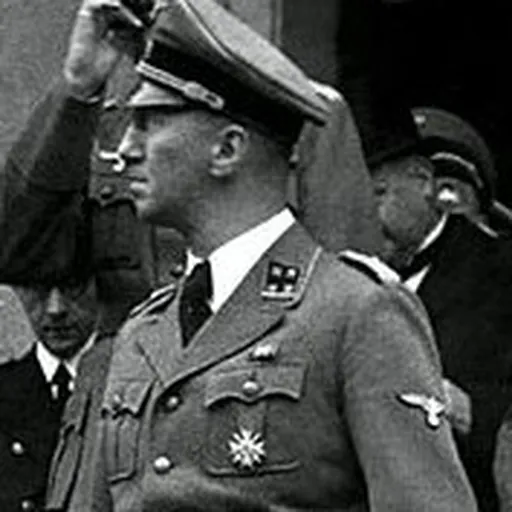
Bruno Sattler
German soldier
About Bruno Sattler
Lived 1898 – 1972 (aged 74). Bruno Sattler was a German gestapo employee, gestapo and territory of the Military Commander in Serbia.
Bruno Sattler (17 April 1898 – 15 October 1972) became a member of the Nazi Party during the closing months of 1931. After the Hitler government took power at the start of 1933 he joined the Gestapo, achieving a succession of promotions during the ensuing decade. In 1942 he was posted to Belgrade with the rank of "SS-Sturmbannführer", as Gestapo Police Chief for occupied Serbia. He remained in post until October 1944, when the German occupation of the territory was ended. He turned up with a false name in Berlin during 1947, but was evidently identified. In October 1947 he was abducted by the Soviet security services from what later became known as West Berlin, and taken to the eastern part of the city in the Soviet occupation zone. His family heard nothing more from him and in 1949 he was pronounced dead. He had actually been detained, probably in the occupied zone that became the East Germany in October 1949. Several major atrocities committed during the Nazi era were associated with Sattler, and it became known much later that in 1952 he faced trial "for his Gestapo activities". It was only by chance that a year later his wife learned that he was still alive. By then, he was serving a life sentence after being convicted of war crimes by the Greifswald District Court. According to some sources, the circumstances of Sattler's death in the prison hospital at the jail in Leipzig-Meusdorf in 1972 never became clear. Elsewhere it is stated that he was shot dead in his prison cell. He also found time to join the Ehrhardt Brigade, one of the "Freikorps" units of defeated former imperial army soldiers that emerged during the months of revolution which broke out after the war. In March 1920 Sattler took part, on the side of the right-wing insurgents, in the anti-government "Kapp Putsch" (short-lived uprising -) which failed in its objective of overthrowing the new republican government) Sattler's father died in 1922. Any accumulated savings that the family might have had were eaten up by the collapse in the value of money. Sattler was obliged to cut short his education and earn money in order to support his own needs and those of his mother. He worked at a succession of casual jobs. One of these was a selling job which involved selling watches and silver jewellery at Berlin's Wertheim department store. Bruno Sattler had imbibed to the full his parents' "traditional values", which in his case involved not just the rather nostalgic nationalism that was widespread among those hankering for "the good old days, before the war", but also a gnawing antisemitism. It did nothing for his self-esteem that the young man had ended up selling watches in a store established and owned by a leading Jewish entrepreneur.
Police service Meanwhile, he remained in contact with his "Freikorps" comrades from the time of the insurrection. One of them was by this time working for the police service, and through this contact Sattler also received and accepted the offer of a job in the police service, joining the "Criminal police" in 1928. Almost immediately he was picked out for a training programme for future "Criminal Commissars". He was also becoming more politicised. By 1945 the National Socialist Party had more than ten million members, but in the early 1930s, although the intensified polarisation of politics was beginning to spill out into the streets, National Socialism was still a minority movement. Membership numbers run more or less chronologically, though there appear to have been several batches running concurrently. From Sattler's membership number it is apparent that he joined the party in October or November 1931. Further evidence of his political preferences and inclinations comes from his switch from the "Criminal Police" to the "Political Police" in 1933.
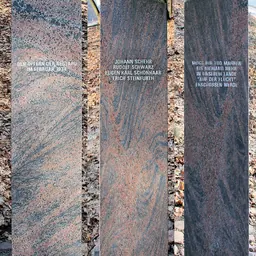
It was as an ambitious still relatively young Gestapo officer, on the night of 1/2 February 1934, that Sattler was responsible for the killing of four communist detainees, John Schehr, Eugen Schönhaar, Erich Steinfurth and Rudolf Schwarz at the "Schäferberg" (just outside Berlin), "while they were attempting to escape". The incident later became mythologised, and the subject of a frequently broadcast ballad-song, in East Germany. Although Sattler was in charge of the group of Gestapo men escorting the prisoners when the incident took place, it was never known whether or not he fired any of the fatal shots. Nevertheless, according to subsequent research by his daughter (who became a journalist) it was Sattler who gave the order to shoot.
Reichssicherheitshauptamt (RSHA) In September 1939 the Reich Security Main Office Reichssicherheitshauptamt (RSHA) was established by Heinrich Himmler. Bruno Sattler immediately assumed leadership of the new organisation's "Department IV A2", with responsibilities covering Sabotage Prevention, Political-Police Defence and Political Counterfeiting operations. A few months later he was posted to Potsdam to work alongside Reinhold Heller of the "SS". As overall head of Department IV, during the summer of 1940 he was briefly posted to newly occupied Brussels, responsible for taking care of the files of the Second Socialist International which had been based in the Belgian capital between 1935 and 1940.
Like other RSHA staff, Sattler was assigned to what the head of the RSHA, Reinhard Heydrich, liked to refer to as the "Kämpfende Verwaltung" ("Fighting Administration") - elsewhere identified as Germany's "[paramilitary] taskforces", which were much expanded at the time of the German invasion of the Soviet Union. In this context he seems to have served in Byelorussia and Russia, although even his family was being kept in the dark as to his whereabouts by this point. Between September 1941 and January 1942 Sattler was listed as an "orderly officer" of "Advance Command Moscow" of the Special Commando with "Taskforce Group B". It emerged much later that during 1941 Sattler was a member of the "Einsatzgruppe B" (taskforce) which is believed to have murdered 90,000 in Smolensk. He was later part of an equivalent task force mandated to take over the Interior Ministry in Moscow, but Moscow held out. After "Advance Command Moscow" was dissolved, the unit comprising the survivors was rebranded as "Department SK 7c".
Belgrade At the start of 1942 Sattler was promoted to the rank of "SS-Sturmbannführer" and "[Police] Kriminaldirektor", ahead of his posting to Belgrade. In Belgrade he took over "Department IV" which was the Gestapo department responsible for security in occupied Serbia. In this role he reported directly to SS-Oberführer Emanuel Schäfer, the Befehlshaber der Sicherheitspolizei und des SD. Sources covering Sattler's time in Belgrade between 1942 and 1944 lean heavily, both directly and indirectly, on court reports of Sattler's (at the time) secret trial, held at the District Court in Greifswald in July 1952. There is an inevitable focus on the atrocities in which he was involved. Complementary research that would not have been possible before 1990 has nevertheless endorsed assessments relating to his culpability, notwithstanding sometimes highly critical evaluations of the East German justice system.
At the time when Sattler took charge of the Belgrade Gestapo, the department was already an established key element in the military administration of the region. From Sattler's party-loyal perspective, there was nevertheless much unfinished business left by Schäfer's predecessor as BdS, SS-Oberführer Wilhelm Fuchs. Schäfer found that there were still 6,280 Jews - mostly women and children - alive at the nearby "Semlin" Concentration Camp. By July 1942, SS-Gruppenführer Harald Turner, the chief of the military administration staff, was able to report in a letter that Serbia was "Judenfrei" (Free of Jews). In Belgrade, Sattler worked with a team of approximately 30 people with backgrounds in the Gestapo, Criminal law enforcement and Secret Police work. While assigned to "Department IV" in Belgrade, they all enjoyed the status of Gestapo officers. An "ethnic German" simultaneous translator, able to work with the necessary local languages, was permanently available to each of them.
Records of the 1952 trial state that following Sattler's installation as Belgrade's Gestapo chief, the population of Yugoslavia was subjected to merciless persecution and mass killings. Through his adept recruitment and control of a network of informants Sattler received details of the structural organisation and activities of all the resistance groups in the region. Early in 1947 he turned up in the by this time diminished mountain of rubble that had been Berlin Sattler was at this stage very much alive, however. He was still being subjected to interrogation in a succession of prisons in East Germany and - according to some sources the Soviet Union. The East German authorities had every intention of keeping him alive at least until they had extracted from his all the information they could concerning his own interrogation of communists resistance fighters during the war. Under intense pressure from Moscow and their own paranoid leaders in (East) Berlin, the authorities were, in particular, keen to know "which comrade had betrayed which comrade(s) under Nazi questioning" administered, or at least logged, by Sattler. Sattler could look forward to a lifelong prison sentence, but for at least as long as the authorities thought they might extract more information from him, his life seems not to have been in immediate danger. During the 1960s she had already obtained confirmation that her father had been a member of the National Socialist ("Nazi") Party. The US authorities had obtained a copy of the complete membership list from the Soviets who had found it in the eastern part of Berlin. West Berliners had no direct access to any copy of the list, which the American authorities kept in a basement storage facility, but lawyers were permitted access, so she persuaded the friend of a father who was also a lawyer to undertake a search through the almost eleven million names on her behalf. Although he found her father's party membership record, he reported back that he had found nothing more of substance. There has followed further press exposure and a television documentary film by Yoash Tatari who had accompanied her and filmed her research work for a year during 2003. Her own book on the topic, "Mein guter Vater: Meine Leben mit seiner Vergangenheit", was published initially in 2005. Expanded and updated versions have appeared more recently.
In some ways Beate Niemann's almost obsessive determine to find and share the truth about her father has taken over her life. The impact is not all positive. She broke off relations with her mother as early as 1978 and subsequently lost all contact with her two elder sisters, both of whom "sided with her mother". Regarding friends' reactions to the publicity her project has generated, she has told an interviewer that there are roughly three equal cohorts. A third of her former friends were appalled and shunned her. Another third would be happy to meet up for a cinema visit or a coffee, but took care never to ask her what she was doing, for fear that she might tell them. That left a final third who supported her courage and commitment, welcoming the public impact of her work.
Don’t just read it —
keep it.
Full-length biographies made to live with: read them, listen on the way to work, watch them tonight.
- E-book
- Audio
- Video
Instant download · yours to keep · every purchase keeps this site free
Important facts
People in Bruno Sattler's life
Named in this biography and alive at the same time

Related people
Same field, nearest in time



Contemporaries
People whose lives overlapped Bruno Sattler's




Frequently asked questions
Who was Bruno Sattler?
German soldier (1898-1972)
When was Bruno Sattler born?
Bruno Sattler was born on 17 April 1898 in Schmargendorf.
When did Bruno Sattler die?
Bruno Sattler died on 15 October 1972 in Leipzig.
What was Bruno Sattler's occupation?
Bruno Sattler was a gestapo employee, gestapo and territory of the Military Commander in Serbia.
What nationality was Bruno Sattler?
Bruno Sattler was German.
Sources & further reading
Cite this page
APA: Biography.guide. (2026). Bruno Sattler. https://biography.guide/bruno-sattler/
MLA: "Bruno Sattler." Biography.guide, https://biography.guide/bruno-sattler/.
Chicago: "Bruno Sattler." Biography.guide. https://biography.guide/bruno-sattler/.
Data last updated: 2026-09-21 · Spot an error? Report a correction.
Portrait: Wikimedia Commons · author & licence
Page generated 2026-09-27 05:00 UTC