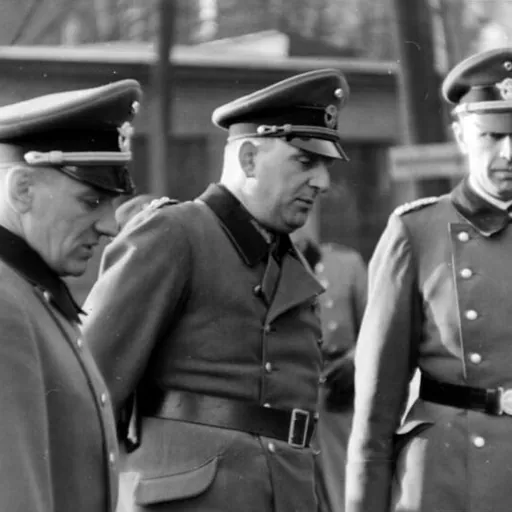
About Wilhelm Fuchs
Lived 1898 – 1947 (aged 48). Wilhelm Fuchs was a German agronomist and military officer.
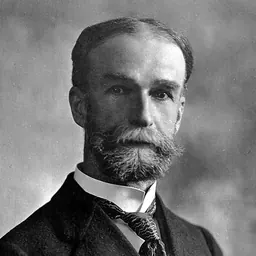
Wilhelm Fuchs (1 September 1898 – 24 January 1947) was a German SS-Oberführer and Oberst of police in Nazi Germany. During the Second World War, he led the Einsatzgruppe Serbia and was the commander of the Sicherheitspolizei (Security Police) and the SD (BdS) in occupied Serbia. He was also the commander of Einsatzkommando 3 and Einsatzgruppe A, as well as the BdS of the Reichskommissariat Ostland in the occupied Soviet Union. After the end of the war, he was implicated in the deaths of tens of thousands, and he was tried, convicted of war crimes and hanged in Yugoslavia.
Early life and peacetime SS career Fuchs was born in Mannheim and, after earning his Abitur, he entered the Imperial German Army and fought in the First World War, earning the Iron Cross, 2nd class. He then studied agricultural science at the University of Leipzig and received a doctorate in 1929.
On 1 April 1932, Fuchs joined the Nazi Party (membership number 1,038,061) and, on 1 December 1932, the Schutzstaffel (SS) (membership number 62,760). After the Nazi seizure of power, Fuchs became an adjutant to Reichsbauernführer (Reich Farmers Leader) Walther Darré from April 1933 and was commissioned an SS-Untersturmführer on 11 July 1933. He was assigned to the SS Race and Settlement Main Office, then headed by Darré. He was rapidly promoted, rising three ranks to SS-Sturmbannführer by May 1934. In 1936, he transferred to the SD Main Office, under Reinhard Heydrich. From October 1937, he was assigned to the SS-Oberabschnitt (main section) in Dresden. His next assignment was as the Inspekteur der Sicherheitspolizei und des SD (IdS) in Braunschweig, and he was promoted to SS-Standartenführer on 20 April 1938.
Second World War From 1940 onward, Fuchs was assigned as an SD officer to the Commander of the Security Police and SD (Befehlshaber der Sicherheitspolizei und des SD, BdS) in the General Government, Bruno Streckenbach. Following the German attack on the Kingdom of Yugoslavia on 6 April 1941, Fuchs was named BdS for Serbia and was assigned the leadership of the Einsatzgruppe Serbia. One of his first acts was to order the registration of all Jews in Belgrade. His proclamation stated that anyone not registering would be shot. Yugoslav partisans in July began a rebellion against the German occupiers by acts of sabotage, destroying railway lines, telephone lines and other infrastructure as well as ambushing German troops. During Fuchs tenure in Serbia, the Wehrmacht High Command issued the so-called "Keitel order" of 16 September 1941, which mandated executing 50 to 100 civilian hostages in reprisal for each German killed. When discussing the implementation of the reprisal policy, Fuchs successfully advocated for including already incarcerated male Serbian Jews as victims. By the end of the year, due to reprisals then more brutal than anywhere else in occupied Europe, the rebellion in Serbia largely had been quelled. Fuchs was replaced as BdS in January 1942 by SS-Standartenführer Emanuel Schäfer.
Fuchs was promoted to SS-Oberführer in 1942. Sent to Riga in the Reichskommissariat Ostland, he served as the acting SS and Police Leader in the Generalbezirk Lettland in June 1942, in place of SS-Brigadeführer Walther Schröder. Returning to his post in Braunschweig, he was appointed the acting Higher SS and Police Leader "Mitte" in place of SS-Obergruppenführer Günther Pancke from 8 July to 14 September 1943. On 15 September 1943, Fuchs returned to the east as Führer of Einsatzkommando 3, which he commanded until 6 May 1944. He then advanced to the leadership of Einsatzgruppe A and BdS in Ostland until 17 October 1944. His next assignment was as the last commander of Einsatzgruppe E in Croatia between October and November 1944. In this role he was co-responsible for the murder of tens of thousands of people. Together with SS-Gruppenführer August Meyszner, the former Higher SS and Police Leader in Serbia, Fuchs was executed by hanging on 24 January 1947.
SS and police ranks SS and police ranks Date Rank 11 July 1933 SS-Untersturmführer 1 January 1934 SS-Obersturmführer 23 March 1934 SS-Hauptsturmführer 25 May 1934 SS-Sturmbannführer 20 April 1938 SS-Standartenführer und Oberst der Polizei 20 April 1942 SS-Oberführer und Oberst der Polizei
Don’t just read it —
keep it.
Full-length biographies made to live with: read them, listen on the way to work, watch them tonight.
- E-book
- Audio
- Video
Instant download · yours to keep · every purchase keeps this site free
Important facts
People in Wilhelm Fuchs's life
Named in this biography and alive at the same time
Related people
Same field, nearest in time






Contemporaries
People whose lives overlapped Wilhelm Fuchs's




Frequently asked questions
Who was Wilhelm Fuchs?
SS officer (1898-1947)
When was Wilhelm Fuchs born?
Wilhelm Fuchs was born on 1 September 1898 in Mannheim.
When did Wilhelm Fuchs die?
Wilhelm Fuchs died on 24 January 1947 in Belgrade.
What was Wilhelm Fuchs's occupation?
Wilhelm Fuchs was an agronomist and military officer.
What nationality was Wilhelm Fuchs?
Wilhelm Fuchs was German.
Sources & further reading
Cite this page
APA: Biography.guide. (2026). Wilhelm Fuchs. https://biography.guide/wilhelm-fuchs/
MLA: "Wilhelm Fuchs." Biography.guide, https://biography.guide/wilhelm-fuchs/.
Chicago: "Wilhelm Fuchs." Biography.guide. https://biography.guide/wilhelm-fuchs/.
Data last updated: 2026-09-22 · Spot an error? Report a correction.
Portrait: Wikimedia Commons · author & licence
Page generated 2026-09-27 05:03 UTC