
Bruno Lavagnini
Italian classical philologist
About Bruno Lavagnini
Lived 1898 – 1992 (aged 93). Bruno Lavagnini was an Italian classical philologist, neohellenist, university teacher and translator.
Bruno Lavagnini (3 October 1898–20 March 1992) was an Italian scholar of Greek literature and Emeritus at the University of Palermo.
Biography Bruno Lavagnini was born in a working class family in Siena, the second of the five children of Lorenzo and Assunta (née Vinci). His father was a telegraph clerk and his mother a retired schoolteacher.
After attending elementary and middle school in Viareggio, he entered the liceo classico in Lucca (1911–1916), where his teachers encouraged his interests and talent for classical antiquity.
In 1916 he was accepted at the Scuola Normale Superiore in Pisa where, despite the crisis caused by World War I (1915–1918) and some familiar shortcomings, he could study "peacefully, fruitfully and intensely for four years in then-quiet Tuscany".
Lavagnini graduated in 1920, tutored by Francesco Zambaldi (1837–1928), defending a dissertation on Le origini del romanzo greco ['The origins of Greek novel'], published the next year.
At Pisa, he attended classes by Giovanni Gentile on philosophers of the Italian Renaissance, and was advised by his professors to write and publish his first essays in Latin literature, archaeology, epigraphy, linguistics.
In 1921, Lavagnini won a scholarship at the Italian School of Archaeology at Athens, which he would consider instrumental in his academic formation.
Upon his return in Italy, he won a scholarship at the Istituto di Studi Superiori at Florence and was accepted for a "perfezionamento" at the Scuola Normale.
He obtained both degrees in the summer of 1922, defending a dissertation on Le origini del romanzo di Apuleio ['The origins of Apuleius' novel'] in Pisa, and an "improvvisato lavoro di archeologia" in Florence, since Giorgio Pasquali did not approve of his Teubner edition of the papyrus fragments of ancient Greek novels.
The death of his father Lorenzo and the lack of assistant positions in Universities forced Bruno to accept some jobs as high school teacher and to apply for habilitation in 1923.
Whilst he had the credentials to apply for a position as assistant professor in Greek and Latin at the Scuola Normale, he lost it to "a pupil of his who would become Professor in Naples ... an alumnus of the University of Padua". In 1924, he was habilitated to university teaching in Greek literature and taught Ancient Greek literature in Padua (1924/1925), Pisa (from 1925 to 1927) and Catania (1927/1928).
In 1928, Lavagnini won a tenured position at the University of Palermo where, after teaching for two years (1928–1930) in Catania, he became Professor in Greek literature.
He held the chair of Ancient Greek literature and introduced classes in Modern Greek literature, which he taught from 1930/1931 to 1966/1967, as one of the only two Italian universities with the Sapienza University to teach the subject.
Lavagnini spent research periods in Athens (1936) and Crete (1939) and, unlike many colleagues, supported Greece in the Italian invasion of 1940. He remained connected to Greece despite the (failed) campaign, and from 1952 to 1959 he chaired the Istituto Italiano di Cultura in Athens, contributing to re-establish the diplomatic relationships between the two nations.
In 1964 he was elected Fellow of the Academy of Sciences at Athens and nominated Honorary Consul of Greece but would resign from the former position after the coup d'état of 1967.
After World War II, Lavagnini also intensified his interest for Byzantine literature as "the natural antecedent of modern Greek culture": he chaired the eighth International Congress of Byzantine Studies (Palermo, 3–10 April 1951) and founded the Istituto Siciliano di Studi Bizantini e Neoellenici [ISSN] (in 1952). In 1963 he was elected President of the Associazione Italiana di Studi Bizantini [AISB] and made correspondent of the Accademia dei Lincei (elevated to Fellow in 1972).
In Palermo, he served as director of the Faculty library (1933–1948) and Dean of the Faculty of Humanities (1965–1973), where he created the Institute of Greek philology.
Lavagnini retired from teaching in 1968 and from all academic positions in 1975, and was nominated Emeritus Professor at the University of Palermo. He remained scholarly productive since his very last days and died in Palermo in 1992. He had married a pupil of his, Orsola Autore, on 2 September 1939 and the couple had two daughters, Marina and Renata Lavagnini, the latter of whom also taught Modern Greek literature and Medieval Greek philology at the University of Palermo.
Research activity Lavagnini developed and published almost five hundred works over the course of nearly seventy years of scholarly activity. His main area of research was Greek literature as a whole (classical, medieval and modern) with special interest for poetry and narrative prose, but he also wrote on archaeology, linguistics and toponymy.
At the beginning of his career, Lavagnini was chiefly a classical philologist, publishing his first scholarly works whilst still an undergraduate at Pisa. In 1922 he published both an extensive study of Greek novel, derived from his dissertation, and the Teubner edition of all extant fragments of Greek novels. Through the 1920s he would also publish works in Greek and Latin epigraphy and archaeology. In his first years of teaching in Palermo, Lavagnini published monographs based on the lecture notes of his classes, which show a predominant interest for Greek poetry of the archaic, classical, and Hellenistic ages.
Whilst predominantly a scholar of Greek literature, Lavagnini also gave scholarly contributions to Latin literature, both of the classical age and of the Renaissance. Most notable are his 1922 dissertation on the Metamorphoses by Apuleius; critical essays on various poets (Plautus, Ovid, Horace, Vergil, Lucretius, Juvenal, and others); and the critical edition of the satura sotadea attributed to Luisa Sigea de Velasco, but which Lavagnini attributed to Nicolas Chorier. He was interested in the history of classical philology and assigned dissertations on various philologists, including for instance his late tutor Zambaldi.
Several of his studies in Greek literature, from classical antiquity to Byzantium, were collected in a volume published in 1978, which included an "Autobiography".
Publications
Fellowships and honors
Academy of Sciences, Athens, Foreign Fellow (1964) Accademia Nazionale dei Lincei, Correspondent (29 August 1963); Fellow (26 September 1972) Accademia Nazionale di Scienze, Lettere e Arti, Palermo (1936) Associazione Italiana di Studi Bizantini (President 1963–1972) Austrian Academy of Sciences, Foreign Fellow (1974) Honorary Consul, Republic of Greece (1964–1967; voluntary resignation) Honorary Degree, Aristotle University of Thessaloniki Honorary Degree, University of Athens (1931) Istituto Italiano di Cultura at Athens, President (1952–1959)
Festschriften
Don’t just read it —
keep it.
Full-length biographies made to live with: read them, listen on the way to work, watch them tonight.
- E-book
- Audio
- Video
Instant download · yours to keep · every purchase keeps this site free
Important facts
People in Bruno Lavagnini's life
Named in this biography and alive at the same time


Related people
Same field, nearest in time
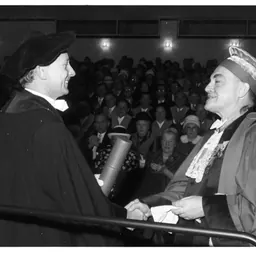
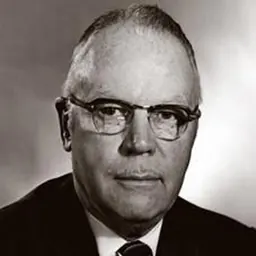



Contemporaries
People whose lives overlapped Bruno Lavagnini's

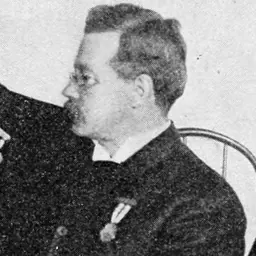

Frequently asked questions
Who was Bruno Lavagnini?
Italian classical philologist (1898-1992)
When was Bruno Lavagnini born?
Bruno Lavagnini was born on 3 October 1898 in Siena.
When did Bruno Lavagnini die?
Bruno Lavagnini died on 20 March 1992 in Palermo.
What was Bruno Lavagnini's occupation?
Bruno Lavagnini was a classical philologist, neohellenist, university teacher and translator.
What nationality was Bruno Lavagnini?
Bruno Lavagnini was Italian.
Sources & further reading
Cite this page
APA: Biography.guide. (2026). Bruno Lavagnini. https://biography.guide/bruno-lavagnini/
MLA: "Bruno Lavagnini." Biography.guide, https://biography.guide/bruno-lavagnini/.
Chicago: "Bruno Lavagnini." Biography.guide. https://biography.guide/bruno-lavagnini/.
Data last updated: 2026-09-20 · Spot an error? Report a correction.
Page generated 2026-09-27 05:23 UTC