
About Bruce Trigger
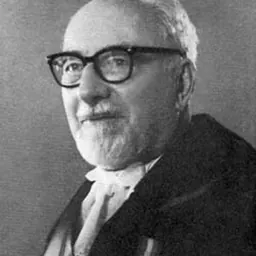
Lived 1937 – 2006 (aged 69). Bruce Trigger was a Canadian anthropologist, archaeologist, prehistorian, historian and university teacher.
Bruce Graham Trigger (June 18, 1937 – December 1, 2006) was a Canadian archaeologist, anthropologist, and ethnohistorian. He was appointed the James McGill Professor at McGill University in 2001.
Life Born in Preston, Ontario (now part of Cambridge), Trigger obtained his undergraduate education at the University of Toronto earning a B.A. in anthropology in 1959. He was co-supervised by William Kelly Simpson and Michael D. Coe. He became friends with K. C. Chang, a Chinese archaeologist, who joined the department during his final year of his PhD at Yale. His PhD thesis, entitled "History and Settlement of Lower Nubia," argued that four principle parameters determined the density of Nubia over 4,000 years: the height of floods, agricultural techniques, foreign trade and wars. He spent the following year teaching at Northwestern University a British geographer trained in Physical Geography, who, despite being less known than her husband, was considered an equally sophisticated thinker.
Pamela Jane Smith writes in her obituary of Bruce Trigger that "It is little known outside Canada that Bruce had a deep and profound influence on the development of archaeology in his homeland and is seen as one of the great Canadian intellectuals along with Harold Innis, Northrop Frye and Marshall McLuhan."
Contributions Bruce Trigger contributed to a wide range of fields and wrote on many aspects of archaeology. He published over 20 books including the book "A History of Archaeological Thought" which became required reading in the discipline. Leo Klejn (2008:4, (Lev Samuilovich Klejn, known as Leo Klejn, who was an internationally acclaimed Russian archaeologist) who corresponded with him for a considerable period of time wrote of him "Since then I always felt (and said) that if there were another archaeologist in the world whose positions were the most similar to mine, it would be Bruce Trigger." Klejn described (2008:4) Bruce and his contributions after his death as: "Today no other scholar is able to skillfully embrace the whole multifaceted range of activities of this modest and calm man. There must have been something unique about his spirit or personality that inspired and equipped him to deal creatively with American Indians, Ancient Egypt, world civilizations and the theory and history of archaeology, and it is interesting to try to understand some of the principles underlying his explorations of these very different themes."
Ethnohistory In Canada, he was arguably best known for The Children of Aataentsic, his two-volume study of the Huron peoples, a work which remains the definitive study on the history and ethnography of that people. The Children of Aataentsic earned Trigger numerous accolades, including adoption by the Huron-Wendat Nation as an honorary member. Trigger would later reiterate some of the key arguments of the book in Natives and Newcomers, a polemical work aimed at educating laypeople. In Natives and Newcomers Trigger, writing in the tradition of Franz Boas, argued that the colonial and Aboriginal societies of early Canada all possessed rich and complex social and cultural systems, and that there are no grounds to argue that any society of early Canada was superior to the others.
History of archaeology Trigger's book A History of Archaeological Thought investigates the history of the development of theory and archaeology as a discipline. The first version was published by Cambridge University Press in 1989. This book was described as "the first ever to examine the history of archaeological thought from medieval times to the present in world-wide perspective" A second and expanded edition of this book was published in 2006. In 1991, he was recipient of the Québec Government's Prix Léon-Gérin. The Québec Government in 2001 made him an Officer of the National Order of Quebec while five years later, in 2005, he was made an Officer of the Order of Canada.
His most cherished honour was his adoption in 1989 into the Great Turtle Clan of the Wendat (Huron) Confederacy, with the name Nyemea.
Trigger died of cancer on December 1, 2006. His archive is kept at the McGill University Archives.
Selected bibliography History and Settlement in Lower Nubia. New Haven: Yale University Publications in Anthropology, 1965. The Late Nubian Settlement at Arminna West. New Haven: Publications of the Pennsylvania-Yale Expedition to Egypt, 1965. Beyond History: The Methods of Prehistory. New York: Holt, Rinehart and Winston, 1968. The Huron: Farmers of the North. New York: Holt, Rinehart and Winston, 1969, revised edition, 1990. The Impact of Europeans on Huronia. Toronto: The Copp Clark Publishing Company, 1969. The Meroitic Funerary Inscriptions from Arminna West. New Haven: Publications of the Pennsylvania-Yale Expedition to Egypt, 1970. (with J.F. Pendergast) Cartier's Hochelaga and the Dawson Site. Montreal: McGill-Queen's University Press, 1972. The Children of Aataentsic: A History of the Huron People to 1660. Montreal: McGill-Queen's University Press, 1976. Nubia Under the Pharaohs. London: Thames and Hudson, 1976. Time and Traditions: Essays in Archaeological Interpretation. Edinburgh: Edinburgh University Press, 1978 (U.S. edition New York: Columbia University Press). Handbook of North American Indians, Vol. 15. Northeast, Washington: Smithsonian Institution, 1978. Time and Traditions: Essays in Archaeological Interpretation. Edinburgh: Edinburgh University Press, 1978. Gordon Childe: Revolutions in Archaeology. London: Thames and Hudson, 1980. (with B.J. Kemp, D. O'Connor, and A.B. Lloyd) Ancient Egypt: A Social History. Cambridge: Cambridge University Press, 1983. Natives and Newcomers: Canada's "Heroic Age" Revisited. Montreal: McGill-Queen's University Press, 1985. A History of Archaeological Thought. Cambridge: Cambridge University Press, 1989. Early Civilizations: Ancient Egypt in Context. New York: Columbia, 1993. The Cambridge History of the Native Peoples of the Americas [vol. I]. New York: Cambridge University Press, 1996. Sociocultural Evolution: Calculation and Contingency. Oxford: Blackwell, 1998. Artifacts and Ideas: Essays in Archaeology. New Brunswick, NJ: Transaction Publishers, 2003. Understanding Early Civilizations: A Comparative Study. New York: Cambridge University Press, 2003. A History of Archaeological Thought. 2nd ed. Cambridge: Cambridge University Press, 2006.
Don’t just read it —
keep it.
Full-length biographies made to live with: read them, listen on the way to work, watch them tonight.
- E-book
- Audio
- Video
Instant download · yours to keep · every purchase keeps this site free
Important facts
People in Bruce Trigger's life
Named in this biography and alive at the same time




Related people
Same field, nearest in time


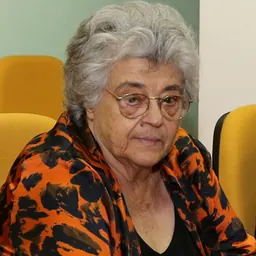
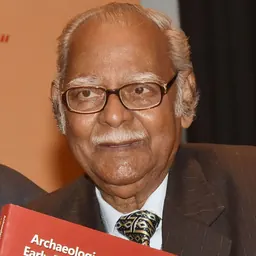

Contemporaries
People whose lives overlapped Bruce Trigger's
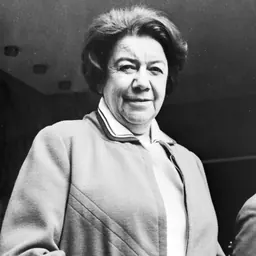
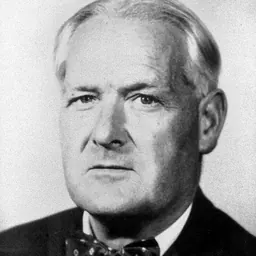


Frequently asked questions
Who was Bruce Trigger?
Canadian archaeologist (1937–2006)
When was Bruce Trigger born?
Bruce Trigger was born on 18 June 1937 in Preston.
When did Bruce Trigger die?
Bruce Trigger died on 1 December 2006 in Montreal.
What was Bruce Trigger's occupation?
Bruce Trigger was an anthropologist, archaeologist, prehistorian, historian and university teacher.
What nationality was Bruce Trigger?
Bruce Trigger was Canadian.
Sources & further reading
Cite this page
APA: Biography.guide. (2026). Bruce Trigger. https://biography.guide/bruce-trigger/
MLA: "Bruce Trigger." Biography.guide, https://biography.guide/bruce-trigger/.
Chicago: "Bruce Trigger." Biography.guide. https://biography.guide/bruce-trigger/.
Data last updated: 2026-09-20 · Spot an error? Report a correction.
Page generated 2026-09-27 05:06 UTC