
About Bruce Graham
Lived 1925 – 2010 (aged 84). Bruce Graham was an American and Colombian architect.
Bruce John Graham (December 1, 1925 – March 6, 2010) was a Colombian-born Peruvian-American architect. A longtime employee of the architecture firm Skidmore, Owings and Merrill, Graham designed buildings all over the world and was deeply involved with evolving the Burnham Plan of Chicago. Among his most notable buildings are the Inland Steel Building, the Willis Tower (formerly the Sears Tower), and the John Hancock Center. He was also responsible for planning the Broadgate and Canary Wharf developments in London.
Architectural historian Franz Schulze called him "the Burnham of his generation." and a Peruvian mother. His first language was Spanish.
Career During his 40-year tenure at SOM, Bruce Graham designed notable buildings all over the world from his home in Chicago, to Guatemala, Hong Kong, London, Cairo, and many other cities. He designed the Willis Tower, tallest building in the world for nearly 36 years, the 100 story tall John Hancock Center, One Shell Plaza etc.
He was extremely involved with the University of Pennsylvania, especially the School of Fine Arts. He believed that teachers of architecture should be currently involved in its practice. He was committed to the study of architectural theory and started the SOM Foundation. He also taught an architectural studio at Harvard. Graham was a great collector of art. He befriended Alexander Calder, Joan Miró, Chryssa and Chillida, among others. He invited these artists to create public works of art for the city of Chicago. He believed that to create great work an architect should be informed by philosophy, history, music and literature.
Design philosophy Graham had studied structural engineering at Case Western and brought that knowledge and respect of the structure of an edifice to all his buildings. The Hancock building in particular, uses structural design for esthetic expression. Graham later expressed this in Hotel Arts in Barcelona and many other buildings including his buildings in London at Broadgate. Bruce Graham firmly believed that architecture like dance and music were a combination of structure and beauty. He believed that these forms of art represented the highest achievements of culture. Like other forms of Art, Graham believed that architecture was a result and a reflection of the morals of the culture in which it was built.
England projects Graham left a major influence on London, where he was responsible for designing the master plans for the massive Broadgate and Canary Wharf developments.
Graham said, "We design our buildings for the inhabitants and for those who see them from the street. We try to design buildings that are a part of London, not in an imitation of period styles but an invention."
Major works 1958 - Inland Steel Building, Chicago, Illinois, USA 1970 - John Hancock Center, Chicago, Illinois, USA 1973 - Sears Tower (renamed Willis Tower), Wacker Drive, Chicago, USA 1973 - First Wisconsin Plaza, Milwaukee, Wisconsin, USA 1982 - Broadgate, London, England 1988 - Canary Wharf, London, England 1992 - Hotel Arts, Barcelona, Spain
Death
Graham died March 6, 2010, at the age of 84 in Hobe Sound, Florida. The cause was complications of Alzheimer’s disease, said his son, George. Graham was buried at Graceland Cemetery in Chicago, Illinois next to Fazlur Rahman Khan.
On October 14, 2010, Chicago Alderman Brendan Reilly, 42nd Ward, dedicated the streets to the south and east sides of the John Hancock Center – one of Graham’s most iconic achievements – as Honorary Bruce J. Graham Way. It runs along Chestnut Street between Mies van der Rohe Street and Michigan Avenue and along Mies van der Rohe Street – named after famed architect, Ludwig Mies van der Rohe - between Chestnut and Delaware Streets.
Don’t just read it —
keep it.
Full-length biographies made to live with: read them, listen on the way to work, watch them tonight.
- E-book
- Audio
- Video
Instant download · yours to keep · every purchase keeps this site free
Important facts
People in Bruce Graham's life
Named in this biography and alive at the same time


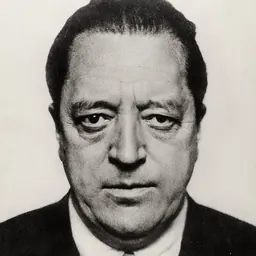

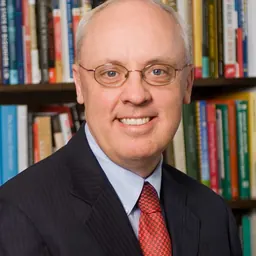
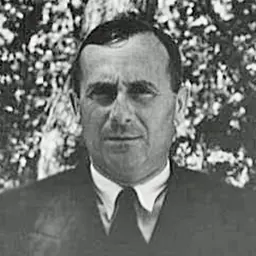
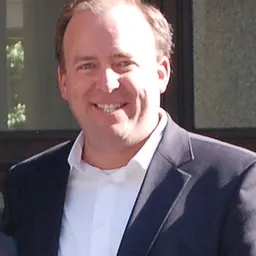

Related people
Same field, nearest in time


Contemporaries
People whose lives overlapped Bruce Graham's




Frequently asked questions
Who was Bruce Graham?
Peruvian-American architect (1925–2010)
When was Bruce Graham born?
Bruce Graham was born on 1 December 1925 in La Cumbre.
When did Bruce Graham die?
Bruce Graham died on 6 March 2010 in Hobe Sound.
What was Bruce Graham's occupation?
Bruce Graham was an architect.
What nationality was Bruce Graham?
Bruce Graham was American and Colombian.
Sources & further reading
Cite this page
APA: Biography.guide. (2026). Bruce Graham. https://biography.guide/bruce-graham/
MLA: "Bruce Graham." Biography.guide, https://biography.guide/bruce-graham/.
Chicago: "Bruce Graham." Biography.guide. https://biography.guide/bruce-graham/.
Data last updated: 2026-09-20 · Spot an error? Report a correction.
Page generated 2026-09-27 05:12 UTC