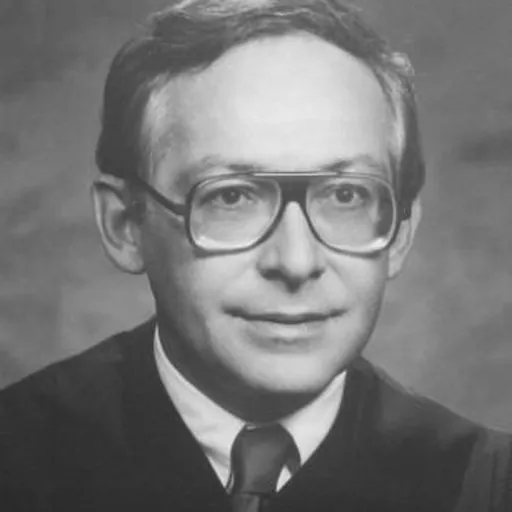
About Bruce M. Selya
Lived 1934 – 2025 (aged 90). Bruce M. Selya was an American lawyer and judge.
Bruce Marshall Selya (May 27, 1934 – February 22, 2025) was an American judge who was a United States circuit judge of the United States Court of Appeals for the First Circuit. Born in Rhode Island, he practiced law and participated in Republican politics before his appointment to the U.S. District Court for the District of Rhode Island in 1982. Elevated to the First Circuit four years later, he gained a reputation for his distinctive writing style, which often involved peppering opinions with figures of speech, puns, and extremely uncommon words.
Education and career Bruce Marshall Selya was born on May 27, 1934, in Providence, Rhode Island, to a Jewish family. He attended Nathan Bishop Middle School and Classical High School in Providence.
Selya was the Republican candidate for Rhode Island Attorney General in the 1964 election, losing to incumbent J. Joseph Nugent. He was an informal adviser to Governor John Chafee and chaired both his gubernatorial reelection campaign and his successful 1976 U.S. Senate bid. From 1969 to 1974, Selya was vice-chairman of Rhode Island's Republican State Central Committee.
Court of appeals Selya was nominated by President Reagan on September 26, 1986, to the United States Court of Appeals for the First Circuit, to a new seat created by 98 Stat. 333. He was confirmed by the Senate on October 8, 1986, and received his commission on October 14, 1986.
When the en banc First Circuit in 2005 upheld a voluntary desegregation plan in Lynn, Massachusetts, that considered race when evaluating student transfer decisions, Selya dissented, writing that the program "flies in the teeth of the Supreme Court's stalwart opposition to the use of inflexible, race-determinative methods". A 2008 decision by Selya in IMS Health Inc. v. Ayotte upheld a New Hampshire law that prohibited the sale of information about doctors' prescribing practices; the Supreme Court struck down a similar law in Sorrell v. IMS Health Inc. Selya wrote for a unanimous panel ruling in favor of Boston when it refused to fly a Christian flag on a city flagpole, arguing that the government was free to choose which messages it endorsed. The Supreme Court unanimously held in Shurtleff v. City of Boston (2022) that the city had violated the First Amendment.
In 1996, Selya hired future Supreme Court Justice Ketanji Brown Jackson as one of his law clerks for the year. and she described him as "a brilliant, meticulous, and scholarly practitioner of the law" in her memoir Lovely One.
In 2000, Chief Justice William Rehnquist appointed Selya to the Judicial Panel on Multidistrict Litigation, a position he held until 2004. In 2005, Chief Justice John Roberts appointed Selya to the Foreign Intelligence Surveillance Court of Review, and in 2008 he became its chief judge. He wrote a 2008 decision upholding the Protect America Act of 2007, which permitted warrantless wiretapping of the international communications of Americans suspected of espionage or terrorism.
Judge Selya assumed senior status at the end of 2006. President George W. Bush nominated District Judge William E. Smith to succeed him in 2007, but the nomination was not acted upon. On October 6, 2009, President Barack Obama formally nominated O. Rogeriee Thompson to Selya's seat on the First Circuit. She was confirmed by the Senate in a 98–0 vote on March 17, 2010.
Writing style Selya was known for the distinctive and playful quality of his prose. Selya said that because he had often found judicial decisions sleep-inducing as a lawyer, he had committed himself as a judge to demonstrating that "sound jurisprudence and interesting prose are not mutually exclusive". The most noteworthy feature of his opinions was their frequent use of very uncommon words, from "philotheoparoptesism" and "rodomontade" to "salmagundi" and "sockdolager". In a 2006 interview, he said: "There are no such things as obscure words; there are just words that are temporarily abandoned. It's part of my responsibility to resuscitate them." But he disclaimed "lexiphanicism for its own sake" and said that if a word "does not fit, I won't submit".
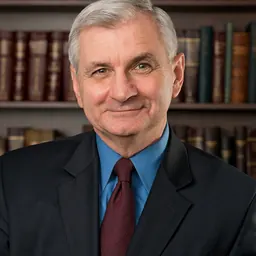
He deployed unusual figures of speech. One opinion included the line: "We find this to be a ketchup-bottle type of argument: it looks quite full, but it is remarkably difficult to get anything useful out of it." In another, he wrote that "the appellant’s asseverational array is all meringue and no pie." but his style sometimes came under criticism from scholars and jurists. Upon his death, US Senator Jack Reed described Selya as "a legal legend" and "a man of great wisdom, integrity, modesty, wit, and high ethical standards". Professor Michael J. Yelnosky, former dean of the Roger Williams University School of Law, described him as "the greatest jurist in Rhode Island history".
Don’t just read it —
keep it.
Full-length biographies made to live with: read them, listen on the way to work, watch them tonight.
- E-book
- Audio
- Video
Instant download · yours to keep · every purchase keeps this site free
Important facts
People in Bruce M. Selya's life
Named in this biography and alive at the same time

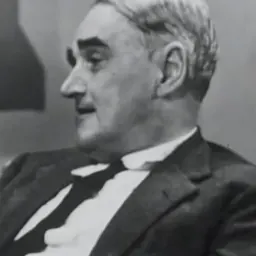
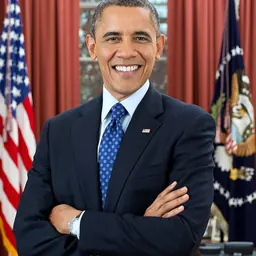
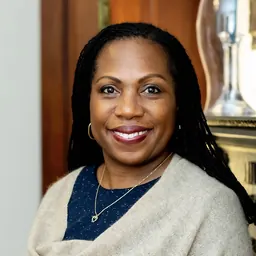

Related people
Same field, nearest in time



Contemporaries
People whose lives overlapped Bruce M. Selya's



Frequently asked questions
Who was Bruce M. Selya?
American judge
When was Bruce M. Selya born?
Bruce M. Selya was born on 27 May 1934 in Providence.
When did Bruce M. Selya die?
Bruce M. Selya died on 22 February 2025.
What was Bruce M. Selya's occupation?
Bruce M. Selya was a lawyer and judge.
What nationality was Bruce M. Selya?
Bruce M. Selya was American.
Sources & further reading
Cite this page
APA: Biography.guide. (2026). Bruce M. Selya. https://biography.guide/bruce-m-selya/
MLA: "Bruce M. Selya." Biography.guide, https://biography.guide/bruce-m-selya/.
Chicago: "Bruce M. Selya." Biography.guide. https://biography.guide/bruce-m-selya/.
Data last updated: 2026-09-21 · Spot an error? Report a correction.
Portrait: Wikimedia Commons · author & licence
Page generated 2026-09-27 05:00 UTC