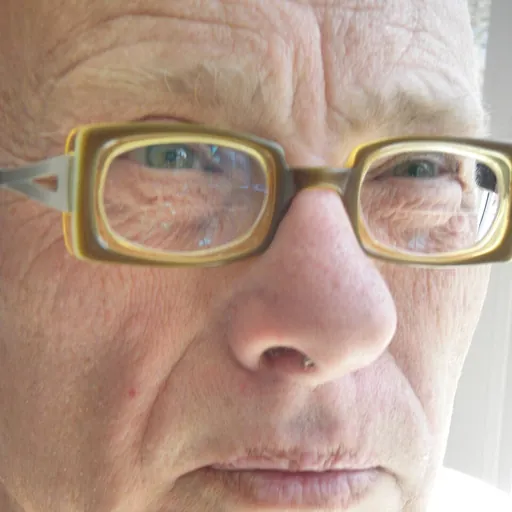
About Bruce Allan Clark
Born 1944. Bruce Allan Clark is a Canadian lawyer.
Bruce Allan Clark (born 22 June 1944) is a Canadian native rights lawyer, writer and activist. He rose to attention as part of the Gustafsen Lake Standoff and its aftermath.
Life and education Clark graduated LLB from the University of Western Ontario in 1969, being called to the bar in 1971. He returned to higher education with an MA in North American constitutional history also from the UWO in 1987, followed in 1990 by a PhD in comparative law from the Department of Jurisprudence in the Faculty of Law in the University of Aberdeen School of Law, Scotland.
Clark's theories of sovereignty and genocide
Clark's 1990 book Native Liberty, Crown Sovereignty published by McGill–Queen's University Press was described as "widely researched, up-to-date, and persuasively argued" by the Canadian Book Review Annual. Native Liberty described how "native liberty and crown sovereignty complement each other in Canada" where the imperial British North America claimed overall sovereignty and delegated powers to colonial governments who in turn would accommodate the liberty of the natives. "The jurisdiction of federal and provincial governments to govern ceded territory is constitutionally counter-balanced by the jurisdiction of the aboriginal peoples to govern themselves upon territory they have not voluntarily ceded. Hansen describes Clark as a "controversial writer, and activist." He further noted that, "espite his academic qualifications, Clark's behaviour in trials and hearings was characterized as 'unconventional' and 'unprofessional' resulting in numerous sanctions by the courts." In Native Liberty, Clark says that the "British Crown recognized the right to self-government for Indians on unceded lands" in the Royal Proclamation of 1763. This right has been "entrenched" in the Constitution Act, 1982 and therefore provides a "legal basis for native claims to self-government before the Supreme Court of Canada." According to Maclean's, on June 2, 2015, when Justice Murray Sinclair released the report of the Truth and Reconciliation Commission on the abuses of Aboriginal children in residential schools he used the phrase, "cultural genocide". He said, "Today, I stand before and acknowledge that what took place in residential schools amounts to nothing short of cultural genocide – a systematic and concerted attempt to extinguish the spirit of Aboriginal peoples." In 2018, Clark published Ongoing Genocide Caused by Judicial Suppression of the "Existing" Aboriginal Rights which includes essays that were published in Dissident Voice from the late 2000s onwards.
In a master's degree thesis, Paul Hanson compares Clark with scholars of "traditional Indigenous sovereignty" with "Taiaiake Alfred, Dale Turner, John Borrows, and Jean Cohen, each of whom offers unique, controversial, and sometimes disputed insights into sovereignty's meaning to Indigenous peoples." who is also more inclined to take direct action, whereas Dale Turner, who calls for the "resurgence of indigeneity and traditional governance regimes", "approaches the issue from an intellectual, persuasive perspective" and is "reflective and open to reasoned discussion and negotiation."
In his book, Justice in Paradise, Clark described how he and his wife liquidated his law practice in southern Ontario, sold his home and assets, and took up residence in the remote Bear Island community from 1978 through 1985 where they brought up their young children. Interfor was granted an injunction against the blockade on February 2. On February 9, the RCMP raided the blockade before dawn and arrested 62 people. Clark represented them before B.C. Supreme Court judge Wetmore.
In March 1997, Ben Mahony interviewed William Jones Ignace (known as Wolverine, his Shuswap name). Wolverine (1932-2016), who was in jail waiting for his trial where Clark was his defense lawyer, explained that he had first met Clark when he was working on the Lil'Wat case in 1990. Wolverine went to the Mount Currie area to help. He and Clark "went to different courts on the Lower Mainland here trying to get the jurisdiction issue addressed. We've been stonewalled by the judicial system. I think it came out in court that Bruce has tried to have the jurisdiction argument addressed 41 different times...Then Bruce took a case and finally it got to the Supreme Court of Canada." On May 17, 1993, Dann was sentenced to 9 months in prison, 2 years probation and a fine of $5,000.
In his career he litigated 40 cases in North America including in Alaska, Alberta, British Columbia, California, Maine, Nevada, New York, New Brunswick, Ontario, Quebec, Saskatchewan and Washington (DC).
Gustafsen Lake
According to a 2011 article in the International Indigenous Policy Journal, Gustafsen Lake or Ts'peten in Shuswap, which is south of Williams Lake, Working with his partner Mary Pena, they held their first Sun Dance at Gustafsen Lake in 1990 and it became an annual event. While researching land claims for the Shuswap Nation, Rosette found that the land they were using was owned by the Shuswap Nation, and he and John Stevens had contacting Clark to investigate the claim.
Over the next month with "400 RCMP officers and soldiers" against 18 protesters, the situation had escalated "into one of the costliest police operations in Canadian history". Using a radio-telephone at the camp, Rosette asked for Steven's guidance. Rosetta said that if "Stevens came to the camp and told the group to leave the camp, they would do so." The protesters who "believe in the hereditary and not the elected system of leadership", trusted Stephens. Thirteen men and five women were arrested. However, according to Windspeaker, the protesters did not trust either Chief Ovide Mercredi of the Assembly of First Nations (AFN) or the Shuswap council because they "represent an extension of European-style government" whereas they trusted Stevens. The protesters "believe in the hereditary and not the elected system of leadership."
Other observers place substantial blame with the RCMP, with RCMP Superintendent in Charge of the Gustafsen Lake standoff, Len Olfert, telling Sergeant Denis Ryan to "Kill this Clark and smear the prick and everyone with him."
By 2010, because of lessons learned at Gustafsen Lake, British Columbia had developed a "wide-ranging protocol on public safety co-operation" which was accepted nationally which included identifying "situations that could lead to crisis, provide for exchanging information on how to prevent it and facilitate debriefings during or after a conflict." In a 2010 interview with The Globe and Mail, Gary Bass, deputy commissioner for the RCMP, said that Gustafsen Lake was a "turning point" for him where he learned that "confrontations with First Nations could be avoided." He said that, the RCMP has worked on building "relationships and trust" so that the "chances of another Gustafsen happening are significantly lower." In "15 years, we have never had another major confrontation in this province."
Regina v. Mary Pena
Bruce Clark was originally the chosen lawyer for some of the defendants in Regina v. Mary Pena. The trial took place from July 8, 1996, through 20 May 20, 1997 in a courthouse in Surrey, British Columbia. The trial ended with 39 acquittals and 21 convictions. Suniva Bronson, and Robert Flemming was filed on May 16, 1997. In the case Regina v. Mary Pena, Bruce Clark testified that he had told Doc Hill and William "Wolverine" Jones Ignace that during the occupation of the land, there were numerous statements by members of the encampment, mostly by Doc Hill (also known as Dacajeweiah, "Splitting the Sky" and John Boncore Hill) and William "Wolverine" Jones Ignace that "no Court in this country (including the Supreme Court of Canada) had accepted his argument on the law because, in effect, the Judges of this country are blinded by self interest. His advice was that only a "third party tribunal, one such as the Privy Council of Great Britain, would be sufficiently free of self interest to accede to what he believes to be his compelling and irrefutable argument on the law. It was that demand which was at the heart of the stand-off at Gustafsen Lake." Hill and Ignace said that "Bruce Clark has challenged even the whole colony of B.C., and their presence in native lands...that "Native nations have the right to sovereignty, free of any colonial regimes and restrictions."; "All unceded territory shall be left unmolested and undisturbed."; "B.C. [doesn't] have the right to set up government here in the province."; "Domestic laws don't apply in this situation here...they cannot charge us in any way because we are a sovereign people."; and that "We are standing on sovereign territory of the Shuswap nation."
According to Sandra Lambertus, defendants' lawyers said that a fair trial was jeopardized because of a number of factors including biased pre-trial media coverage. Witnesses for the defence, RCMP media liaison supported this allegation, and one journalist was identified as having contributed to an organized police media strategy in which the standoff was "portrayed as a war."
One of the defendants in the case, James Allen Scott Pitawanakwat, was granted asylum in the United States in USA v. Pitawanakwat. In her ruling the Judge said that the Canadian government, in the Lake Gustafsen standoff—which she described as the biggest Canadian police or military land operation on land since the Korean War—had used a "disinformation campaign" to smear the defendants and had prevented the media from "learning and publicizing the true extent and political nature of the events."
At the end of the trial, defence lawyer Don Campbell, called for a public inquiry.
Law Society of Upper Canada According to Victoria Times Colonist, at 9:20 on Friday morning, September 15, Clark, entered the small 100 Mile House courthouse and demanded a hearing from Provincial Court Judge Nick Friesen. Judge Friesen denied his request saying that the Ottawa-based Clark "was not a member of the Law Society of B.C." Clark gave the judge a nine-page document and said he was acting on pro bono basis for his clients. Clark, who was the counsel of choice for the Gustafsen Lake Defenders, wanted to file his clients' legal arguments in an effort to prevent the RCMP/Canadian Forces from using force against the 18 Gustafsen Lake protesters. The "courtroom had been locked and only the media, police, court staff and a few natives were present." Clark told the judge that the police had "denied him access to his clients and he has not been able to obtain "fresh instructions" from them." He learned that the Tribal Council had hired lawyers for his clients and that they would be representing them, not him. Police officers handcuffed Clark from behind. Seven Mounties and four sheriffs removed him from the courthouse. He was later charged with assaulting an officer. According to the article, in the struggle he called them, "Filthy god damn fascist goons. Just following orders is not an excuse for genocide since 1948... He accused the court of "being guilty of treason, fraud and complicity in genocide" He said, "This kangaroo court will not succeed. Judge Friesen cited Clark for contempt and told him he would see him in Williams Lake on Monday." Clark remained in a "holding cell for the weekend." On September 18, Clark was brought to court in manacles and leg shackles in front of the national media. Judge Friesen had Clark committed to the Riverview Forensic Institute, a hospital for the criminally insane, saying he was a "delusional paranoid". Clark skipped his October 18, 1995 court appearance before Judge Friesen in Williams Lake. Clark, his wife, their three children along with Harold (Tsenhu'qw) and Loretta (Lahalus) Pascal, Lil'Wat natives, flew to the Netherlands, to "explore international legal remedies". In 1996 Clark attempted to make a citizen's arrest of the four British Columbia Court of Appeal (BCCA) judges who he had accused of treason and complicity to genocide.
According to an article in The Globe and Mail based on a June 19 Law Society of Upper Canada report the Globe had obtained on June 28, 1996, by Clayton Ruby and Gavin MacKenzie, although at first the Law Society of Upper Canada discipline panel report had considered 22 charges of alleged professional misconduct, including assault and illegal citizen's arrests, on June 19, 1996, the Law Society of Upper Canada acquitted Clark of 19 of the charges. The Society decided to not revoke Clark's right to practice. He was found guilty of "three counts of professional misconduct" and called to appear before the court to be reprimanded the attempted citizen's arrest of four British Columbia Court of Appeal Judges in January 1997. The convicting judge and disbarring panel of the Law Society apparently felt the Law Society as of June 19, 1996, misunderstood the facts, although for all that appears no fresh evidence was adduced or referenced. According to The Globe and Mail article which quoted Supreme Court Justice Antonio Lamer, who had called Clark " "a disgrace to the bar", Clark's case presented a "unique test" to the law profession where muting Clark's voice might result in lending "credence to his accusations against the legal establishment."
Supreme Court of Canada On September 12, 1995, Clark appeared before the Supreme Court of Canada as council on Delgamuukw v British Columbia in which Supreme Court Chief Justice Antonio Lamer declined to address constitutional challenges set forth by Clark. In response to Clark's statement that "the judiciary has engaged in fraud and genocide, by ignoring native sovereignty over vast tracts of land, including the disputed ranchland at Gustafsen Lake", Lamer responded that Clark was a "disgrace to the bar"
Don’t just read it —
keep it.
Full-length biographies made to live with: read them, listen on the way to work, watch them tonight.
- E-book
- Audio
- Video
Instant download · yours to keep · every purchase keeps this site free
Important facts
People in Bruce Allan Clark's life
Named in this biography and alive at the same time





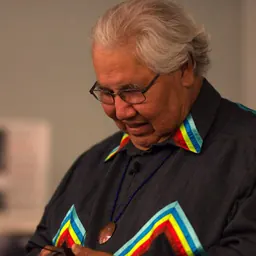
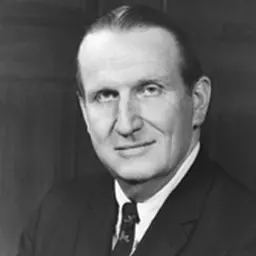
Related people
Same field, nearest in time
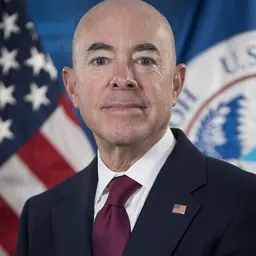

Contemporaries
People whose lives overlapped Bruce Allan Clark's


Frequently asked questions
Who is Bruce Allan Clark?
First Nations activist
When was Bruce Allan Clark born?
Bruce Allan Clark was born on 22 June 1944.
What is Bruce Allan Clark's occupation?
Bruce Allan Clark is a lawyer.
What nationality is Bruce Allan Clark?
Bruce Allan Clark is Canadian.
Sources & further reading
· Wikipedia: Bruce Allan Clark
Cite this page
APA: Biography.guide. (2026). Bruce Allan Clark. https://biography.guide/bruce-allan-clark/
MLA: "Bruce Allan Clark." Biography.guide, https://biography.guide/bruce-allan-clark/.
Chicago: "Bruce Allan Clark." Biography.guide. https://biography.guide/bruce-allan-clark/.
Data last updated: 2026-09-22 · Spot an error? Report a correction.
Portrait: Wikimedia Commons · author & licence
Page generated 2026-09-27 05:03 UTC