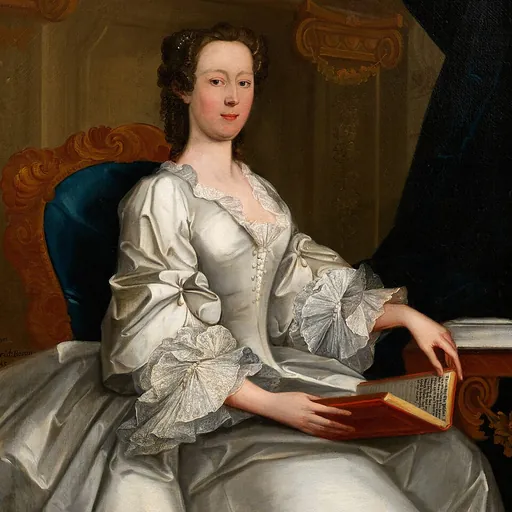
About Bridget Bevan
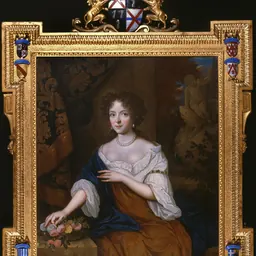
Lived 1698 – 1779 (aged 81). Bridget Bevan was a Welsh philanthropist and pedagogue.
Bridget Bevan (née Vaughan; baptised 30 October 1698 – 11 December 1779), also known as Madam Bevan, was a Welsh educationalist and public benefactor. She was the chief supporter of Griffith Jones and his system of circulating schools.
Life Bridget Bevan was born at Derllys Court, Llannewydd, in Carmarthenshire, Wales, in 1698. She was the youngest daughter of the philanthropist John Vaughan (1663–1722), a patron of the Society for the Promotion of Christian Knowledge (SPCK) schools in the county, and his wife, Elizabeth Thomas (died 1721). On 30 December 1721 at Merthyr church, she married a local lawyer and Member of Parliament for Carmarthen, Arthur Bevan (1689–1743). She was the heiress of her uncle, John Vaughan of Derllys.
She followed her father's interest in philanthropy. In 1731, she financially supported the rector at Llanddowror, Carmarthenshire, Griffith Jones, to establish an experimental school. This developed into the Circulating Welsh Charity School system, which moved from village to village and fostered education for children and adults throughout Wales. The education was given in the Welsh language. Much of Madam Bevan's considerable wealth poured into these free schools. After Jones' wife died in 1755, he moved in with Bevan; after his death in 1761, she assumed management of the project. During the following eighteen years she displayed considerable business acumen and organizational skills. Between 1736 and 1776, 6,321 schools were founded and 304,475 scholars, both adults and children, taught. It is estimated that at this time half the population of Wales had attended a circulating school, and the nation achieved one of the highest literacy rates in Europe. By 1764 news of the success of this educational initiative had reached the ears of Catherine the Great of Russia, who ordered her ministers to make enquiries about the scheme.
She died at Laugharne, Carmarthenshire in 1779, and left £10,000 of her wealth to the schools. Admiral William Lloyd, however, disputed her will and the case went into Chancery, where it remained for a period of thirty years, and grew to over £30,000. In 1804 the money was released and devoted to the educational purposes intended by Mrs. Bevan.
In 1854 the schools were absorbed into the system of the National Society, effectively ending the system of circulating schools that she had fostered.
Don’t just read it —
keep it.
Full-length biographies made to live with: read them, listen on the way to work, watch them tonight.
- E-book
- Audio
- Video
Instant download · yours to keep · every purchase keeps this site free
Important facts
Family & relationships
People in Bridget Bevan's life
Named in this biography and alive at the same time


Related people
Same field, nearest in time




Contemporaries
People whose lives overlapped Bridget Bevan's



Frequently asked questions
Who was Bridget Bevan?
Welsh philanthropist (1698-1779)
When was Bridget Bevan born?
Bridget Bevan was born on 30 October 1698 in Llannewydd.
When did Bridget Bevan die?
Bridget Bevan died on 11 December 1779 in Laugharne.
What was Bridget Bevan's occupation?
Bridget Bevan was a philanthropist and pedagogue.
What nationality was Bridget Bevan?
Bridget Bevan was Welsh.
Sources & further reading
Cite this page
APA: Biography.guide. (2026). Bridget Bevan. https://biography.guide/bridget-bevan/
MLA: "Bridget Bevan." Biography.guide, https://biography.guide/bridget-bevan/.
Chicago: "Bridget Bevan." Biography.guide. https://biography.guide/bridget-bevan/.
Data last updated: 2026-09-22 · Spot an error? Report a correction.
Portrait: Wikimedia Commons · author & licence
Page generated 2026-09-27 05:03 UTC