
About Brian Reynolds Myers
Born 1963. Brian Reynolds Myers is an American journalist, political scientist, columnist and koreanologist, known for A Reader's Manifesto and The Cleanest Race.
Brian Reynolds Myers (born 1963), usually cited as B. R. Myers, is an American professor of international studies at Dongseo University in Busan, South Korea, best known for his writings on North Korean propaganda. He is a contributing editor for The Atlantic and an opinion columnist for The New York Times and The Wall Street Journal. Myers is the author of Han Sŏrya and North Korean Literature (Cornell, 1994), A Reader's Manifesto (Melville House, 2002), The Cleanest Race (Melville House, 2010), and North Korea's Juche Myth (Sthele Press, 2015).
Early life and education Myers was born in New Jersey, near Fort Dix. and his father was a U.S. Army officer from Pennsylvania who served in South Korea as a military chaplain, often helping out local orphans. Myers is also a descendant of John F. Reynolds though his father.
Myers spent his childhood in Bermuda and his high school youth in apartheid-era South Africa, and received graduate education in West Berlin during the early 1980s, occasionally visiting East Germany. He earned an MA degree in Soviet studies at Ruhr University (1989) and a PhD degree in Korean studies with a focus on North Korean literature at the University of Tübingen (1992). Myers subsequently taught German in Japan
Career Before his appointment at Dongseo University, Myers lectured in North Korean literature and society at the Korea University's North Korean Studies Department. He also taught globalization and North Korean literature at the Inje University Korean Studies Department.
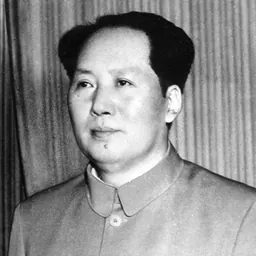
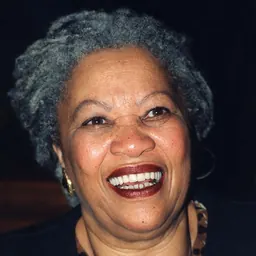
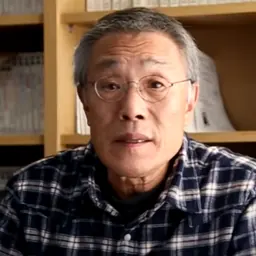
Journalism Opinion columns Myers's opinion columns for the Atlantic, The New York Times, and The Wall Street Journal generally focus on North Korea, which he says is not a Marxist-Leninist or a Stalinist state, but a "national-socialist country." He has also commented in The New York Times on the common view of the ROKS Cheonan sinking in South Korea with regard to its perception of North Korea. He stated that there was a lack of outrage over the incident among South Koreans due to the racialized nature of Korean nationalism; in other words, there was no major uproar over the incident in South Korea because of the concept of racial solidarity with the North Koreans that many South Koreans feel, which Myers said overruled patriotism towards South Korea in many cases. (who he says is an admirer of the North Korean regime), American author Toni Morrison, American author Denis Johnson, South Korean novelist Hwang Sok-yong, and American author Jonathan Franzen.
Books
Myers' Han Sŏrya and the North Korean literature: The Failure of Socialist Realism in the DPRK (1994) was adapted from his 1992 dissertation at the University of Tübingen and published as the sixty-ninth volume of the Cornell East Asia Series.
A Reader’s Manifesto: An Attack on the Growing Pretentiousness in American Literary Prose (2002) was developed from his critical review essay of the same name published in the Atlantic in 2001.
The Cleanest Race: How North Koreans See Themselves and Why It Matters (2010) is a discussion of North Korean propaganda, contending that North Korea under Kim Jong Il was guided by a "paranoid, race-based nationalism with roots in Japanese fascism." Myers asserts that the North Korean political system is not based on communism or Stalinism, and he contends that the official Juche idea is a sham ideology for foreign consumption and intended to establish Kim Il Sung's credentials as a thinker alongside Mao Zedong. Myers also claims that post-Cold War attempts to understand North Korea as a Confucian patriarchy, based on the filial piety of Kim Jong Il and the dynastic transfer of power from his father, are misguided and that the North Korean leadership is maternalist rather than paternalist.
Myers furthers his argument about the status of Juche as a non-ideology in his book North Korea's Juche Myth (2015). According to his own account, promoting him to write the book was the realization he was making "not the slightest bit of headway" with The Cleanest Race in challenging the conventional wisdom about Juche in the academia. North Korea's Juche Myth develops a three-pronged categorization of North Korean propaganda. Some works are in the "inner track", meant for North Korean eyes only. Others are in the "outer track", meant primarily for North Korean consumption but mindful of the fact that foreigners can access them too. "Export track" propaganda specifically targets foreigners.
Reception Myers's book The Cleanest Race has been challenged by several academic critics. Charles K. Armstrong, then of Columbia University, suggested that the book "gives an intellectual gloss to attitudes many in the West already have about the DPRK". Felix Abt, a Swiss business affairs specialist who lived in North Korea for seven years, describes Myers' claims in The Cleanest Race as "flawed" and "shaky". Abt wrote that it was "rather absurd" to describe Juche as "window-dressing" for foreigners.
South Korean literary critic Yearn Hong Choi also regards the thesis of Myers's Han Sŏrya and North Korean Literature as erroneous:
Tatiana Gabroussenko points out that Myers is the only Western academic who thinks that North Korean literature does not have the hallmarks of socialist realism.
Scholar Andrei Lankov favorably reviewed The Cleanest Race as taking a "fresh approach" on North Korea. Lankov also says Myers's work is "informative" but is not sure whether his thesis has any relation to reality.
Myers's North Korea's Juche Myth was favorably reviewed by Jan Blinka and Balazs Szalontai.
Scholar Pak Noja, also known as Vladimir Tikhonov, a Soviet-born Korean activist and historian, criticized Myers, commenting that had the academic rigor of overseas Koreanology had been a little bit higher, his work would have clearly been established as a non-academic, somewhat amateurish historical revisionist attempt like The Comfort Women of the Empire. He points out that the content of his book, regardless of Myers' inclinations, is so detached from a balanced account of historical facts that citing it can lead one into confusion.
Personal life and politics Myers is married to a South Korean woman, Myung-hee Myers. He lives and teaches in South Korea, where he moved to in September 2001. Politically, Myers is a supporter of the Green Party of the United States and animal rights. Myers can speak Korean, Mandarin, Japanese, and German. He is a vegan. In a December 2014 interview with conservative Munhwa Ilbo, Myers identified himself as a "conservative and staunch anti-North Korea". According to the Hankyoreh, a left-leaning media outlet in 2011, Myers was described as having a "typical view of American conservatism".
South Korean liberals and progressives support the view that the Republic of Korea (South Korea) was founded in 1919, when the Provisional Government was established, not 1948, the official establishment of the South Korea government. In contrast, South Korean conservatives recognize Aug. 15, 1948, as the 'founding day' of the Republic of Korea. Myers supported the position of South Korean conservatives by expressing the view that August 15, 1948, should be commemorated by enacting the founding anniversary. Also, he argues that honor of Syngman Rhee, the 'founding president' (건국 대통령) must be restored, rather than that of minjok independence activist Kim Gu; in South Korea, Rhee is known as a right-wing anti-communist "state nationalist" dictator, because Rhee prioritized state (국가) over minjok (민족).
Myers had an interview in 2024 with the ultraconservative Segye Ilbo, supported by the Unification Church; he opposed the Impeachment of Park Geun-hye and defended pro-Park conservatives. Myers defended Park Geun-hye, accusing the Impeachment of a "parliamentary coup". He also expressed negative views on both the Sunshine Policy and the abolition of the National Security Act.
Myers supported changing minjok to "Republic of Korea" in the text of the Pledge of Allegiance, but criticized Hankyoreh for calling for the abolition of the Allegiance on the grounds that it encourages state nationalism; Myers holds the view that state nationalism is necessary, including Allegiance, but Hankyoreh opposes state nationalism and supports minjok-based left-wing nationalism.
In January 2024, Myers compared the right-wing to far-right conservative People Power Party and Yoon Suk-yeol with Tony Blair’s Labour Party, and described the centre to centre-left liberal Democratic Party as a "nationalist, anti-immigration, pro-Chinese, Ukraine-indifferent, not-too-LGBT-friendly party". He did not support the New Right, but called it a "brave" matter that New Right activists discussed North Korea’s infiltration in certain parties, unions and church groups.
Don’t just read it —
keep it.
Full-length biographies made to live with: read them, listen on the way to work, watch them tonight.
- E-book
- Audio
- Video
Instant download · yours to keep · every purchase keeps this site free
Important facts
People in Brian Reynolds Myers's life
Named in this biography and alive at the same time




Related people
Same field, nearest in time



Contemporaries
People whose lives overlapped Brian Reynolds Myers's





Frequently asked questions
Who is Brian Reynolds Myers?
American political scientist
When was Brian Reynolds Myers born?
Brian Reynolds Myers was born in 1963 in New Jersey.
What is Brian Reynolds Myers's occupation?
Brian Reynolds Myers is a journalist, political scientist, columnist and koreanologist.
What is Brian Reynolds Myers known for?
Brian Reynolds Myers is known for A Reader's Manifesto and The Cleanest Race.
What nationality is Brian Reynolds Myers?
Brian Reynolds Myers is American.
Sources & further reading
· Wikipedia: Brian Reynolds Myers
· DBpedia: Brian Reynolds Myers
Cite this page
APA: Biography.guide. (2026). Brian Reynolds Myers. https://biography.guide/brian-reynolds-myers/
MLA: "Brian Reynolds Myers." Biography.guide, https://biography.guide/brian-reynolds-myers/.
Chicago: "Brian Reynolds Myers." Biography.guide. https://biography.guide/brian-reynolds-myers/.
Data last updated: 2026-09-22 · Spot an error? Report a correction.
Page generated 2026-09-27 05:19 UTC