
About Brian Boydell
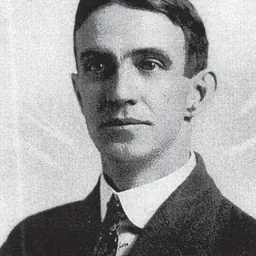
Lived 1917 – 2000 (aged 83). Brian Boydell was an Irish conductor, musicologist and composer.
Brian Patrick Boydell (17 March 1917 – 8 November 2000) was an Irish composer whose works include orchestral pieces, chamber music, and songs. He was Professor of Music at Trinity College Dublin for 20 years, founder of the Dowland Consort, conductor of the Dublin Orchestral Players, and a broadcaster and writer on musical matters. He was also a musicologist specialising in 18th-century Irish musical history.
Early life and education Boydell was born in Howth, County Dublin, into an Anglo-Irish family. His father James ran the family maltings business while his mother, Eileen Collins, was one of the first women graduates of Trinity College.
Following their son's birth, the Boydells moved from Howth and lived in a succession of rented houses before settling in Shankill, County Dublin. The young Boydell began his formal education at Monkstown Park in Dublin and was subsequently sent to the Dragon School at Oxford. From there he went to Rugby, where he came under the influence of Kenneth Stubbs, the music master. Although Boydell later spoke of his resentment at the anti-Irish attitude he experienced at Rugby, he said "the education there was very good, in science and music."
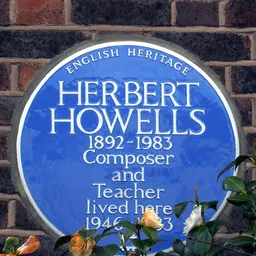
Following his graduation, he entered the Royal College of Music where he studied composition under Patrick Hadley, Herbert Howells, Boydell also became a oboe player during this time.
Career Boydell worked briefly as a research scientist, Boydell plunged himself into Dublin's classical musical scene. In 1942, he succeeded Havelock Nelson as conductor of the Dublin Orchestral Players,
Boydell had many interests beyond music. As a surrealist painter in the 1940s (he took lessons from Mainie Jellett), he was a member of The White Stag group.
Over the course of the next five decades, Boydell produced a great variety of music, ranging from orchestral works such as his Violin Concerto, Op. 36 and Masai Mara, Op. 87 to more intimate compositions for voice or solo instruments. An example of the latter is his piece for harp A Pack of Fancies for a Travelling Harper, Op. 66, premiered at the Dublin Festival of Twentieth Century Music in 1971.
His final work, a short composition for brass band entitled Viking Lip-Music, Op. 91, was given its premiere by the Royal Danish Brass Ensemble at the Drogheda Arts Centre in November 1996 with the composer in attendance.
In his later years, Boydell viewed his place in the greater world of late twentieth-century music with a certain wry detachment."I've now become something of an old fogey, but in the 1940s I was regarded as the naughty boy of frightfully modern music."
Selected works Orchestral Pregaria a la Verge del Remei, Op. 14 (1941; rev. 1945) for string orchestra The Strings are False, Op. 16 (1942) Laïsh, Op. 17 (1942) Symphony for Strings, Op. 26 (1945; rev. 1946) for string orchestra Magh Sleacht, Op. 29 (1947) In memoriam Mahatma Gandhi, Op. 30 (1948) Ballet Suite: The Buried Moon, Op. 32a (1949) Violin Concerto, Op. 36 (1953; rev. 1954) The Wooing of Etain, Op. 37a and Op. 37b (two suites, based on the incidental music to the play by Padraic Fallon, 1954) Megalithic Ritual Dances, Op. 39 (1956) Meditation & Fugue, Op. 40 (1956; rev. 1957) Elegy and Capriccio, Op. 42 (1956) for clarinet and string orchestra Ceol cas corach, Op. 46 (1958) Shielmartin Suite, Op. 47 (1959) Richard's Riot, Op. 51 (1961) for percussion and orchestra Symphonic Inscapes, Op. 64 (1968) Jubilee Music, Op. 73 (1976) Partita Concertante, Op. 75 (1978) A Wild Dance for Ceol Chumann na nÓg, Op. 78 (1982) Masai Mara, Op. 87 (1988)
Cantatas Hearing of Harvests, Op. 13 (W.H. Auden) (1940) for baritone, mixed chorus and orchestra Five Joyce Songs, Op. 28a (1946; rev. 1948) for baritone, mixed chorus and orchestra The Deer's Cry, Op. 43 (Thomas Kinsella) (1957) for baritone and orchestra Mors et vita, Op. 50 (William Dunbar and anonymous writers) (1961) for soprano, tenor, bass, mixed chorus and orchestra A Terrible Beauty is Born, Op. 59 (W.B. Yeats, Francis Ledwidge, Thomas MacDonagh, AE, George Sigerson, Tom Kettle) (1965) for narrator, soprano, alto, bass, mixed chorus and orchestra Four Yeats Poems, Op. 56 (1966) for soprano and orchestra The Carlow Cantata (or, The Female Friend), Op. 83 (various authors) (1984) for soprano, tenor, bass, mixed chorus and orchestra Under No Circumstances: An Historical Entertainment, Op. 85 (1987) for narrator, tenor, baritone, mixed chorus and orchestra
Chamber music Oboe Quintet, Op. 11 (1940) String Trio, Op. 21 (1944) Sonata for Cello & Piano, Op. 24 (1945) String Quartet No. 1, Op.31 (1949) Elegy, Op. 42a (1956) for 2 violins (or violin, clarinet) and piano String Quartet No. 2, Op. 44 (1957) Quintet for Flute, Harp and Strings, Op. 49 (1960; rev. 1966 & 1980) Four Sketches for Two Irish Harps, Op. 52 (1962) String Quartet No. 3, Op. 65 (1969) Five Mosaics, Op. 69 (1972) for violin and harp or piano Fred's Frolic, Op. 74a (1977) for piano 4-hands Confrontations in a Cathedral [no op. number] (1986) for organ, harp, percussion Adagio and Scherzo for String Quartet, Op. 89 (1991)
Piano music Nine Variations on 'The Snowy Breasted Pearl (1935) Berceuse for a Young Pianist, Op. 20 (1943) Suite: Naughty Children, Op. 27 (1945), incl. Sleeping Leprechaun, Op. 27a Dance for an Ancient Ritual, Op. 39a (1959) Capriccio, Op. 48, (1959) Sarabande, Op. 53 (1963) The Maiden and the Seven Devils, Op. 90 (1992)Other solo instrumentalA Pack of Fancies for a Travelling Harper, Op. 66 (1970) for harp Three Pieces for Guitar, Op. 70 (1973) An Album of Pieces for the Irish Harp, Op. 88 (1989)ChoralAn Easter Carol (anonymous), Op.12 (1940) for soprano, tenor, bass, mixed chorus Shatter Me Music, Op. 33 (Rainer Maria Rilke, trans. J.B. Leishman) (1952) for mixed voice choir The Owl and the Pussy Cat, Op. 34 (Edward Lear) (1952) for vocal quartet Noël, Op. 41 (1956), 2 descant rec, 2trvv, str orch, or org; Two Madrigals, Op. 54 (John Fletcher, George Wither) (1964) for mixed voice choir Three Madrigals, Op. 60 (Philip Sydney and anonymous writers) (1967) for mixed voice choir Mouth Music for Ten Voices, Op. 72 (1974) for mixed voice choir The Small Bell, Op. 76 (1980) for mixed voice choir, flute, harp, string quartet I Will Hear What God the Lord Will Speak, Op. 86 (Psalm 85) (1988) for mixed voice choir and organSongs''' (for voice and piano if not mentioned otherwise)Wild Geese, Op. 1 (P.H.B. Lyon) (1935)Rushlights, O. 3 (anonymous) (1935)Cathleen, the Daughter of Hoolihan, Op. 4 (W.B. Yeats) (1936)She Weeps over Rahoon, Op. 5 (James Joyce) (1936)Watching the Needleboats at San Sabba (James Joyce) (1936; rev. 1937)The Witch, Op. 6 (W.B. Yeats) (1938)Alone, Op. 15 (James Joyce) (1941)The Feather of Death, Op. 22 (Thurloe Connolly) (1943) for baritone, flute, violin, viola, celloSleep Now, Op. 23 (James Joyce) (1944) for soprano, oboe or violin, string orchestraFive Joyce Songs, Op. 28 (1946)Because Your Voice Was at My Side, Op. 25 (James Joyce) (1948) for voice and pf (or oboe d'amore, violin, viola, celloThree Yeats Songs, Op. 56a (1965) for soprano and Irish harpTwo Yeats Songs (1966)In memoriam Thomas McDonagh, Op. 59a (Francis Ledwidge) (1966)
Selected writings "Music in Ireland", in: The Bell 14.1 (1947), p. 16–20. "Culture and Chauvinism", in: Envoy 2 (May 1950), p. 75–9. "The Future of Music in Ireland", in: The Bell 16.4 (1951), p. 21–9. "The Dublin Musical Scene 1749–50 and Its Background", in: Proceedings of the Royal Musical Association 105 (1978–9), p. 77–89. (ed.): Four Centuries of Music in Ireland (London: BBC, 1979). "Half a Century of Music in Dublin", in: Dublin Historical Record 37.3 & 4 (1984), p. 117–21. "Georgian Lollipops, or The Lighter Side of Classical Music", in: Popular Music in Eighteenth-Century Dublin, ed. Shields (Dublin: Folk Music Society of Ireland, 1985), p. 5–11. "Music before 1700" and "Music 1700–1850", in: A New History of Ireland vol. 4, ed. Moody & Vaughan (Oxford, 1986), p. 542–67 and 568–628. A Dublin Musical Calendar, 1700–60 (Dublin: Irish Academic Press, 1988). Rotunda Music in Eighteenth-Century Dublin (Dublin: Irish Academic Press, 1992).
Recordings For a full discography see here.
Ceathrar: Contemporary Irish String Quartets, features String Quartet No. 2, Op. 44. Performed by Vanbrugh Quartet, on: Chandos CHAN 9295 (CD, 1994). Brian Boydell. Orchestral Music, features In memoriam Mahatma Gandhi, Op. 30; Violin Concerto, Op. 36; Megalithic Ritual Dances, Op. 39; Masai Mara, Op. 87. Performed by RTÉ National Symphony Orchestra of Ireland, Colman Pearce (cond.), on: Marco Polo 8.223887 (CD, 1997). British Brass Connection, features Viking Lip-Music, Op. 91. Performed by Royal Danish Brass, on: Rondo Grammofon 8358 (CD, 1997). E-motion, features Three Pieces for Guitar, Op. 70. Performed by John Feeley (guitar), on: Black Box Music 1002 (CD, 1998). In Blue Sea or Sky, features A Pack of Fancies for a Travelling Harper, Op. 66. Performed by Cliona Doris (harp) on: Riverrun RRCD59 (CD, 2003). John Finucane: Clarinet Variations, features Elegy and Capriccio, Op. 42. Performed by John Finucane (clarinet), RTÉ National Symphony Orchestra of Ireland, Robert Houlihan (cond.), on: RTÉ Lyric fm CD 124 (CD, 2009). Brian Boydell: The Complete String Quartets, features String Quartet No. 1, Op. 31; String Quartet No. 2, Op. 44; String Quartet No. 3, Op. 65; Adagio and Scherzo, Op. 89. Performed by Carducci Quartet, on: Carducci Classics CSQ 8841 (CD, 2010). Heavenly harps, heavenly cloths. Contemporary music for the Irish harp by Brian Boydell, features Four Sketches for Two Irish Harps, Op. 52; Three Yeats Songs, Op. 56a; An Album of Pieces for the Irish Harp, Op. 88. Performed by Mary Louise and Teresa O'Donnell, no label (CD 2020).
Don’t just read it —
keep it.
Full-length biographies made to live with: read them, listen on the way to work, watch them tonight.
- E-book
- Audio
- Video
Instant download · yours to keep · every purchase keeps this site free
Important facts
People in Brian Boydell's life
Named in this biography and alive at the same time

Related people
Same field, nearest in time



Contemporaries
People whose lives overlapped Brian Boydell's

Frequently asked questions
Who was Brian Boydell?
Irish composer (1917-2000)
When was Brian Boydell born?
Brian Boydell was born on 17 March 1917.
When did Brian Boydell die?
Brian Boydell died on 8 November 2000.
What was Brian Boydell's occupation?
Brian Boydell was a conductor, musicologist and composer.
What nationality was Brian Boydell?
Brian Boydell was Irish.
Sources & further reading
Cite this page
APA: Biography.guide. (2026). Brian Boydell. https://biography.guide/brian-boydell/
MLA: "Brian Boydell." Biography.guide, https://biography.guide/brian-boydell/.
Chicago: "Brian Boydell." Biography.guide. https://biography.guide/brian-boydell/.
Data last updated: 2026-09-20 · Spot an error? Report a correction.
Page generated 2026-09-27 05:25 UTC