
About Breyten Breytenbach
Lived 1939 – 2024 (aged 85). Breyten Breytenbach was a South African and French poet, writer, painter, essayist, lithographer and political activist.
Breyten Breytenbach (; 16 September 193924 November 2024) was a South African writer, poet, and painter. He became internationally well-known as a dissident poet and vocal critic of South Africa under apartheid, and as a political prisoner of the National Party–led South African Government. He was also known as a founding member of the Sestigers, a dissident literary movement, and was one of the most important poets in Afrikaans literature.
Early life and education Breyten Breytenbach was born on 16 September 1939 in Bonnievale, South Africa.
For secondary education, he attended Hoërskool Hugenote, in Wellington, Western Cape. He later attended the University of Cape Town, as well as philology.
Activism and imprisonment Breytenbach was a political dissenter against the ruling National Party and its white supremacist policy of apartheid in the early 1960s. He was a founding member of the Sestigers, a dissident literary movement of Afrikaner writers, He was not physically assaulted, but the prison officials abused him verbally, taunted him by pointing out the censorship of letters from his mother, and allowed him no privacy to mourn her death.
He served seven years as well as spending time in the United States and Europe.
He was a founding member and served as executive director of the Gorée Institute in Dakar, Senegal. This arose from an historic meeting in 1987 that became known as the Dakar Conference, between exiled leaders of the ANC and a group of liberal South Africans, mostly Afrikaners, from all walks of life. This gathering, held to define a strategy for effective struggle against the apartheid regime, was one of many that opened the way for a negotiated end to apartheid in South Africa. A good friend of Breytenbach, Frederik van Zyl Slabbert, also attended.
While in Paris, Breytenbach wrote several works about his experience as an immigrant. His work was at the time controversial in South Africa. His book Skryt. Om 'n sinkende skip blou te verf (Scrit. Painting Blue a Sinking Ship), published in the Netherlands in 1972, was dedicated "to the people of South Africa, denied citizenship in their own country". The book was banned from sale in South Africa.
In 1984, he published The True Confessions of an Albino Terrorist.
Art
Breytenbach was also known for his paintings, which have been exhibited internationally in Amsterdam,
Academia In January 2000, Breytenbach started a three-year stint as visiting professor in the departments of English and Drama in the Graduate School of Humanities at the University of Cape Town. He was Global Distinguished Professor at NYU for over ten years. He practised Zen Buddhism.
Breytenbach died after a fall in Paris, France, on 24 November 2024, at the age of 85. His wife Yolande was by his side.
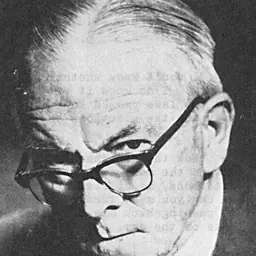
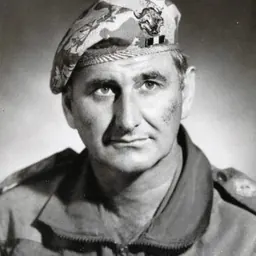
He was the younger brother of Jan Breytenbach (1932–2024), an SADF commander with political views strongly opposed to his, and Cloete Breytenbach (1933–2019), a widely published war correspondent. Cloete was notably one of the few people given permission by South African Prime Minister John Vorster to take photographs of Nelson Mandela at Robben Island following his imprisonment there in July 1964.
Breytenbach was informally considered by Afrikaans-speakers as their poet laureate and was one of the most important living poets in Afrikaans literature. Commandeur des Arts et Lettres (France's top cultural award) for Skryt 1986: Rapport Literature Prize, worth (a major prize) 1994: Alan Paton Award, for Return to Paradise 2007: W.A. Hofmeyr Prize, for "Die windvanger" 2010: , for Outre Voix/Voice Over
The Basque rock band Berri Txarrak dedicated the song "Breyten" to him on their 2005 album Jaio.Musika.Hil.
Works Breytenbach's work includes numerous volumes of novels, poetry and essays, many of which are in Afrikaans. Many have been translated from Afrikaans to English, and many were originally published in English. Exhibitions of his paintings and prints have been shown in cities around the world.
His works have been translated into many languages, including English, Dutch, German, French, Arabic, Polish, Danish, Basque, Swedish, Portuguese, Spanish, and Italian.
Poetry in Afrikaans
Die ysterkoei moet sweet (The Iron Cow Must Sweat), Johannesburg, 1964 Die huis van die dowe (The House of the Deaf), Cape Town, 1967 Kouevuur (Gangrene), Cape Town, 1969 Lotus, Cape Town, 1970 The Remains (Oorblyfsels), Cape Town, 1970 Skryt. Om 'n sinkende skip blou te verf (Scrit. Painting Blue a sinking Ship), Amsterdam, 1972 Met ander woorde (In Other Words), Cape Town, 1973 Voetskrif (Footnote), Johannesburg, 1976 Sinking Ship Blues, Oasis Editions, Toronto 1977 And Death White as Words. An Anthology, London, 1978 In Africa even the flies are happy, London, 1978 Flower Writing (Blomskryf), Emmarentia, 1979 (Selected poems) Eclipse (Eklips), Emmarentia, 1983 YK, Emmarentia, 1983 Buffalo Bill, Emmarentia, 1984 Living Death (Lewendood), Emmarentia, 1985 Judas Eye, London – New York, 1988 As Like (Soos die so), Emmarentia, 1990 Nine Landscapes of our Times Bequeathed to a Beloved (Nege landskappe van ons tye bemaak aan 'n beminde), Groenkloof, 1993 The Handful of Feathers (Die hand vol vere), Cape Town, 1995 (Selected poems) The Remains. An Elegy (Oorblyfsels. 'n Roudig), Cape Town, 1997 Paper Flower (Papierblom), Cape Town, 1998 Lady One, Cape Town, 2000 (Selected love poems) Iron Cow Blues (Ysterkoei-blues), Cape Town, 2001 (Collected poems 1964–1975) Lady One: Of Love and other Poems, New York, 2002 The undanced dance. Prison poetry 1975 – 1983 (Die ongedanste dans. Gevangenisgedigte 1975 – 1983), Cape Town, 2005 Die windvanger (The windcatcher), Cape Town, 2007 Voice Over: A Nomadic Conversation with Mahmoud Darwish, Archipelago Books, 2009 Catalects (Artefacts for the slow uses of dying) (Katalekte (artefakte vir die stadige gebruike van doodgaan)), Cape Town: Human & Rousseau, 2012
Prose in English Catastrophes (Katastrofes), Johannesburg, 1964 (stories) To Fly (Om te vlieg), Cape Town, 1971 (novel) The Tree Behind the Moon (De boom achter de maan), Amsterdam, 1974 (stories) The Anthill Bloats … (Die miernes swell op ...), Emmarentia, 1980 (stories) A Season in Paradise (Een seizoen in het paradijs), Amsterdam – New York – London, 1980 (novel, uncensored edition) Mouroir: Mirror Notes of a Novel, London – New York, 1983 Mirror Death (Spiegeldood), Amsterdam, 1984 (stories) End Papers, London, 1985 (essays) The True Confessions of an Albino Terrorist, London – New York, 1985 Memory of Snow and of Dust, London – New York, 1987 (novel) Book. Part One (Boek. Deel een), Emmarentia, 1987 (essays) All One Horse. Fiction and Images, London, 1989 Sweet Heart (Hart-Lam), Emmarentia, 1991 (essays) Return to Paradise. An African journal, London – New York, 1992 (which won the Alan Paton Award) The Memory of Birds in Times of Revolution, London – New York, 1996 (essays) Dog Heart. A travel memoir, Cape Town, 1998 Word Work (Woordwerk), Cape Town, 1999 A Veil of Footsteps, Cape Town, 2008 Intimate Stranger, Archipelago Books, 2009 Notes From The Middle World: Essays, Haymarket Books, 2009
CDs Mondmusiek (2001) Lady One (2002)
Articles
Don’t just read it —
keep it.
Full-length biographies made to live with: read them, listen on the way to work, watch them tonight.
- E-book
- Audio
- Video
Instant download · yours to keep · every purchase keeps this site free
Important facts
People in Breyten Breytenbach's life
Named in this biography and alive at the same time




Related people
Same field, nearest in time

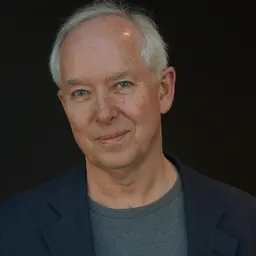
Contemporaries
People whose lives overlapped Breyten Breytenbach's

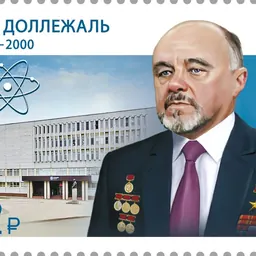
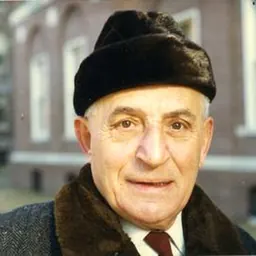


Frequently asked questions
Who was Breyten Breytenbach?
South African writer and painter (1939–2024)
When was Breyten Breytenbach born?
Breyten Breytenbach was born on 16 September 1939 in Robertson.
When did Breyten Breytenbach die?
Breyten Breytenbach died on 24 November 2024 in Paris, 14th arrondissement of Paris.
What was Breyten Breytenbach's occupation?
Breyten Breytenbach was a poet, writer, painter, essayist, lithographer and political activist.
What nationality was Breyten Breytenbach?
Breyten Breytenbach was South African and French.
Sources & further reading
· Wikipedia: Breyten Breytenbach
· DBpedia: Breyten Breytenbach
Cite this page
APA: Biography.guide. (2026). Breyten Breytenbach. https://biography.guide/breyten-breytenbach/
MLA: "Breyten Breytenbach." Biography.guide, https://biography.guide/breyten-breytenbach/.
Chicago: "Breyten Breytenbach." Biography.guide. https://biography.guide/breyten-breytenbach/.
Data last updated: 2026-09-20 · Spot an error? Report a correction.
Page generated 2026-09-27 05:30 UTC