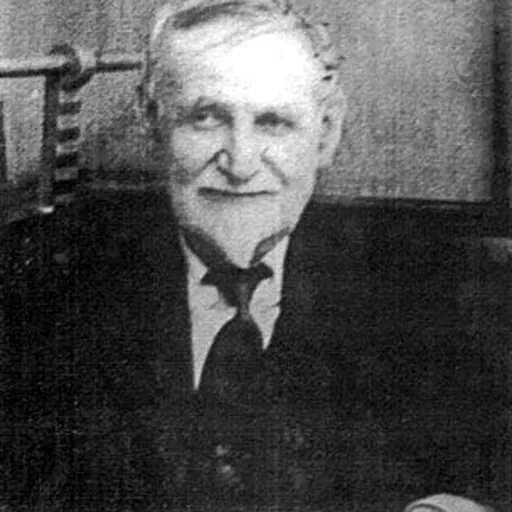
Branislav Petronijević
Serbian philosopher and paleontologist
About Branislav Petronijević
Lived 1875 – 1954 (aged 78). Branislav Petronijević was a Serbian philosopher and university teacher.
Branislav Petronijević (Serbian Cyrillic: Бранислав Петронијевић; also spelled Petronievics; 6 April 1875 – 4 March 1954) was a Serbian philosopher and paleontologist, and a professor at the University of Belgrade. He is regarded as one of the most prominent Serbian philosophers of the first half of the 20th century and played a central role in the institutionalization of academic philosophy in Serbia and Yugoslavia.
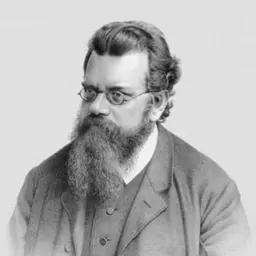
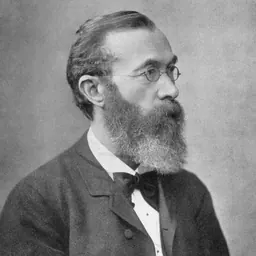
Trained in Vienna and Leipzig under figures such as Ludwig Boltzmann, Johannes Volkelt and Wilhelm Wundt, Petronijević developed an original metaphysical system that he called "monopluralism", a synthesis of Spinoza's substance monism and Leibniz's monadological pluralism shaped by the idealist tradition of Hermann Lotze and Eduard von Hartmann. In his self-described "empirio-rationalist" epistemology he held that immediate experience both presents reality as it is and yields the basic logical and metaphysical axioms, including the principle of sufficient reason, from which he sought to derive an "absolute metaphysics". His major systematic works, notably Prinzipien der Metaphysik (Principles of metaphysics, 1904–1911), develop a discrete, finitist conception of space built from simple qualitative points, a "hypermetaphysics" concerned with the most general oppositions of the One and the Many, and a broader program that also encompasses the foundations of mathematics, experimental psychology, aesthetics, and practical philosophy.
Alongside his metaphysical and epistemological writings, Petronijević made contributions to the philosophy of science and to natural history, publishing on universal evolution and proposing an interpretation of Dollo's law as well as what he called the Law of Non-correlative Evolution. In paleontology he was among the early specialists on Archaeopteryx, introducing the genus Archaeornis and several related names. However, later work has generally not adopted these taxonomic arrangements.
A participant in the Serbian army's Great Retreat in World War I, he served as a war correspondent, lectured in Paris and London, and wrote the biographical preface to the 1922 English edition of Roger Joseph Boscovich's A Theory of Natural Philosophy. He was a full member and later secretary of the Serbian Academy of Sciences and Arts, co-founded the Serbian Philosophical Society, mentored the philosopher Ksenija Atanasijević, and was nominated for the Nobel Prize in Literature in 1941 and 1947.
Biography Early life Branislav Petronijević was born in the small village of Sovljak, near Ub, Serbia, on 6 April (25 March, O.S.) 1875, the son of Marko Jeremić, a theologian. The last name Petronijević stems from Branislav's grandfather, Petronije Jeremić, a local priest. His father changed Branislav's last name to reduce pressure at school, as the Jeremić family were prominent supporters of the exiled Karađorđević dynasty.
He studied at the Valjevo Gymnasium and at the Velika škola in Belgrade. He taught the German language and philosophical propaedeutics at the Third Belgrade Gymnasium. Petronijević was promoted to the post of associate professor in 1899, and then full professor in 1903. Three years later when the school developed into the University of Belgrade, Petronijević was demoted back to associate professor. He was simultaneously elected correspondent member of the Serbian Royal Academy on 3 February 1906. Petronijević found this humiliating, and declined the post, his decision coming into effect in 1910. During this time, Petronijević also taught art theory at Rista and Beta Vukanović's Serbian Art School in Belgrade.
It was during this period that he thought out and developed what is distinctive in his philosophical doctrine. His two major works in metaphysics, Prinzipien der Metaphysik (Principles of metaphysics) and Die typischen Geometrien und das Unendliche (The typical geometries and the infinite), were published during this period.
World War I At the outbreak of World War I he turned to journalism, becoming a war correspondent for the Serbian War Office Press Bureau, induced by Dragutin Dimitrijević "Apis", his childhood friend. In 1915 he joined the Serbian army's retreat through Albania. After reaching Greece, he was sent first to Rome where he stayed for four months. After Rome, Petronijević spent several months in Paris, where he taught two courses at the Sorbonne, on universal evolution and on the value of life.
Finally, he spent the longest part of the war in London with the Serbian Legation, along with politician Nikola Pašić, geographer Jovan Cvijić, professors Bogdan Popović and his brother Pavle Popović. There, Petronijević worked on an English translation of (A Theory of Natural Philosophy) by Roger Joseph Boscovich, together with Čedomilj Mijatović and Nikolaj Velimirović. The 1763 Venetian edition of the book was translated by James Mark Child, and finally published in 1922 by the Open Court Publishing Company, funded in part by the newly created Kingdom of Serbs, Croats and Slovenes. Petronijević wrote the preface, titled Life of Roger Joseph Boscovich. Parts of it were severely criticized by Vladimir Varićak in 1925 for various factual errors, among other things for asserting Boscovich's exclusively Serbian ethnicity, and listing his birth date inaccurately.
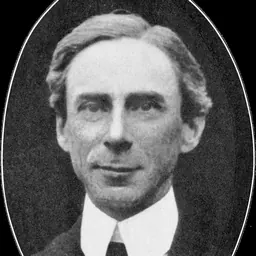
While in London, Petronijević met with Bertrand Russell, who wrote:
Later life After the war he left London and went back to his teaching post at the University of Belgrade, where he was again appointed full professor in 1919. On 16 February 1920, he was elected into the Serbian Royal Academy.
From 1918 to 1922, Petronijević notably mentored Ksenija Atanasijević, later a prominent Serbian female intellectual and early Serbian feminist writer.
During the Interbellum, Petronijević was an active participant in European philosophy, and considered himself a worthy philosopher who transcended his "parochial" limitations. He deemed himself one of the 15 "great philosophers" of history, along with Aristotle, Leibniz and Hegel. Beside "great philosophers", Petronijević mentions "significant philosophers" and "philosophic writers".
Petronijević retired from the university in 1927. He served as secretary of the Serbian Royal Academy from February 1932 to February 1933 and founded the Serbian Philosophical Society in 1938, together with Vladimir Dvorniković, Justin Popović and others. The third volume of his Principles of Metaphysics was destroyed in an air raid in April 1941. He held lectures at the German Scientific Institute during the occupation of Yugoslavia. After the war, he traveled to France several times and started writing poetry.
Petronijević died at the Hotel Balkan in Belgrade on 4 March 1954. He was 78. He never married.
Writings Philosophy Petronijević considered himself a "born metaphysician" and devoted his career to constructing a systematic metaphysical doctrine. At the level of method, Petronijević employs what has been described as a modified Hegelian dialectic.
In epistemology, Petronijević described his position as "empirio-rationalist". He distinguished between real "central points" and unreal "intermediate points" . The world as a manifold is possible, on this view, only because each pair of real points is separated by an unreal point, so that negation acquires a fundamental role in his ontology as a basic structuring principle of reality.
Petronijević's contributions to the philosophy of natural sciences are collected in his compilation (Universal evolution. Presentation of evidence and laws of global evolution and particular developments, 1921). Among them there are the explanation of Dollo's law of irreversibility, first described in (Law of irreversible evolution, 1920), and the introduction of his own Law of Non-correlative Evolution with which he describes the mosaic evolution in Archaeopteryx.
Among his most notable contributions to the logical foundations of mathematics are his work on typical geometries, on the problem of the infinitude of space, the three-body problem, on difference quotients, and on mathematical induction. In psychology, he developed theories about the observation of the transparent and on the depth and observation of compound colours.
Legacy
In 1957, the Department of Natural Science of the Serbian Academy of Sciences and Arts published a commemorative anthology of all Petronijević's publications. He was included in the 1993 book The 100 most prominent Serbs, published by the Serbian Academy of Sciences and Arts. A street in the Višnjička Banja neighborhood of Belgrade is named in his honor.
According to Miodrag Cekić, Petronijević's works in philosophy may have influenced Boltzmann's late system of philosophical classification. His theory of multi-dimensions as well as the theory of mathematical discontinuity also seems to have interested both Boltzmann and Mach.
Don’t just read it —
keep it.
Full-length biographies made to live with: read them, listen on the way to work, watch them tonight.
- E-book
- Audio
- Video
Instant download · yours to keep · every purchase keeps this site free
Important facts
People in Branislav Petronijević's life
Named in this biography and alive at the same time


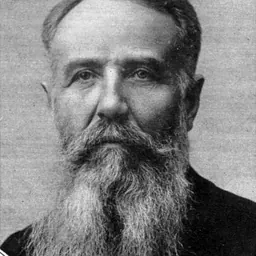

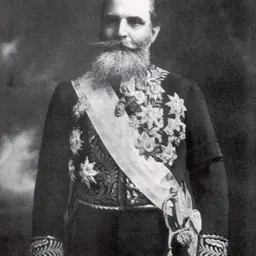
Related people
Same field, nearest in time

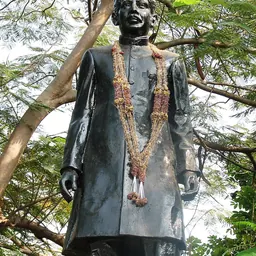
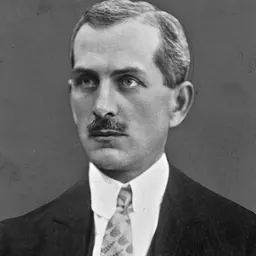


Contemporaries
People whose lives overlapped Branislav Petronijević's

Frequently asked questions
Who was Branislav Petronijević?
Serbian philosopher and paleontologist (1875-1954)
When was Branislav Petronijević born?
Branislav Petronijević was born on 25 March 1875 in Ub.
When did Branislav Petronijević die?
Branislav Petronijević died on 4 March 1954 in Belgrade, Socialist Federal Republic of Yugoslavia.
What was Branislav Petronijević's occupation?
Branislav Petronijević was a philosopher and university teacher.
What nationality was Branislav Petronijević?
Branislav Petronijević was Serbian.
Sources & further reading
· Wikipedia: Branislav Petronijević
· DBpedia: Branislav Petronijević
Cite this page
APA: Biography.guide. (2026). Branislav Petronijević. https://biography.guide/branislav-petronijevic/
MLA: "Branislav Petronijević." Biography.guide, https://biography.guide/branislav-petronijevic/.
Chicago: "Branislav Petronijević." Biography.guide. https://biography.guide/branislav-petronijevic/.
Data last updated: 2026-09-21 · Spot an error? Report a correction.
Portrait: Wikimedia Commons · author & licence
Page generated 2026-09-27 04:58 UTC