
About Bozhidar Dimitrov
Lived 1945 – 2018 (aged 72). Bozhidar Dimitrov was a Bulgarian historian and politician.
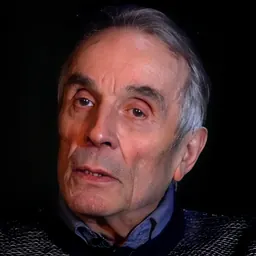
Bozhidar Dimitrov Stoyanov (, 3 December 1945 – 1 July 2018) was a Bulgarian nationalist historian and politician, in the sphere of Medieval Bulgarian history, the Ottoman rule of Bulgaria and the Macedonian Question. He was the director of the National Historical Museum. Formerly a Bulgarian Socialist Party (BSP) member, he later became affiliated with the Citizens for European Development of Bulgaria (GERB) political party.
Biography Bozhidar Dimitrov Stoyanov was born on 3 December 1945 in Sozopol into a Bulgarian refugee family from Eastern Thrace. He specialised in paleography in Paris, France. Dimitrov received a PhD in history from Sofia University, where he studied history and archaeology. As an agent of the State Security since the 1970s, he managed to secure materials about Bulgaria in the Vatican Secret Archives, such as Petar Bogdan's 1667 historical work about Bulgaria. Dimitrov was a Bulgarian historian in the fields of Medieval Bulgarian history, the Ottoman rule in Bulgaria, and the Macedonian Question. He also ended up switching from academic to popular history. According to Bulgarian historian Aleksandar Vezenkov, despite being regarded as a manipulator and a "Chalga historian" by his colleagues, his interpretations were taken seriously by many specialists. In June 2009, Dimitrov's service in the State Security was revealed in Bulgaria. Dimitrov had resigned from the position due to his service in the communist period as Borisov's government promised to dismiss all Bulgarian diplomats who worked for communist secret services. In August 2015, he was photographed splashing "holy water" from the well in Pliska's Basilica on Borisov, but the water was unsafe for human consumption. An online petition calling for his retirement as director of National Historical Museum was launched by cultural anthropologist Ivailo Dichev, who said that "Dimitrov offended the scientific community with his unproven assertions and fables, insulted national feelings with his mercenary attitude towards heritage", etc. In December 2015, the Bulgarian Ministry of Culture awarded him with the cultural award "Golden Age". An honorary diploma was also awarded to him for his contribution to Bulgarian culture. After retiring from the National Historical Museum in 2017, he caused a controversy by insulting Russian government spokesperson Maria Zakharova after she downplayed Bulgaria's role in saving Bulgarian Jews during World War II by claiming it was Russia that had saved them. In March 2018, he founded a national movement named "Khan Kubrat" in honour of the ruler of Old Great Bulgaria and suggested a presidential republic with a strong leader. The anti-corruption commission established that when he was the director of the National Historical Museum, Dimitrov was in conflicts of interest for having signed two contracts with his daughter and nephews in 2015. He died on 1 July 2018 at the age of 72 from pulmonary embolism. Dimitrov Cove in Antarctica is named after him.
Views and works Dimitrov was a prolific writer of popular historical works, as well as the host of popular historical television shows, such as Bulgarian Memory, which aired on Channel 1 from 2002 to 2012.
Dimitrov often emphasised Bulgarian contributions to Slavic civilisation. In his 1993 book Bulgarians: Civilizers of the Slavic World, Dimitrov asserted: "Few, however, know that the Bulgarians are the ones who created the foundation for European medieval Christian civilization (the base upon which contemporary Europe is built, too)." In his narrative, Slavs were not capable of establishing states and relied on the Bulgars. Dimitrov claimed that Serbia, Croatia, Romania, and Russia, have to thank the Bulgarians for their language and Christian culture. In his 2005 book 12 Myths in Bulgarian History, he promoted the thesis of Bulgarians' "genetic predisposition to state-building." English and French translations of the book were sponsored by the Bulgarian government. he claimed that the Thracians appeared in 5th century BCE in the modern Bulgarian lands and the ancestors of the Bulgarians were the first Europeans. Per Dimitrov, Bulgarians were also the first to develop and implement the concept of nation-state. According to Bulgarian academics Maya Kosseva, Antonina Zhelyazkova and Marko Hajdinjak, most of Dimitrov's claims selectively, manipulatively and inconsistently interpreted history and could be easily challenged.
In his book The Ten Lies of Macedonism, he claimed that the Macedonians are actually Bulgarians, the Macedonian nation does not exist and the Macedonian language is a dialect of the Bulgarian language. Per Bulgarian historian Chris Kostov, as a scholar of the old school, Dimitrov believed that the nation is an organic and static entity, unable to change and evolve. Dimitrov said that he would award a prize to a person who showed him a primary source confirming that Samuel of Bulgaria or Dimitar Miladinov and other historical figures declared themselves as Macedonians instead of Bulgarians, which was criticised by Kostov as an attempt to turn Balkan history into a reality show. After Russia annexed Crimea in 2014, in 2015 he stated: During the European migrant crisis, he suggested the conversion of migrants to Christianity and acceptance of women and children only.
Publications Bozhidar Dimitrov. The True History of Liberation 1860–1878. Sofia: Standart News Ltd., 2010. 183 pp. (First edition in 2006.) Bozhidar Dimitrov, co-author. Bulgarian Policies on the Republic of Macedonia: Recommendations on the development of good neighbourly relations following Bulgaria’s accession to the EU and in the context of NATO and EU enlargement in the Western Balkans. Sofia: Manfred Wörner Foundation, 2008. 80 pp. (Trilingual publication in Bulgarian, Macedonian and English) Bozhidar Dimitrov. The Ten Lies of Macedonism. Sofia: Kom Foundation, 2007. 107 pp. (First edition in 2000 in Bulgarian.) Bozhidar Dimitrov. Macedonia – Holy Bulgarian Land: Who Are the Successors of Alexander the Great and Roxana? Sofia: Kom Foundation, 2007. 80 pp. Bozhidar Dimitrov. Seven Ancient Civilizations in Bulgaria: With Maps & Color Illustrations. Sofia: Kom Foundation, 2006. 112 pp. Bozhidar Dimitrov. 12 Myths in Bulgarian History. Sofia, Kom Foundation, 2005. 148 pp. Bozhidar Dimitrov. Bulgarians: The First Europeans. Sofia: St. Kliment Ohridsky University Press, 2002. 108 pp. Bozhidar Dimitrov. Bulgaria and the Vatican. Sofia: Bulgarian Diplomatic Review, 2002. 56 pp. Bozhidar Dimitrov. The Bulgars and Alexander of Macedon. Sofia: Tangra Publishers, 2001. 138 pp. Bozhidar Dimitrov. Venetian Documents on Bulgarian History During the 16th and 17th Century. Sofia: Borina Ltd., 1994.
Don’t just read it —
keep it.
Full-length biographies made to live with: read them, listen on the way to work, watch them tonight.
- E-book
- Audio
- Video
Instant download · yours to keep · every purchase keeps this site free
Important facts
People in Bozhidar Dimitrov's life
Named in this biography and alive at the same time


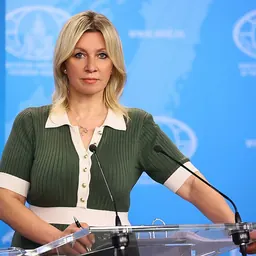

Related people
Same field, nearest in time
Contemporaries
People whose lives overlapped Bozhidar Dimitrov's




Frequently asked questions
Who was Bozhidar Dimitrov?
Bulgarian historian and politician (1945–2018)
When was Bozhidar Dimitrov born?
Bozhidar Dimitrov was born on 3 December 1945 in Sozopol.
When did Bozhidar Dimitrov die?
Bozhidar Dimitrov died on 1 July 2018 in Sofia.
What was Bozhidar Dimitrov's occupation?
Bozhidar Dimitrov was a historian and politician.
What nationality was Bozhidar Dimitrov?
Bozhidar Dimitrov was Bulgarian.
Sources & further reading
· Wikipedia: Bozhidar Dimitrov
Cite this page
APA: Biography.guide. (2026). Bozhidar Dimitrov. https://biography.guide/bozhidar-dimitrov/
MLA: "Bozhidar Dimitrov." Biography.guide, https://biography.guide/bozhidar-dimitrov/.
Chicago: "Bozhidar Dimitrov." Biography.guide. https://biography.guide/bozhidar-dimitrov/.
Data last updated: 2026-09-20 · Spot an error? Report a correction.
Page generated 2026-09-27 05:21 UTC