
About Boris Schnaiderman
Lived 1917 – 2016 (aged 99). Boris Schnaiderman was a Brazilian writer, translator, linguist and translation, known for Portuguese language.
Boris Solomonovitch Schnaiderman (Russian Борис Соломонович Шнайдерман; 17 May 1917 – 18 May 2016) was a Russian-born Brazilian translator, writer, professor, and essayist.
Born in Uman, Schnaiderman settled in Odesa at a very young age, living there until age eight, when he moved to Brazil. In 1960, he became the first professor of Russian literature at the University of São Paulo, despite holding a degree in agronomy. He rendered into Portuguese works by prominent Russian writers and poets, such as Dostoevsky, Tolstoy, Chekhov, Gorky, Babel, Pasternak, Pushkin, and Mayakovsky.
Before leaving the Soviet Union, he witnessed the filming of the Odesa Steps sequence in Sergey Eisenstein's film The Battleship Potemkin. Schnaiderman only later realised what he had seen when watching the film on screen.
He became a naturalized Brazilian in 1941, and later fought in World War II in the Brazilian Expeditionary Force, an experience that inspired the novel Guerra em Surdina ("Muted War"). Due to Schnaiderman's opposition to the military dictatorship, he was arrested while giving a lecture.
In 2003, he was bestowed the Prize of Translation by the Brazilian Academy of Letters. He was a pioneer in translating classical Russian books directly from the Russian language; prior to his effort, indirect translations were the standard. In 2007 he also received the Medal of Pushkin from the Russian government.
Schnaiderman said of Dostoevsky that he was "...the kind of writer who drags us; while we have to agree with him, we have to turn against him. I mean, sometimes I translate something that contradicts my deepest convictions. Dostoevsky was a great writer, he had that understanding, that extraordinary humanity, while he was racist, chauvinistic, sexist."
Don’t just read it —
keep it.
Full-length biographies made to live with: read them, listen on the way to work, watch them tonight.
- E-book
- Audio
- Video
Instant download · yours to keep · every purchase keeps this site free
Important facts
Family & relationships
Related people
Same field, nearest in time

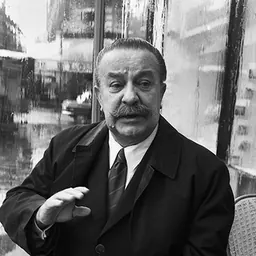


Contemporaries
People whose lives overlapped Boris Schnaiderman's

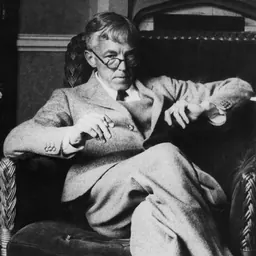
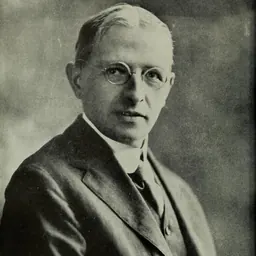
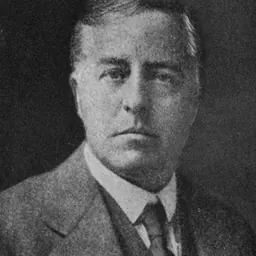
Frequently asked questions
Who was Boris Schnaiderman?
Brazilian translator (1917–2016)
When was Boris Schnaiderman born?
Boris Schnaiderman was born on 17 May 1917 in Uman.
When did Boris Schnaiderman die?
Boris Schnaiderman died on 18 May 2016 in São Paulo.
What was Boris Schnaiderman's occupation?
Boris Schnaiderman was a writer, translator, linguist and translation.
What was Boris Schnaiderman known for?
Boris Schnaiderman was known for Portuguese language.
What nationality was Boris Schnaiderman?
Boris Schnaiderman was Brazilian.
Sources & further reading
· Wikipedia: Boris Schnaiderman
Cite this page
APA: Biography.guide. (2026). Boris Schnaiderman. https://biography.guide/boris-schnaiderman/
MLA: "Boris Schnaiderman." Biography.guide, https://biography.guide/boris-schnaiderman/.
Chicago: "Boris Schnaiderman." Biography.guide. https://biography.guide/boris-schnaiderman/.
Data last updated: 2026-09-22 · Spot an error? Report a correction.
Page generated 2026-09-27 04:59 UTC