
About Boris Perchatkin
Born 1946. Boris Perchatkin is a Russian and American human rights defender.
Boris Perchatkin (; born 1 July 1946 ) — the most famous participant in the Nakhodka's religious emigration movement of the late 1970s and early 1980s, a human rights activist who lobbied in the United States for the adoption of the "Lautenberg's Amendment" in 1989, as a result of which about 1 million people emigrated to the United States from the countries of the former USSR.
Biography Early years and joining the church Boris Perchatkin was born in family of a military pilot who died in a car accident shortly after Boris was born. Some time after the death of her first husband, Boris' mother remarried a military man, who in 1953 was arrested for failure to follow orders during the riots and given 25 years of exile in the Vorkuta's camps. At the age of 16, Boris found a Pentecostal church in the city of Nakhodka, which he joined. Later, he collected information about the persecution of believers and actively shared it with foreign journalists.
Joining the emigration movement and contacts with dissidents In 1976, Perchatkin, together with his associates Vasily Patrushev, V. A. Burlachenko and Vladimir Stepanov, established contact with dissidents in Moscow and received recommendations "to direct the wave of emigration into an organized direction". In the same year, a representative of the Moscow Helsinki Group, L.V. Voronina, arrived in Nakhodka. Beginning this year, Perchatkin actively sought the mass departure of Pentecostals from the USSR. In the same year, Perchatkin sent appeals to the UN, to the World Council of Churches and the heads of state that signed the Helsinki Accords, in which he spoke about the constant persecution of believers in the USSR.
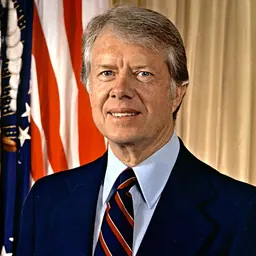
On December 20, 1978, Perchatkin tried to send a congratulatory New Year's telegram to US President Jimmy Carter through the Nakhodka Post Office asking for attention to those who do not have freedom of religion.
Since 1979, he carried out organizational work to create a Center for Emigration-minded Believers in the USSR, claiming to be its leader. In 1980, he was elected as secretary of the created Council of Soviet Pentecostal Churches who were inclined to emigrate. At the end of 1979, Perchatkin wrote a statement "To the Congress and the government of the United States, the governments of Canada, Australia, England, Germany, France and Italy," in which he spoke about Soviet reality, the program provisions of the CPSU on religious issues in the USSR and outlined Soviet legislation on religious cults. he was convicted under Article 190.1 of the Criminal Code of the RSFSR for spreading "deliberately false fabrications discrediting the Soviet state and social system" to 2 years in prison. which he subsequently discussed with congressmen, senators and diplomats. The result of these discussions was the adoption in 1989 of the "Lautenberg Amendment", named after Democratic Senator from New Jersey Frank Lautenberg. In the first decade of this amendment, about 350,000 religious migrants entered the United States, and organized the Christian human rights organization AARC He also published an autobiographical book, "Paths of Fire", which was reprinted several times.
In the summer of 2025, Boris Perchatkin, along with like-minded individuals at the US State Department and the Commission on International Religious Freedom, reported that Christian pacifists in Ukraine and Russia were being persecuted, denied alternative civilian service, forcibly conscripted (see busification), subjected to arrest, violence, and threats for refusing to participate in combat, as well as discriminated against and prosecuted. In this regard, Boris Perchatkin lobbied for the creation of a separate immigration quota for Ukrainian Christian pacifists who came to the US under the U4U program.
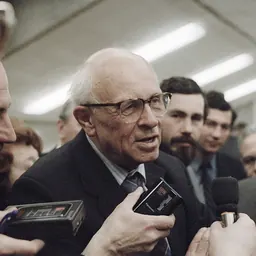
Mentions Boris Perchatkin was mentioned by Andrei Sakharov among other political prisoners in his article "Responsibility of Scientists," written in 1981
Don’t just read it —
keep it.
Full-length biographies made to live with: read them, listen on the way to work, watch them tonight.
- E-book
- Audio
- Video
Instant download · yours to keep · every purchase keeps this site free
Important facts
People in Boris Perchatkin's life
Named in this biography and alive at the same time



Related people
Same field, nearest in time

Contemporaries
People whose lives overlapped Boris Perchatkin's


Frequently asked questions
Who is Boris Perchatkin?
Christian Russian-American human rights activist
When was Boris Perchatkin born?
Boris Perchatkin was born on 1 July 1946 in Myrhorod.
What is Boris Perchatkin's occupation?
Boris Perchatkin is a human rights defender.
What nationality is Boris Perchatkin?
Boris Perchatkin is Russian and American.
Sources & further reading
Cite this page
APA: Biography.guide. (2026). Boris Perchatkin. https://biography.guide/boris-perchatkin/
MLA: "Boris Perchatkin." Biography.guide, https://biography.guide/boris-perchatkin/.
Chicago: "Boris Perchatkin." Biography.guide. https://biography.guide/boris-perchatkin/.
Data last updated: 2026-09-20 · Spot an error? Report a correction.
Page generated 2026-09-27 05:28 UTC