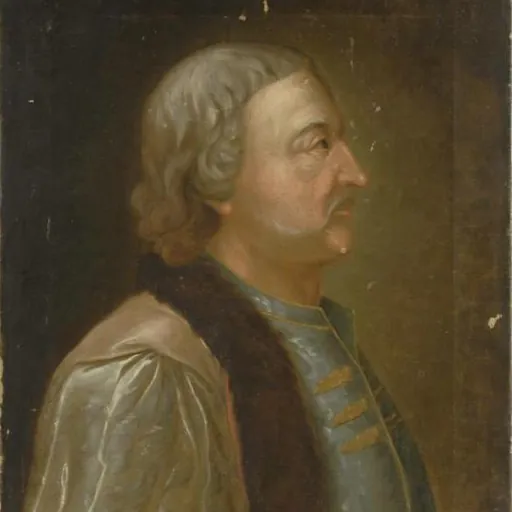
About Boris Golitsyn
Lived 1651 – 1714 (aged 63). Boris Golitsyn was a Russian politician.
Boyar Boris Alexeyevich Golitsyn (surname sometimes transcribed Galitzin, ; 1654–1714) was a Russian politician of the noble Golitsyn family. His chief political opponent was his own cousin Prince Vasily Vasilyevich Golitsyn.
Life
Boris was a court chamberlain since 1676. He was the young tsar Peter the Great's tutor and chief supporter when, in 1689, Peter resisted the usurpations of his elder half sister Sophia, and the head of the loyal council which assembled at the Trinity monastery during the crisis of the struggle. It was Golitsyn who suggested taking refuge in that strong fortress and won over the boyars of the opposite party.
The church in Dubrovitsy. The political views of Prince Boris Golitsyn were reflected in the pro-Western architecture of his estate Dubrovitsy
In 1690 he was created a boyar and shared with Lev Naryshkin, Peter's uncle, the conduct of home affairs. After the death of the tsaritsa Natalia, Peter's mother, in 1694, his influence increased still further. The estate Bolshiye Vyazyomy was given to him; since then Vyazyomy remained the ancestral estate of the Golitsyns, although Boris rarely came to Vyazyomy preferring to live at the Dubrovitsy estate (near Podolsk), which came from his wife's family. From 1690 to 1704, in the Dubrovitsy estate, he led the construction of a stone Church of the Theotokos of the Sign. His son Vasily (1681-1710) inherited the estate.
He accompanied Peter to the White Sea (1694–1695); he took part in the Azov campaign (1695); and was one of the triumvirate who ruled Russia during Peters first foreign tour (1697–1698) to Holland and England. The Astrakhan rebellion (1706), which affected all the districts under his government, shook Peter's confidence in him, and seriously impaired his position. In 1707 he was superseded in the Volgan provinces by Andrei Matveev. A year before his death he entered a monastery.
As was common in late 17th century Russia, Golitsyn supported Westernism. In many respects he was regarded as in advance of his time. He was well educated, spoke Latin fluently, frequented the society of scholars and had his children educated according to European models. Yet his frequent drunkenness and perceived rudeness by intruding the hospitality of wealthy foreigners lost him the respect Peter the Great, despite his previous services.
The Polish diplomat Foy de la Neuville visited Moscow at the end of 1689 and hosted a banquet for two Russian nobles, Golitsyn and Matveev, who had long wanted to try French roast. Both nobles were so pleased with this meal that they sent several plates to their wives. Three days after this banquet, Matveev invited to dine at his house, where Neuville was received with great dignity.
Don’t just read it —
keep it.
Full-length biographies made to live with: read them, listen on the way to work, watch them tonight.
- E-book
- Audio
- Video
Instant download · yours to keep · every purchase keeps this site free
Important facts
People in Boris Golitsyn's life
Named in this biography and alive at the same time
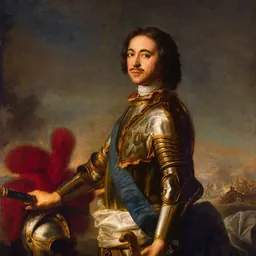

Related people
Same field, nearest in time

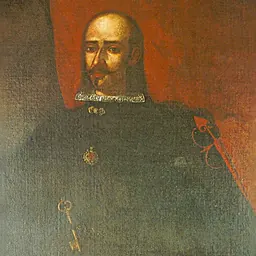
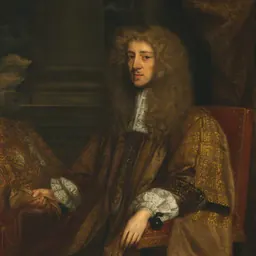

Contemporaries
People whose lives overlapped Boris Golitsyn's




Frequently asked questions
Who was Boris Golitsyn?
Russian noble
When was Boris Golitsyn born?
Boris Golitsyn was born on 29 July 1651 in Tsardom of Russia.
When did Boris Golitsyn die?
Boris Golitsyn died on 18 October 1714 in Volodarsky District.
What was Boris Golitsyn's occupation?
Boris Golitsyn was a politician.
What nationality was Boris Golitsyn?
Boris Golitsyn was Russian.
Sources & further reading
· DBpedia: Boris Alekseyevich Golitsyn
Cite this page
APA: Biography.guide. (2026). Boris Golitsyn. https://biography.guide/boris-golitsyn/
MLA: "Boris Golitsyn." Biography.guide, https://biography.guide/boris-golitsyn/.
Chicago: "Boris Golitsyn." Biography.guide. https://biography.guide/boris-golitsyn/.
Data last updated: 2026-09-23 · Spot an error? Report a correction.
Portrait: Wikimedia Commons · author & licence
Page generated 2026-09-27 05:06 UTC