
About Boris Carmeli
Lived 1928 – 2009 (aged 81). Boris Carmeli was an Italian opera singer and bass (voice type).
Early life
Carmeli was born Norbert Wolfinger to Hermann and Rachel Wolfinger in Obertyn, Poland, in 1928. His older brother Pinkas (later Peter Carmeli) was born in 1921. Believing that Germany had an economic future, the family emigrated to Magdeburg in 1932. Hermann moved first and found work in the textile business. His wife and sons joined him later.
From January 1933, under the Nazi regime, the Jewish Wolfinger family faced difficulties. Growing anti-Semitism in the country even affected five-year-old Boris (Norbert), who as the only Jew in his class was subject to bigotry. The pogrom of Kristallnacht in 1938 made clear that the family was not safe in Germany. Converting their assets into jewelry, which Rachel sewed into their clothing, they fled to Brussels, Belgium. His brother had relocated to Tel Aviv. The whole family ultimately reunited in Israel. Carmeli worked in a music shop, learned Hebrew and began piano and singing lessons.
In 1950, he received two offers for study abroad. Mezzo-soprano Jennie Tourel, for whom he had auditioned, invited him to New York. The second offer, won in a competition among 300 Israeli singers, was an opportunity to study in Milan. He chose the Italian option and set off with $400 from his father. The money was to last him a year, but a year was not long enough to establish an opera career.
Carmeli went on to perform in world-renowned opera houses with most of the leading conductors of his day, including Herbert von Karajan, Zubin Mehta, Leonard Bernstein, Riccardo Muti, Lorin Maazel, John Barbirolli, Yehudi Menuhin and Mstislav Rostropovich. In publicity photos made at La Scala and other venues, he is shown in the roles of Sarastro in Mozart's Die Zauberflöte, Galitsky and Khan Konchak from Borodin's Prince Igor, Marcello in Meyerbeer's Les Huguenots, and Leporello in Mozart's Don Giovanni. He appeared at La Scala in Mozart's Great Mass in C minor in 1960 and in Schönberg's Die Jakobsleiter in 1962. He appeared as Moloch in the European premiere of Penderecki's Paradise Lost conducted by the composer at La Scala in 1979. He also appeared in world premieres of contemporary Italian operas by Bruno Bartolozzi, Salvatore Allegra and Luciano Chailly. Naxos Records' 2007 version was nominated for a Grammy Award.
Carmeli was a frequent guest artist at international music festivals such as Berliner Festwochen, Wiener Festwochen, Maggio Musicale Fiorentino, Sagra Musicale Umbra in Perugia, and the Festival d'Aix-en-Provence, among others. At roughly the same time, he sang for Pope John Paul II at the Vatican.
Boris Godunov (Mussorgsky), Orchestra of the Teatro La Fenice, conductor Jerzy Semkow Choral Music by J. S. Bach / Antonio Vivaldi, RAI Chorus and Symphony Orchestra, conductor Hermann Scherchen De temporum fine comoedia (Carl Orff), Kölner Rundfunk-Sinfonie-Orchester, conductor Herbert von Karajan Die Verurteilung des Lukullus, Paul Dessau, Leipzig Radio Symphony Orchestra, conductor Herbert Kegel Ernest Ansermet and The Ballets Russes, L'orchestre de la Suisse Romande, conductor Ernest Ansermet Bach: Magnificat, BWV 243 (Milan 1963) / Actus tragicus, BWV 106, Orchestra Sinfonica di Torino Della RAI, conductor Hermann Scherchen (Turin 1958) La scala di seta (Rossini), Orchestra Filarmonica di Roma, conductor Franco Ferrara Le prophète (Meyerbeer), Orchestra Sinfonica di Torino della RAI, conductor Henry Lewis (Turin 1970) Les Troyens (Berlioz), RAI National Symphony Orchestra, conductor Georges Prêtre 1969 Mass, for Soloists, Chorus & Orchestra, Op. 21 (Wolfgang von Schweinitz, Berlin Radio Symphony Orchestra, conductor Uwe Gronostay Requiem (Verdi), NDR Symphony Orchestra, conductor Hans Schmidt-Isserstedt Odd Opera, Various Pulcinella (Stravinsky), L'Orchestre de la Suisse Romande, conductor Ernest Ansermet Sirius, (Stockhausen), conductor Karlheinz Stockhausen Snap Shots, Various Stravinsky: Ballets, Stage Works, Orchestral Works, L'Orchestre de la Suisse Romande, conductor Ernest Ansermet Symphony No. 7 "Seven Gates of Jerusalem" (Penderecki), Warsaw Philharmonic, conductor Antoni Wit Symphony 6 "Desiderata", Op. 70 / Alpha-Zeta, Op. 54 / Pater Noster, Op. 51 (Carlos Veerhoff), Chor des Mitteldeutschen Rundfunks, conductor Leopold Hager Utrenja / Utrenja II (Penderecki), Kölner Rundfunk-Sinfonie-Orchester, conductor Andrzej Markowski Vox Humana? / Finale / Fürst Igor, Strawinsky (Mauricio Kagel), Ensemble 2e2m, conductor Paul Méfano Zeitgenössische Musik in der Bundesrepublik Deutschland 10 (1970–1980)
Personal life
Carmeli lived in Italy for most of his post-war life. In 1961, on a trip to perform at the San Francisco Opera, he met and married Sonja Moser, a Swiss woman working in the fashion industry. Unlike many Holocaust survivors, he never revisited the sites of the horrors of his youth.
Don’t just read it —
keep it.
Full-length biographies made to live with: read them, listen on the way to work, watch them tonight.
- E-book
- Audio
- Video
Instant download · yours to keep · every purchase keeps this site free
Important facts
People in Boris Carmeli's life
Named in this biography and alive at the same time
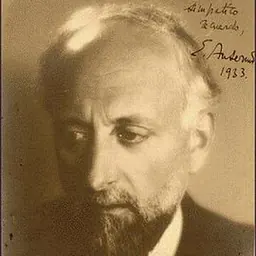


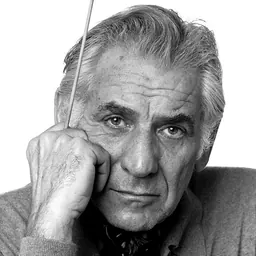



Related people
Same field, nearest in time



Contemporaries
People whose lives overlapped Boris Carmeli's

Frequently asked questions
Who was Boris Carmeli?
basso italiano (1928-2009)
When was Boris Carmeli born?
Boris Carmeli was born on 23 April 1928 in Obertyn.
When did Boris Carmeli die?
Boris Carmeli died on 31 July 2009 in Bern.
What was Boris Carmeli's occupation?
Boris Carmeli was an opera singer and bass (voice type).
What nationality was Boris Carmeli?
Boris Carmeli was Italian.
Sources & further reading
Cite this page
APA: Biography.guide. (2026). Boris Carmeli. https://biography.guide/boris-carmeli/
MLA: "Boris Carmeli." Biography.guide, https://biography.guide/boris-carmeli/.
Chicago: "Boris Carmeli." Biography.guide. https://biography.guide/boris-carmeli/.
Data last updated: 2026-09-22 · Spot an error? Report a correction.
Page generated 2026-09-27 05:34 UTC