
About Bob Shearman
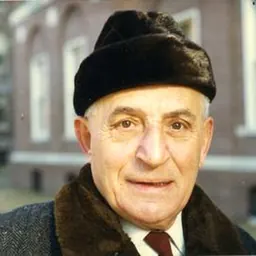
Lived 1939 – 1999 (aged 59). Bob Shearman was an australian rules football player.
Robert Osborne Shearman (14 September 1939 – 27 June 1999) was an Australian Rules footballer who played for the Essendon Football Club in the Victorian Football League (VFL) and for the West Torrens Football Club and Sturt Football Club in the South Australian National Football League (SANFL).
He was widely acknowledged as one of the most exceptional and versatile footballers of his time, noted for his strength, intelligence, and ability to play in any position on the field.
Shearman became one of the youngest players to ever play league football and the then youngest ever Essendon player to debut with Essendon in 1956, at just 16 years of age, showcasing his talent amongst much older players in taking strong marks and executing prodigious drop kicks.
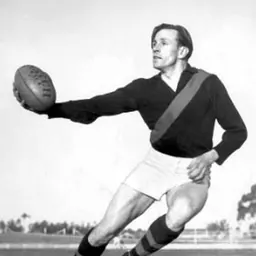
Bob Shearman (Essendon) with the ball during the 1959 VFL Grand Final against Melbourne.
His role as a half-back flanker, highlighted by his aerial prowess and skills at ground level, played a pivotal role in Essendon's progression to the Grand Finals of 1957 and 1959.
These matches attracted crowds of over 100,000 spectators, with Shearman standing out as the youngest player on the field during the 1957 Grand Final, just one week after turning 18 making him one of the youngest players in history to have played in a VFL/AFL Grand Final.
Despite Essendon's defeats to Melbourne on both occasions, Shearman's performances established him as a crowd favourite, earning him recognition as one of the best players in each game.
West Torrens Football Club
In 1961, Shearman followed the request of his Essendon coach, Dick Reynolds, to leave Melbourne and head to South Australia to join him at the West Torrens Football Club.
He quickly established himself as one of the best players in the league and at the age of 21 was appointed captain in just his second year at the club that included football greats such as Lindsay Head. He remained captain until his decision to seek a transfer to Sturt at the end of the 1964 season. Shearman played 70 games and kicked 90 goals for the Eagles.
Coinciding with Dick Reynolds' retirement as coach of West Torrens at the end of the 1963 season, Shearman's eagerness to transfer to the Double Blues at the end of the 1964 SANFL season led him to him taking the decision to abstain from football for the entire 1965 SANFL season in order to secure the clearance from West Torrens.
After finishing as runners-up to Port Adelaide in 1965, the Double Blues decisively defeated the Magpies by 56 points in the 1966 Grand Final, claiming their first flag in 26 years.
Sturt continued to claim premierships in 1967, 1968, 1969, and 1970, achieving an almost record-breaking five consecutive titles.
Shearman led the Double Blues as acting captain in the 1968 grand final victory and served as captain from 1969 until his retirement in 1972, earning widespread respect for his leadership, bravery, and skill.
He won the Craven Filter Champion Kick of Australia competition twice within its five-year duration and could kick over 80 metres with both feet. He was also again named in the SANFL team of the Year by The Advertiser newspaper in 1966 and then in 1968 and 1969.
Shearman was later listed as a member of coach, Jack Oatey's Vintage 21 highlighting the best players in his era as coach. He was also honoured as a member of Sturt's Team of the Century in the half-back flank position and was inducted as an inaugural member of the Sturt Hall of Fame in 2004.
State Representation
Shearman was selected to represent South Australia in his debut year within the SANFL league, and his performance in the carnival led to his inclusion in the All Australian team. He captained South Australia in 1962, 1963, and 1964, playing 13 games for the state.
In 1964 he was awarded the Simpson Medal as the game's best player in the interstate match against Western Australia. His tenure as captain of South Australia is highlighted by the famous 1963 victory at the MCG against Victoria, which ended a 37-year drought. The Australian Football website describes this triumph as "one of the finest efforts by a South Australian team in an interstate clash", and marks it as "the day South Australian football came of age."
Under Shearman's leadership, the team secured a hard-earned seven-point victory over a Victorian side that boasted an array of legendary players, including Polly Farmer, Bob Skilton, Darrel Baldock, Ron Barassi and John Nicholls, in front of nearly 60,000 spectators. The South Australian team, coached by Fos Williams, featured notable players such as Lindsay Head, John Halbert and Neil Kerley.
Upon their return to Adelaide, the victorious team was greeted by more than 8,000 fans, celebrating their significant achievement. This victory is still rated as one of the finest efforts by a South Australian team in an interstate clash.
Personal life
Sherman was married to Francine, a leading fashion and photographic model between 1957 and the mid-1970s, business owner, and the first female television presenter for the Channel 9 Football Show. They had two children, Scott and Danielle.
Shearman died suddenly on 27 June 1999 whilst in Corsica. His Adelaide memorial service was conducted by his former five-time premiership-winning team-mate, the Reverend Keith Chessell at St Augustine’s Anglican Church in Unley. He was listed as a member of The Advertiser SANFL Golden Jubilee Team (1952 - 2002) and his contributions were formally recognised with his induction into the South Australian Football Hall of Fame in 2002, as well as the Sturt Hall of Fame and the Team of the Century. Additionally, the SANFL honoured him by naming the R.O. Shearman Medal after him. This medal is considered one of the most prestigious individual accolades in the SANFL.
Jeff Pash, a highly esteemed former footballer and football journalist, commented on Shearman, noting: The former chief football writer of The Advertiser (from 1979–89), and former West Torrens five-time leading goalkicker and 1961 All-Australian, Geoff Kingston, said that “Bob Shearman was a fierce competitor”, and that "he was tough, hard, and strong. He would hurt you in a tackle”.
Don’t just read it —
keep it.
Full-length biographies made to live with: read them, listen on the way to work, watch them tonight.
- E-book
- Audio
- Video
Instant download · yours to keep · every purchase keeps this site free
Important facts
People in Bob Shearman's life
Named in this biography and alive at the same time



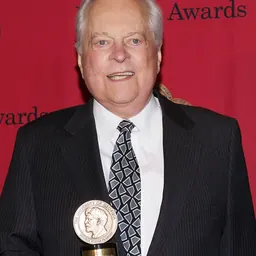


Related people
Same field, nearest in time

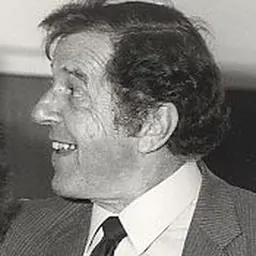


Contemporaries
People whose lives overlapped Bob Shearman's




Frequently asked questions
Who was Bob Shearman?
Australian rules footballer (1939-1999)
When was Bob Shearman born?
Bob Shearman was born on 14 September 1939 in Melbourne.
When did Bob Shearman die?
Bob Shearman died on 27 June 1999 in Macinaggio.
What was Bob Shearman's occupation?
Bob Shearman was an australian rules football player.
Sources & further reading
Cite this page
APA: Biography.guide. (2026). Bob Shearman. https://biography.guide/bob-shearman/
MLA: "Bob Shearman." Biography.guide, https://biography.guide/bob-shearman/.
Chicago: "Bob Shearman." Biography.guide. https://biography.guide/bob-shearman/.
Data last updated: 2026-09-20 · Spot an error? Report a correction.
Page generated 2026-09-27 05:17 UTC