
About Bob Lassiter
Lived 1945 – 2006 (aged 61). Bob Lassiter was an American radio personality.
Bob Lassiter, also known as "Mad Dog", (September 30, 1945 – October 13, 2006) was a controversial and highly influential American radio talk show host in the 1980s and 1990s. He worked in several markets but is best known for his long stint in the Tampa Bay area.
Career
Early career Lassiter was born Robert Henry Glodowski in Camden, New Jersey and raised in Collingswood, New Jersey, where he lived until dropping out of high school in the middle of his junior year and running away to New York City. He then wandered the United States doing odd jobs until arriving in 1970 on St. Thomas in the U.S. Virgin Islands.
A sales representative from a beautiful music radio station heard Lassiter's voice in a bar in Charlotte Amalie in the Virgin Islands one afternoon and immediately suggested he apply for an on-air job. Lassiter was soon hired as a music disc jockey at the salesman's station, WESP-FM, signing on September 1, 1970, under the air name of "Ron Scott."
He would move from there to beautiful music and progressive rock stations all over the country: WOUR-FM in Utica, New York; WOWI-FM in Norfolk, Virginia; WEZS-FM in Richmond, Virginia; and WJOI-FM in Pittsburgh.
Tampa: WPLP (1985–87) and WFLA (1987–89) In September 1985, Tampa Bay's first all-talk station, WPLP-AM, lured Lassiter to Tampa with his first (low-paid) full-time position on weeknights. (At the time he was still working weekends on WINZ and doing fill-ins at WPLP; the station intended to move Neil Rogers from nighttime to day and, until Lassiter was fired, was grooming him as Rogers' replacement.) He took over WPLP's afternoon drive time slot on September 23, 1985. Lassiter recalled on the air that the station initially offered him $12,000 per year, which he turned down, eventually accepting a comeback offer of $18,000 when Rogers suggested he take the job as training for doing talk radio every day. (He later admitted faking his resume to get hired at WPLP, claiming to be a graduate of the University of Pennsylvania. )
Although Lassiter's Miami career was not to be, he soon took Tampa by storm with his confrontational and deliberately offensive style, quickly rising to the top-rated talk program in the market by an enormous margin. He was, in fact, the second-highest-rated radio show in the market, bested only by Cleveland Wheeler and Scott Shannon's Q-ZOO on WRBQ-FM.
Lassiter redefined AM talk radio in Tampa Bay, asserting himself as an on-air bully who targeted Christians, conservatives, the elderly, and virtually everybody else. As he himself would one day describe:
Predictably, he was told the next day that he need not bother to return to work at WFLA that day or any other. "Most men would have been devastated upon losing a six-figure, cushy job," Lassiter said later. "I was relieved." He officially retired from radio. His slot was filled by future radio star Glenn Beck.
Retirement/Death Shortly after his retirement, Lassiter experienced a serious downward slide in his health. A lifelong and unrepentant smoker, he had long ignored the advice of his physicians, and after he was diagnosed with diabetes in about 1990 he had ignored the problem until the disease had advanced considerably. Between 2000 and his death, he would lose 40 percent of his foot, receive treatment for bladder cancer, experience slow decline in kidney function, and slowly lose his eyesight.
During his retirement, Lassiter devoted himself to his longtime interest in futures trading, and in 2002 he started a public journal of his trades on Elite Trader, a popular web site for financial traders. He posted on ET under the username "Tampa" and his journal titled "Short Skirt Trades" would go on to become one of the most popular journals on the site. The journal retained Lassiter's wit, wordplay, and love of playing with his audience. Between 2004 and early 2005, Lassiter also maintained a trading blog (now deleted) under the alias of "The Big Cheese" (a nickname he'd been given as station manager in Utica).
By 2005, Lassiter was largely confined to his home in the Tampa Bay area. However, his spirits remained good, and in the summer of 2005 he began a new blog—under his own name—whose readership steadily increased. In his writings, Lassiter revisited many memories, but mostly depicted a life in which he was isolated and reclusive, his computer being his only real window on the outside world.
On February 14, 2006 — his 19th wedding anniversary—Lassiter revealed on his blog that he had been told that his kidneys were failing. His doctors, whom he had seen that day, had given him a prognosis of six months to two years. He lived eight months afterward, dying on October 13, 2006, 13 days after his 61st birthday. His death was revealed in a final post in his blog] by his wife, Mary Lassiter:
Style Although frequently funny and thought-provoking, Lassiter was always caustic, always contrarian, and often downright mean. He typically began his show with a topical monologue that could last anywhere from five minutes to an hour to a full three-hour shift; the monologue was usually designed to incite his listeners to the point of blind rage, at which point he would begin to accept calls from people who were furious to the point of inarticulacy. As he once put it, "It dawned on me that if I talked for an hour, hour and a half, by the time I stopped these people weren't rational. And then I would just rip them to shreds." In fact, Lassiter showed extreme disdain and impatience with his callers, not hesitating to poke fun at them, subtly trap them into demonstrating their hypocrisy or lies, or even to insult them outright. "Get off my phone, you subhuman pig!" became one of his most famous catchphrases.
Lassiter famously began each hour of his show by giving the day of the week, date, and time (e.g., "Six minutes after the hour of eight o'clock; welcome back, funseekers. It's a Thursday night, September the twelfth, nineteen hundred and ninety six.") He also cultivated a number of signature sign-offs over the years. At WPLP he ended each show by saying "Behave yourselves", and playing "Take It To the Limit" by The Eagles; at WLS, he signed off with, "Love you, Chicago"; in his final years at WFLA he closed by playing an extended version of The Blues Brothers' "Sweet Home Chicago" as he continued speaking or answering phones, then finally playing a tape of a caller saying "That's it?...We're done?...well, have a good night then."
Callers Lassiter had no use for callers who agreed with him, often rushing them off the line so he could find someone with whom he could have a compelling fight. In fact, after his monologue and topic setup he would often tell people who agreed with him not to call, that he was only interested in opposing viewpoints that day; if he received callers who agreed with him anyway, he would immediately hang up on them.
Lassiter was willing to give equal time to those who disagreed with him, even if he would mercilessly lambast them afterward. Frequently, though, he had to force the opposition to speak their piece, cutting off their attempts at preambles, red herrings and ad hominem attacks and demanding that they answer the question at hand. If there was an exception to this rule, it was with the cranks and extremists: when he received calls from the religious fringe, conspiracy theorists, ideologues, even members of the Ku Klux Klan—he would let them have their say, even encouraging them to make outrageously offensive and marginal statements and thus discredit themselves.
In later years, Lassiter became known for "punishing" his listeners when they didn't call in. If he reached a point in the show at which the switchboard wasn't lit, rather than riffing or starting a new monologue to fill the time, Lassiter would allow dead air to sit in. He might hum "The Anniversary Waltz", drum his fingers on the console, or even be heard quietly dealing himself a game of solitaire. Sometimes he would adopt more creative punishments: one night in Chicago, when nobody would address his topic, Lassiter invited calls from Born-Again Christians who wanted to give their personal religious testimonies, and wouldn't allow any other callers. The message was, it was a call-in show, so it was callers' job to carry the program. Lassiter had no intention of doing their job for them. Occasionally, though, he would reward callers who annoyed him with absolute silence: in fact, on the night of August 2, 1996, Lassiter kept a caller on the air at WFLA without saying a word for 12 full minutes.
On the other hand, despite his unsparingly caustic demeanor and complete frankness, radio with Lassiter was in many respects a kind of free-for-all. At least once a week, Lassiter would do "open phones", letting people call in with whatever they wanted to talk about. At times, he would even bypass the call screeners and answer the phones himself—a format he called "Chat With Bob"—letting prank callers, and anyone who wanted to be on the radio at all, speak (although he would censor them if necessary). This would lead to an inordinant number of people calling in and flushing toilets or holding the receiver up to the radio to hear the show on the six second tape delay; Lassiter would frequently respond to these calls by mocking the lengthy period of time they would wait on hold (typically forty minutes to an hour) just to do something completely trivial.
Monologues Although he was unpleasant and pointedly controversial, Lassiter was a careful and engaging orator, building his monologues and telephone harassment with masterful diction, phrasing, and dynamics. It was a strategy that worked: he himself often noted that the secret of his success was that even the many people who despised him couldn't help but listen night after night, year after year.
Lassiter was not shy about airing his personal life on the air: he shared extremely intimate details of his own childhood (including his parents' divorce and his subsequent estrangement from his father); his first marriage, including stories of an abortion and infidelities by both parties; his own history of recreational drug use; and the ups and downs of his radio career. "You probably know more about me than you do about your own spouse, unless you have a better-than-average marriage", he once informed his listeners. Listeners were also frequently treated to present-day anecdotes about himself and his second wife Mary (the former Mary Toensfeldt—nicknamed "Muffy" — who had been the business manager at WPLP during his tenure there), or his hobbies of astronomy, birdwatching, futures trading, and fiddling with his home computer. Often these were subjects he defaulted to when taking a break from "coliseum-style radio."
Stunts Lassiter was also famous for the hoaxes and stunts he pulled on the radio. At times he told his audiences that he would dunk a kitten into a bucket of water live on the air until the board filled with calls, or that he was now forbidden by broadcast-decency advocates from having any even remotely controversial content on his shows. One Friday in the mid-1990s, he and the entire staff of WFLA convinced listeners that he had been pulled from the air by panicky management while substituting for another host, told them that there would be a major announcement about his future during his regular timeslot on Monday, and when listeners tuned in he was back on the air to rub their nose in their own gullibility.
The $50,000 Giveaway The most famous and celebrated of his stunts became known as the "$50,000 Giveaway", which Lassiter pulled at WPLP on New Year's Day 1987. Explaining that there were to be changes in station policy in attempt to get big ratings, Lassiter announced that WPLP would be awarding $50,000 to each and every person who called that night and every other night in 1987; if they were listening before they called, Lassiter promised, callers would receive an additional $10,000. Additionally, the best caller of each hour would receive a brand-new Rolls-Royce, while the worst caller would receive an all-expenses-paid trip to Paris. Other prizes, such as vacation homes, yachts, and a penthouse in the Trump Tower, were offered occasionally throughout the show.
Every few minutes as Lassiter talked, his producer Michael Serio would cut in and whisper a disclaimer: "Pssst! Hey, he doesn't mean a word of it! So don't get any smart ideas about suing us!" Despite this, at least half of Lassiter's callers during his first three hours believed every word he told them and expressed absolute glee at having won $50,000 for doing nothing but calling a radio show. Even when Lassiter explained that to collect their money they merely needed to show up at the station in the morning (though he claimed not to know the address) and ask for it in cash, tax-free, with no need of identification, these "winners" never seemed to think that anything was fishy.
At the end of the third hour, Lassiter admitted openly to his callers that he had been lying all along, pointed out that his promises were absolutely outrageous and unbelievable, and took callers to task for taking him at his word without stopping to think about whether what they were hearing was even possible. Even after he did so, calls continued to pour in from people who wanted to win $50,000.
Christmas Show Every year on December 23 (or on the last Friday before Christmas), Lassiter's on-air vitriol seemed to vanish; on that day, he delivered his annual Christmas show, in which he fondly ruminated on the existence of Santa Claus and the meaning of the holiday, then spent the rest of his shift offering his own Christmas reminiscences from his childhood all the way to the present. He told the same stories every year, but always had different and compelling versions of them to keep the audience interested. Regular highlights included the year in which he gave the same Christmas list to each of his recently divorced parents, resulting in two of everything he asked for, and the story of a special present (a Lady Schick electric razor) he'd given his mother when he was twelve, only to discover, when cleaning out her home after her death 26 years later, that she had kept it for all that time. Lassiter's warmth and sentiment on these broadcasts was astonishing in contrast to his usual "Mad Dog" persona, and listeners often confessed to him that they found themselves captivated by the show, tears streaming down their faces as they relived Lassiter's Christmases with him.
On-Air Blunder On January 26, 1989, he was asked to fill in for the first 30 minutes of the following WFLA shift, that of station mainstay Dick Norman. Lassiter straight-facedly informed Norman's listeners that he had just renegotiated his contract and that because his ratings were so high, he was able to demand that WFLA fire Norman.
Ironically, the regular news reports during Lassiter's show featured the story of a car that had backed full speed into a large propane tank at a gas station in nearby Brandon, Florida, killing the heretofore unknown driver in a fiery crash. The irony was that the driver was Dick Norman. When he was informed of Norman's death several minutes into the show, Lassiter immediately issued a very emotional, repentant, on-air apology and filled in for the rest of Norman's timeslot, inviting listeners to call in and share their reminiscences of "Uncle Dickie."
Airchecks
Lassiter's unique and provocative style have created a high demand for airchecks of his old shows. One of the most notorious of these, known as "Mr. Airstream," is a recording from WPLP on April 1, 1987. It is a phone conversation in which an irate elderly man in an Airstream trailer protests Lassiter's treatment of old people, as well as the President (who, at the time, was Ronald Reagan) and Jim and Tammy Faye Bakker; threatens to report him to the station management, the FCC, the Chamber of Commerce, and even the police; and ends the call by saying, "Have a bad night, hippie!" Fans of the recording, as well as Lassiter himself, consider it to be the greatest moment in talk-radio history.
Don’t just read it —
keep it.
Full-length biographies made to live with: read them, listen on the way to work, watch them tonight.
- E-book
- Audio
- Video
Instant download · yours to keep · every purchase keeps this site free
Important facts
People in Bob Lassiter's life
Named in this biography and alive at the same time




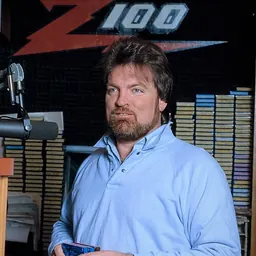

Related people
Same field, nearest in time


Contemporaries
People whose lives overlapped Bob Lassiter's


Frequently asked questions
Who was Bob Lassiter?
Radio talk show host
When was Bob Lassiter born?
Bob Lassiter was born on 30 September 1945 in Camden.
When did Bob Lassiter die?
Bob Lassiter died on 13 October 2006 in Tampa, Florida.
What was Bob Lassiter's occupation?
Bob Lassiter was a radio personality.
What nationality was Bob Lassiter?
Bob Lassiter was American.
Sources & further reading
Cite this page
APA: Biography.guide. (2026). Bob Lassiter. https://biography.guide/bob-lassiter/
MLA: "Bob Lassiter." Biography.guide, https://biography.guide/bob-lassiter/.
Chicago: "Bob Lassiter." Biography.guide. https://biography.guide/bob-lassiter/.
Data last updated: 2026-09-20 · Spot an error? Report a correction.
Page generated 2026-09-27 05:28 UTC