
About Bob Citron
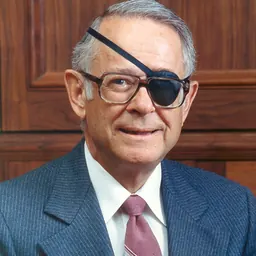
Lived 1932 – 2012 (aged 79). Bob Citron was an American military flight engineer, engineer and businessperson.
Robert A. Citron (September 14, 1932 – January 31, 2012) was an American entrepreneur and aerospace engineer who was born in Brooklyn, New York City, and educated at the University of the Philippines (liberal arts) and aeronautical engineering from Northrop University (1953–1959). Citron helped establish and manage the Smithsonian Astrophysical Observatory's Operation Moonwatch and Precision Optical Satellite Tracking Programs (STP) after the launch of Sputnik I in 1957. short-lived phenomena (Center for Short-Lived Phenomena – 1975), and the study of the long-term future of humanity Foundation For the Future – 1996). He died on January 31, 2012, at his home in Bellevue, Washington, at the age of 79, due to complications from prostate cancer.
Early career Citron worked for the Smithsonian Institution for 17 years, establishing satellite tracking stations around the world, and creating and managing scientific field research projects. While at the Smithsonian he built and managed astrophysical research observatories in the US, Spain, Norway, Ethiopia, South Africa, and India (1959–1968) and founded the Smithsonian Institution Center for Short-lived Phenomena (CSLP) in 1968. The purpose of the Smithsonian Satellite Tracking Program was to track satellites to determine their precision orbits in order to better understand the Earth's atmosphere and to better define the geodesy of planet Earth. Citron created and managed the Smithsonian Transient Lunar Phenomena (TLP) program for NASA during the Apollo Program (1968–1972) and established the NASA/Smithsonian Skylab Earth Observing Program (1973–1974) during the post-Apollo period. He established a global Student Environmental monitoring network (1974), involving high school students from 20 countries, to report on significant environmental events (1974).
While at the Smithsonian, Citron was a consultant to a number of United Nations organizations including UNESCO and the United Nations Environment Programme (UNEP). As a consultant to these organizations he was involved in helping to define the goals and operations of UNESCO's "Man and the Biosphere" Programme (1973) and he helped develop requirements for UNEP's "Global Environmental Monitoring System" (1974). Citron also participated in a number of other United Nations programs involved with global environmental monitoring and assessing the human effect on planet Earth (1972–1975).
Companies Citron founded or co-founded five companies: Limpopo Films, Pty. Ltd. (1964); Adventure Travel, Inc. (1976); SPACEHAB, Inc. (1984); Kistler Aerospace Corporation (1993); and Lunar Transportation Systems, Inc. (2004).
Limpopo Films Pty. Ltd. In 1964, while living in Africa, Citron founded Limpopo Films, Pty. Ltd. to produce documentary films for television. Limpopo Films produced a wide variety of films from 1964 to 1968 including Man in Ethiopia (which won numerous national and international awards), Vigeland on Life, Ten Thousand Mile Safari, From Zululand to Zambia, The Lions of Gorongoza, The Crocodiles of the Nile, The Elephants of Wankie, Meteorite Hunt, The Mystery of Zimbabwe, and many others.
Adventure Travel, Inc. In 1976 Citron founded the American Adventurer's Association (AAA), which was an international organization for adventurers. The American Adventurer's Association eventually grew to a membership of over 10,000 and published a monthly national magazine, Adventure Travel; a monthly newsletter on worldwide adventure, Adventure Travel Newsletter; and an annual Worldwide Adventure TravelGuide (1978–1981). Adventure Travel magazine eventually reached a national circulation of over 100,000 and was distributed on half a dozen major international airlines. Citron sold his company to the Ziff Davis Publishing Company in 1981.
SPACEHAB In 1983 Citron founded SPACEHAB, Inc., which designs, builds, and operates space research laboratories and space logistics modules that fly aboard the Space Shuttle fleet.
Film and television production 1964 – present
Citron began making films in 1964 while living in Africa and founded a film production company, Limpopo Films Ltd., which produced a series of documentary and travel films for television. These films included Zululand to Zambia, Ten Thousand Mile Safari, Europe North, Africa South, An American Boy in Russia, and others.
In the 1960s, while with the Smithsonian Institution, Citron made a series of films in Africa on field research expeditions including The Wama Pygmies of the Congo, The Borana Tribe of Ethiopia, The Meteorites of Southwest Africa, and others.
In the 1970s Citron and National Geographic made a series of television documentaries and educational films based on his EARTHWATCH field research expeditions, including The Search for Fossil Man, The Day the Sun Died, The Violent Earth, Earth, the Restless Planet, and others. During this period Citron was also a consultant to a number of film projects for the National Geographic Society, David Wolper Productions, and MGM Documentary Films.
Recently Citron created a 15-minute film entitled Cosmic Origins: From the Big Bang to Humanity as a showcase for the work of the Foundation For the Future. He also supervises the production of a series of short films for the Foundation, including Where Does Humanity Go from Here?, Visions of the Future, and The Young Scholars Inquiry Program. Citron created a television series called The Next Thousand Years, now in development, for public television distribution.
Scientific field research expeditions Citron has organized, managed, and/or participated in more than 60 scientific field research expeditions in Europe, Africa, Asia, South America, and the South Pacific in fields that include volcanic eruption research, paleoanthropology, archaeology, anthropology, ecology, ethology, zoology, astronomy, meteoritics, and geophysics. He has participated in eight total solar eclipse expeditions in the Philippines, Mexico, Canada, Turkey, Mauritania, Ethiopia, India, and the Libyan Sahara between 1956 and 2006.
Citron has organized, managed, and/or participated in more than a dozen archaeological excavations in Africa and Europe, including excavating early hominid and iron-age sites in South and East Africa with prominent archeological teams (1964–1974).
While working for the Smithsonian, Citron also organized and managed and was the principal cinematographer on 18 volcanic eruption expeditions in Africa, the South Pacific, North and Central America, Hawaii, the Philippines, and New Guinea (1968–1974). He recently donated 40 hours of volcano expedition films to the Smithsonian Institution archives for research and education.
In 2001 Citron organized a major expedition to the South Pacific to observe the reentry of the Russian MIR Space Station in a remote area of the Pacific Ocean. That expedition included chartering two aircraft from Fiji with 31 observers on board. The observers included the Russian Chief Designer of the MIR Space Station as well as three cosmonauts who lived aboard MIR for lengthy durations.
Memberships Citron was a member of many professional organizations and special-interest groups, including the American Institute of Aeronautics and Astronautics, British Interplanetary Society, The Planetary Society, African Wildlife Federation, Friends of the Earth, Greenpeace, Sierra Club, Union of Concerned Scientists, Seattle Astronomical Society, The Nature Conservancy, The Wilderness Society, American Film Institute, Seattle Film Society, Space Frontier Foundation, and the National Space Society.
Awards Citron has received numerous awards for the projects he's created and managed, and the films he's made. He was a two-time recipient of the Smithsonian Institution Outstanding Achievement Award for his management of the Smithsonian Astrophysical Observatory Satellite Tracking Program and for founding and managing the Smithsonian Institution Center for Short-lived Phenomena. He also received the Space Pioneer Award from the National Space Society for his invention of the SPACEHAB modules that fly on the Space Shuttle, and he received the Space Entrepreneur of the Year Award from the Space Frontier Foundation for his contributions to the development of space tourism. In 1967 Emperor Haile Selassie presented Citron with the Haile Selassie Gold Medal for his contributions to the people of Ethiopia.
Publications Citron has published over 200 articles and has written, and/or edited dozens of books and reports dealing with short-lived phenomena, adventure travel, space exploration, meteorite distribution, global environmental monitoring, and the future of humanity.
Don’t just read it —
keep it.
Full-length biographies made to live with: read them, listen on the way to work, watch them tonight.
- E-book
- Audio
- Video
Instant download · yours to keep · every purchase keeps this site free
Important facts
Related people
Same field, nearest in time


Contemporaries
People whose lives overlapped Bob Citron's


Frequently asked questions
Who was Bob Citron?
American businessman
When was Bob Citron born?
Bob Citron was born on 14 September 1932.
When did Bob Citron die?
Bob Citron died on 31 January 2012.
What was Bob Citron's occupation?
Bob Citron was a military flight engineer, engineer and businessperson.
What nationality was Bob Citron?
Bob Citron was American.
Sources & further reading
Cite this page
APA: Biography.guide. (2026). Bob Citron. https://biography.guide/bob-citron/
MLA: "Bob Citron." Biography.guide, https://biography.guide/bob-citron/.
Chicago: "Bob Citron." Biography.guide. https://biography.guide/bob-citron/.
Data last updated: 2026-09-20 · Spot an error? Report a correction.
Page generated 2026-09-27 05:25 UTC