
About Blanche of Lancaster
Lived 1342 – 1368 (aged 26). Blanche of Lancaster was an English politician.
Blanche of Lancaster (25 March 1342 – 12 September 1368) was a member of the English-French royal House of Lancaster and the daughter of the kingdom's wealthiest and most powerful peer, Henry of Grosmont, 1st Duke of Lancaster. She was the first wife of John of Gaunt, the mother of King Henry IV, and the grandmother of King Henry V of England.
Lineage Blanche was born on 25 March 1342, according to her father's inquisitions post mortem. She is also said to have been born as late as 1347,
She was the younger daughter of Henry of Grosmont, 1st Duke of Lancaster, and his wife Isabel de Beaumont. She and her elder sister Maud, Countess of Leicester, were born at Bolingbroke Castle in Lindsey. Maud married Ralph Stafford, 1st Earl of Stafford, and then William I, Duke of Bavaria.
Marriage
On 19 May 1359, at Reading Abbey, Reading, Berkshire, Blanche married her third cousin, John of Gaunt, fourth son of King Edward III. The whole royal family was present at the wedding, and the King gave Blanche expensive gifts of jewellery. The wealth she brought to the marriage was the foundation of John's fortune.
The title Duke of Lancaster became extinct upon her father's death without male heirs in 1361. However, as he was married to Blanche, John of Gaunt became Earl of Lancaster, Earl of Derby, Earl of Lincoln and Earl of Leicester, although he did not receive all of these titles until the death of Blanche's older sister, Maud, in 1362. The Duchy of Lancaster (second creation) was later bestowed on Gaunt. The influence associated with the titles would lead him to become Lord High Steward.
Jean Froissart described Blanche (following her death) as "jone et jolie" ("young and pretty"). Geoffrey Chaucer described "White" (the central figure in his Book of the Duchess, believed to have been inspired by Blanche: see below) in such terms as "rody, fresh, and lyvely hewed", her neck as "whyt, smothe, streght, and flat", and her throat as "a round tour of yvoire": she was "bothe fair and bright", and Nature's "cheef patron [pattern] of beautee".
Gaunt and Blanche's marriage is widely believed to have been happy, although there is little solid evidence for this. The assumption seems to be based on the fact that Gaunt chose to be buried with Blanche, despite his two subsequent marriages, and on the themes of love, devotion and grief expressed in Chaucer's poem (see below)—a rather circular argument, as it is partly on the basis of these themes that the couple's relationship is identified as the inspiration for the poem. Blanche and Gaunt had seven children, three of whom survived infancy.
The tomb of Blanche and John of Gaunt in Old St Paul's Cathedral, as represented in an etching of 1658 by Wenceslaus Hollar. The etching includes a number of inaccuracies, for example in not showing the couple with joined hands
Death and commemoration Blanche died at Tutbury Castle, Staffordshire, on 12 September 1368 while her husband was overseas. Jean Froissart reported that she died aged about 22.
In 1373, Froissart wrote a long poem, Le Joli Buisson de Jonece, commemorating both Blanche and Philippa of Hainault (Gaunt's mother, who had died in 1369).
It may have been for one of the anniversary commemorations of Blanche's death that Geoffrey Chaucer, then a young squire and mostly unknown writer of court poetry, was commissioned to write what became The Book of the Duchess in her honour. Though Chaucer's intentions can never be defined with absolute certainty, many believe that at least one of the aims of the poem was to make John of Gaunt see that his grief for his late wife had become excessive, and to prompt him to try to overcome it. (Chaucer was married to the sister of Katherine Swynford, Gaunt's lover, the mother of several of his children, and his eventual third wife.) The poem tells the story of the poet's dream. Wandering a wood, the poet discovers a knight clothed in black, and inquires of the knight's sorrow. The knight, perhaps representing Gaunt, is mourning a terrible tragedy, which may mirror Gaunt's own extended mourning for Blanche.
In 1374, six years after her death, John of Gaunt commissioned a double tomb for himself and Blanche from the mason Henry Yevele. The magnificent monument in the choir of Old St Paul's Cathedral was completed by Yevele in 1380, with the assistance of Thomas Wrek, having cost a total of £592. Gaunt himself died in 1399, and was laid to rest beside Blanche. The two effigies were notable for having their right hands joined. An adjacent chantry chapel was added between 1399 and 1403. Elizabeth of Lancaster (21 February 1363 – 24 November 1426); married, firstly, John Hastings, 3rd Earl of Pembroke; secondly, to John Holland, 1st Duke of Exeter; thirdly, to John Cornwall, 1st Baron Fanhope Edward of Lancaster (1365–1365) John of Lancaster (4 May 1366); died in early infancy Henry IV of England (15 April 1367 – 20 March 1413); married, firstly, Mary de Bohun and, secondly, Joanna of Navarre Isabel of Lancaster (b.1368); died young
Ancestry
Don’t just read it —
keep it.
Full-length biographies made to live with: read them, listen on the way to work, watch them tonight.
- E-book
- Audio
- Video
Instant download · yours to keep · every purchase keeps this site free
Important facts
Family & relationships
People in Blanche of Lancaster's life
Named in this biography and alive at the same time


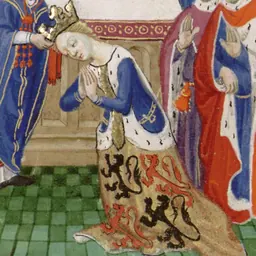



Related people
Same field, nearest in time


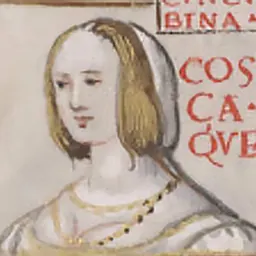
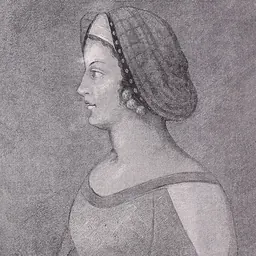
Contemporaries
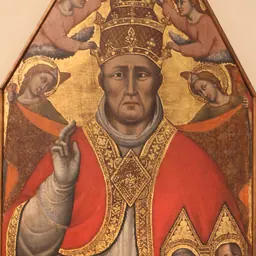
People whose lives overlapped Blanche of Lancaster's


Frequently asked questions
Who was Blanche of Lancaster?
English noblewoman and heiress, died 1368
When was Blanche of Lancaster born?
Blanche of Lancaster was born on 25 March 1342 in Bolingbroke Castle.
When did Blanche of Lancaster die?
Blanche of Lancaster died on 12 September 1368 in Tutbury Castle.
What was Blanche of Lancaster's occupation?
Blanche of Lancaster was a politician.
What nationality was Blanche of Lancaster?
Blanche of Lancaster was English.
Sources & further reading
· Wikipedia: Blanche of Lancaster
· DBpedia: Blanche of Lancaster
Cite this page
APA: Biography.guide. (2026). Blanche of Lancaster. https://biography.guide/blanche-of-lancaster/
MLA: "Blanche of Lancaster." Biography.guide, https://biography.guide/blanche-of-lancaster/.
Chicago: "Blanche of Lancaster." Biography.guide. https://biography.guide/blanche-of-lancaster/.
Data last updated: 2026-09-25 · Spot an error? Report a correction.
Page generated 2026-09-27 05:10 UTC