
About Clement VII
Lived 1342 – 1394 (aged 51–52). Clement VII was a French politician and catholic priest.
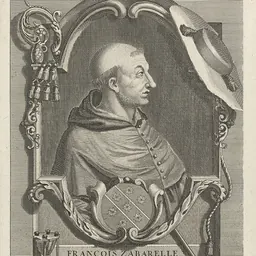
Robert of Geneva (; 1342 – 16 September 1394) was elected to the papacy as Clement VII by the cardinals who opposed Urban VI and was the first antipope residing in Avignon, France. His election led to the Western Schism.
The son of Count Amadeus III of Geneva, Robert became archbishop of Cambrai and was made a cardinal in 1371. As legate, during the War of the Eight Saints, he is said to have authorized the massacre of over 2,000 civilians at Cesena in 1377. He was elected pope the following year by the cardinals who opposed Urban VI and established himself at Avignon.
Biography Robert was born in the Château d'Annecy in 1342, the son of Count Amadeus III of Geneva and Matilda of Boulogne, who were important within the House of Savoy. Guy de Boulogne was his maternal uncle. Robert studied at La Sorbonne in Paris. In 1359, he was appointed prothonotary apostolic, became bishop of Thérouanne in 1361, archbishop of Cambrai in 1368, and a cardinal on 30 May 1371. From 1373 he held the position of archdeacon of Dorset, and from 1374 also Prebend of All Saints Parish Church in Middle Woodford in Wiltshire, leaving both positions in 1378. From 1375, he held a living as rector of Bishopwearmouth in County Durham, England, and instead used the income from that highly prized living for his papal election expenses.
In 1377, while serving as papal legate in upper Italy (1376–1378) and in order to put down a rebellion in the Papal States, known as the War of the Eight Saints, Robert personally commanded troops lent to the papacy by the condottiere John Hawkwood. He occupied the small city of Cesena, which resisted being added to the Papal States. After the murder of 300 to 400 of his soldiers, he authorized the massacre of 3,000–8,000 civilians, an atrocity even by the rules of war at the time, which earned him the nickname butcher of Cesena.
In 1392, at the death of his brother, Peter, he inherited the County of Geneva, The campaign was unsuccessful: Louis suddenly died at Bisceglie on 20 September 1384. Still, these enterprises on several occasions planted Angevin domination in the south of the Italian Peninsula, and their most decisive result was the assuring of Provence to the dukes of Anjou and afterwards to the kings of France. After the death of Louis, Clement hoped to find equally brave and interested champions in Louis' son and namesake Louis II of Anjou, to whom he donated the larger part of the Papal States. Clement then tried to ally with Duke Louis I of Orléans, the brother of King Charles VI of France; with Charles VI himself; and with Count John III of Armagnac. The prospect of his brilliant progress to Rome was ever before Clement's eyes; and in his thoughts force of arms, of French arms, was to be the instrument of his glorious triumph over his competitor.
There came a time, however, when Clement and more particularly his following had to acknowledge the vanity of these elusive dreams; and at the end of his life he realized the impossibility of overcoming by brute force an opposition which was founded on the convictions of the greater part of Catholic Europe. Moreover, his ambitions and the financial needs of his court had resorted to simony, the loss of land and extortion which discerned among his adherents the germs of disaffection. To solicit political support, he created nineteen of the thirty-three total cardinals, but he seems never to have sincerely desired the termination of the schism.
He died at Avignon on 16 September 1394. Benedict XIII was elected to succeed him.
Eventually it was determined that he would be recorded as an antipope rather than as a pope. Uncertainty over who the legitimate pope might be during the time of the Western Schism gave rise to the legal theory called Conciliarism, which claimed that a general council of the Church was superior to the pope and could therefore judge between rival claimants.
Don’t just read it —
keep it.
Full-length biographies made to live with: read them, listen on the way to work, watch them tonight.
- E-book
- Audio
- Video
Instant download · yours to keep · every purchase keeps this site free
Important facts
People in Clement VII's life
Named in this biography and alive at the same time

Related people
Same field, nearest in time

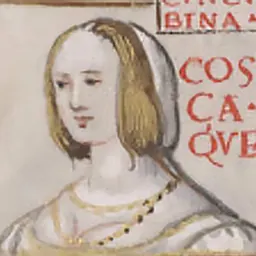
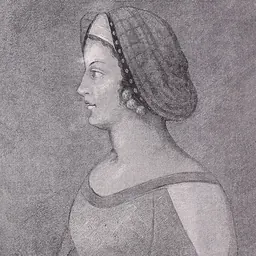
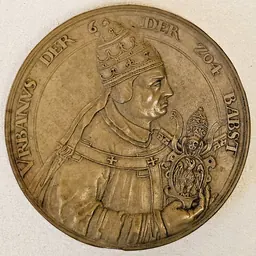
Contemporaries
People whose lives overlapped Clement VII's
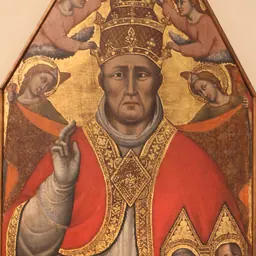



Frequently asked questions
Who was Clement VII?
antipope from 1378 to 1394
When was Clement VII born?
Clement VII was born in 1342 in Château d'Annecy.
When did Clement VII die?
Clement VII died on 16 September 1394 in Avignon.
What was Clement VII's occupation?
Clement VII was a politician and catholic priest.
What nationality was Clement VII?
Clement VII was French.
Sources & further reading
· DBpedia: Antipope Clement VII
Cite this page
APA: Biography.guide. (2026). Clement VII. https://biography.guide/clement-vii/
MLA: "Clement VII." Biography.guide, https://biography.guide/clement-vii/.
Chicago: "Clement VII." Biography.guide. https://biography.guide/clement-vii/.
Data last updated: 2026-09-20 · Spot an error? Report a correction.
Page generated 2026-09-27 05:27 UTC