
About Biswa Ranjan Nag
Lived 1932 – 2004 (aged 71). Biswa Ranjan Nag was an Indian physicist, university teacher and crystallographer, known for Semiconductors.
Biswa Ranjan Nag (1 October 1932 – 6 April 2004) was an Indian physicist and the Sisir Kumar Mitra chair professor at Rajabazar Science College, University of Calcutta. Known for his research in semiconductor physics, Nag was an elected fellow of the Indian National Science Academy and Indian Academy of Sciences. The Council of Scientific and Industrial Research, the apex agency of the Government of India for scientific research, awarded him the Shanti Swarup Bhatnagar Prize for Science and Technology, one of the highest Indian science awards for his contributions to Physical Sciences in 1974.
Biography Nag completed his master's degree and served as faculty in the University of Calcutta's Institute of Radiophysics and Electronics (IRE). Born on 1 October 1932 to Sailabala and Satyaranjan Nag at Comilla, a city along the Dhaka-Chittagong Highway in the undivided Bengal of the British India (presently in Bangladesh), B. R. Nag did his graduate studies at Presidency College, Calcutta, during 1949–51 and earned a master's degree in technology (M.Tech.) from the Institute of Radiophysics and Electronics (IRE) at the Rajabazar Science College campus of the University of Calcutta in 1954. He started his career in 1956 as a faculty member at IRE and simultaneously pursued doctoral studies, mentored by Arun K. Choudhury. In between, he spent one year at the University of Wisconsin, obtaining an MS in 1959. Mr. Nag returned to Calcutta to resume his doctoral work, and earned his PhD in 1961. Continuing his teaching career, he became a full professor in 1968. Further research earned him a Doctor of Science degree from Calcutta University in 1972. He served out his regular academic career at the university and continued his association past his superannuation in 1997 as its Sisir Kumar Mitra professor. In between, he also served as a Commonwealth visiting professor at Bangor, Gwynedd. During his early years at Calcutta University, he led a group of students who were engaged in the studies on microwave measurements of semiconductor properties and did advanced research on Gunn effect and microwave radiation. His studies revealed the non-parabolic nature of electron energy dispersion in narrow quantum wells, and this modified the theory of interface roughness scattering limited mobility for Quantum Wells with finite barrier height and Well width. Liquid phase Epitaxy Semiconducting III–V compounds, acousto-electric effect and free carrier absorption, Gini ratio and Si coefficient related to hot-electron galvanomagnetic transport were some of the other areas of his research. His studies have been documented by way of a number of articles and the article repository of the Indian Academy of Sciences has listed 190 of them. He authored three monographs, Theory of electrical transport in semiconductors, Physics of Quantum Well Devices and Electron Transport in Compound Semiconductors of which the last mentioned is reported to be a significant reference text for researchers. and his work has drawn citations in a number of books.
Awards and honors Nag, a founder fellow of the Indian National Academy of Engineering, He was selected for the Jawaharlal Nehru Fellowship in 1975, and the Indian National Science Academy elected him as a fellow in 1978; the academy would honor him again in 1993 with the INSA Prize for Materials Science. He became an elected fellow of the Indian Academy of Sciences. The department of radio physics and electronics of the University of Calcutta instituted an annual conference, International Conference on Computers and devices for Communication (CODEC), in his honor in 1998, a year after Nag retired from academic service.
Selected bibliography Books
Chapters
Articles
Don’t just read it —
keep it.
Full-length biographies made to live with: read them, listen on the way to work, watch them tonight.
- E-book
- Audio
- Video
Instant download · yours to keep · every purchase keeps this site free
Important facts
People in Biswa Ranjan Nag's life
Named in this biography and alive at the same time

Related people
Same field, nearest in time
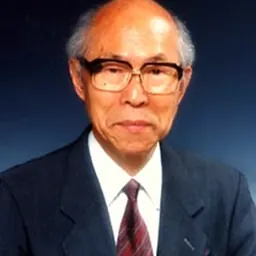



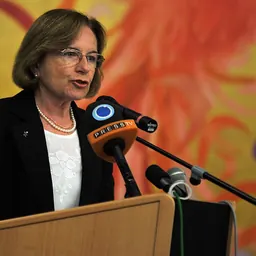
Contemporaries
People whose lives overlapped Biswa Ranjan Nag's

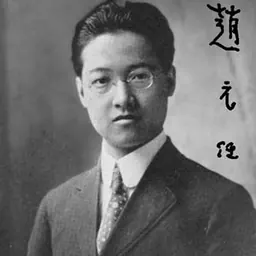


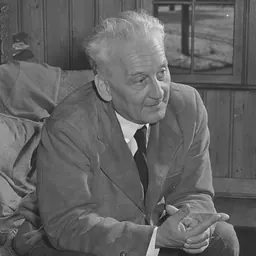
Frequently asked questions
Who was Biswa Ranjan Nag?
Indian physicist
When was Biswa Ranjan Nag born?
Biswa Ranjan Nag was born on 1 October 1932 in Cumilla.
When did Biswa Ranjan Nag die?
Biswa Ranjan Nag died on 6 April 2004 in Kolkata.
What was Biswa Ranjan Nag's occupation?
Biswa Ranjan Nag was a physicist, university teacher and crystallographer.
What was Biswa Ranjan Nag known for?
Biswa Ranjan Nag was known for Semiconductors.
What nationality was Biswa Ranjan Nag?
Biswa Ranjan Nag was Indian.
Sources & further reading
Cite this page
APA: Biography.guide. (2026). Biswa Ranjan Nag. https://biography.guide/biswa-ranjan-nag/
MLA: "Biswa Ranjan Nag." Biography.guide, https://biography.guide/biswa-ranjan-nag/.
Chicago: "Biswa Ranjan Nag." Biography.guide. https://biography.guide/biswa-ranjan-nag/.
Data last updated: 2026-09-20 · Spot an error? Report a correction.
Page generated 2026-09-27 05:25 UTC