
About Bishwa Bandhu Thapa
Lived 1927 – 2026 (aged 98). Bishwa Bandhu Thapa was a revolutionary.
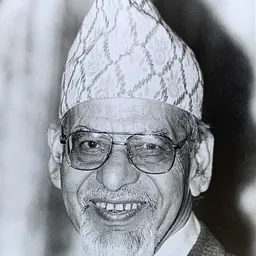
Bishwa Bandhu Thapa (; 9 September 1927 – 14 February 2026) was a Nepalese politician who was regarded as a key figure in the early days of the Panchayat system. Thapa, who was seen as one of the architects of the Panchayat system, served as the first chairman of the Rastriya Panchayat from 1963 to 1964.
Early life Thapa was born on 9 September 1927 in Saharsa, India, to Padma Jung Thapa who had been a Subba in the Rana administration. His mother died at childbirth.
Nepali Congress (1946–1959) He was a student at Kashi Hindu Vishwavidyalaya in Benaras along with Man Mohan Adhikari, B. P. Koirala and K. P. Bhattarai. He was a founding member of the Nepali National Congress in 1946. He was arrested for distributing party pamphlets during the Biratnagar jute mill strike the following year.
In November 1951, the Mukti Sena under Thapa and Keshav Koirala tried to take over Jhapa but failed. The next month they launched a successful campaign to take over Rangeli and Biratnagar. He was made home minister of the people's government in Biratnagar. When Koirala was appointed home minister after the 1951 revolution, he appointed Thapa as the Badahakim for Gorkha and later for Pokhara when Matrika Prasad Koirala was prime minister. He was nominated as a central committee member of Nepali Congress in 1951. At the party's sixth general convention in 1956 at Birgunj, he was appointed general secretary of the party. He was re-appointed general secretary at a special general convention the following year in Biratnagar. At the party's seventh general convention at Kathmandu in 1960, Thapa was elected as a member of the central working committee of the party.
Thapa was elected as a member of the 1st House of Representatives from Chitaun– Chisapani at the 1959 elections. He also served as the chief whip for Nepali Congress during the term of the parliament.
Panchayat (1960–1990) Thapa was in New York for the United Nations General Assembly during the 1960 coup d'état by King Mahendra. He was arrested after landing in Kathmandu, but was taken to his residence. He met with Tulsi Giri and three days later had an audience with the king where he was asked to support the move. He came out in support of the move and planned the Panchayat system along with Tulsi Giri. On the insistence of Giri and Thapa all political parties were banned instead of the proposed ban on only Nepali Congress. He and Tulsi Giri developed the political philosophy of the Panchayat system, along with formulating its plans and policies. In April 1963, he was appointed the chairman of the Rastriya Panchayat. He also headed the Commission for Administrative Power Decentralization that was formed in May 1963 which recommended the formation of panchayats at the village and district level.
On 5 July 1964 then King Mahendra appointed Thapa, the chair of the National Panchayat, as the first deputy chairman of the cabinet under Tulsi Giri but later resigned on 21 August 1964. He resigned from the Rastriya Panchayat in July 1966. In 1967, Thapa was arrested for planning to issue a statement against the postponement of the Graduate's Organization elections. He was appointed the chairman of the central committee of the Back to the Village national campaign in 1969. He campaigned in support of the multiparty side in the 1980 referendum on government reform. He rejoined Nepali Congress in 1981, but left the party after Koirala's death in 1982. He was elected as the president of the Graduate's Organization in the panchayat elections. In July 2017, Thapa was nominated as a central committee member of the reunified Rastriya Prajatantra Party.
Personal life and death His family was close to the Koirala family and Krishna Prasad Koirala was the maternal uncle during Thapa's bratabandha. He married Josana Thapa when he was 18 in Chitwan.
Thapa died on 14 February 2026, at the age of 98.
Don’t just read it —
keep it.
Full-length biographies made to live with: read them, listen on the way to work, watch them tonight.
- E-book
- Audio
- Video
Instant download · yours to keep · every purchase keeps this site free
Important facts
People in Bishwa Bandhu Thapa's life
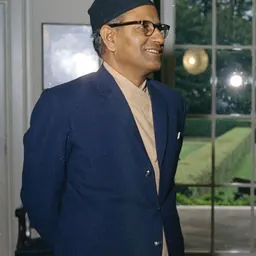
Named in this biography and alive at the same time



Related people
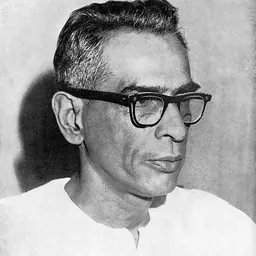
Same field, nearest in time




Contemporaries
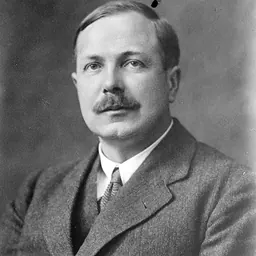
People whose lives overlapped Bishwa Bandhu Thapa's

Frequently asked questions
Who was Bishwa Bandhu Thapa?
Nepalese politician (1927–2026)
When was Bishwa Bandhu Thapa born?
Bishwa Bandhu Thapa was born on 9 September 1927.
When did Bishwa Bandhu Thapa die?
Bishwa Bandhu Thapa died on 14 February 2026.
What was Bishwa Bandhu Thapa's occupation?
Bishwa Bandhu Thapa was a revolutionary.
Sources & further reading
· Wikipedia: Bishwa Bandhu Thapa
· DBpedia: Bishwa Bandhu Thapa
Cite this page
APA: Biography.guide. (2026). Bishwa Bandhu Thapa. https://biography.guide/bishwa-bandhu-thapa/
MLA: "Bishwa Bandhu Thapa." Biography.guide, https://biography.guide/bishwa-bandhu-thapa/.
Chicago: "Bishwa Bandhu Thapa." Biography.guide. https://biography.guide/bishwa-bandhu-thapa/.
Data last updated: 2026-09-20 · Spot an error? Report a correction.
Page generated 2026-09-27 05:15 UTC