
Biofilo Panclasta
Political activist, writer, and Colombian individualist anarchist
About Biofilo Panclasta
Lived 1879 – 1942 (aged 62). Biofilo Panclasta was a Colombian writer and politician.
Vicente Rojas Lizcano (October 26, 1879, in Chinácota, Colombia – March 1, 1943, in Pamplona, Colombia), known as Biófilo Panclasta, was a political activist, writer, and Colombian individualist anarchist. In 1904 he began to use the pseudonym by which he was later known: Biófilo, lover of life, and Panclasta, enemy of all. He traveled to more than fifty countries, agitating for anarchist ideas and taking part in worker and union demonstrations, in the course of which he befriended such people as Kropotkin, Maxim Gorky, and Lenin.
Biography
Early life The son of Bernardo Rojas and Simona Lizcano, a working-class woman, Biófilo began his studies in Pamplona, a city close to Chinácota. From 1897 to 1898 he was in the Escuela Normal of Bucaramanga, from which he was expelled for publishing a small periodical in which he denounced the re-election of president Miguel Antonio Caro.
Participation in the Venezuelan Revolution In 1899 he left school and traveled to Venezuela, where, with Eleazar López Contreras, he founded the first Public School in the town of Capacho Nuevo, the capital of the Independencia municipality (State of Táchira). That same year he signs up for the army of the Venezuelan Cipriano Castro, which had as its goal the downfall of president Ignacio Andrade. He soon left this group behind and wandered around Venezuela with other revolutionary groups that prowled through Trujillo, Portuguesa, Cojedes and Carabobo. He arrived at the city of Valencia in January 1900. In November 1904 he traveled to the Colombian city of Barranquilla, now as a colonel in the army of Cipriano Castro; he offered his support as a fighter to the Colombian forces against the Panamanian separatists supported by the United States.
First contacts with Anarchism In 1906 he traveled to Buenos Aires, Argentina. There his contact with anarchist and socialist thought began as he attended meetings and wrote for partisan newspapers. That same year, he left for Europe as a delegate of the Federación Obrera Regional Argentina to the Workers' Congress in Amsterdam.
Revolutionary activity around the world In 1923, two years after leaving the Valencia prison, Biófilo was selected as delegate of the Mexican Anarchist Association to a congress in Barcelona. There he proposed a project named Operation Europe, which had as its goal:
Last years In 1934, Biófilo Panclasta began cohabiting with Julia Ruiz, a well-known fortune teller who worked in Bogotá. He dedicated his time to writing for newspapers and granting interviews, also sending letters to some Latin American presidents. His companion died in January 1939. One year later, Biófilo attempted suicide in Barranquilla, electrocuting himself and cutting his throat with a straight razor.
Thought Biófilo Panclasta's ideas on anarchism were quite idiosyncratic. He oscillated between individualist anarchism and social anarchism, which can be seen in a series of letters he wrote from Barranquilla prison in 1910. At first, Biófilo presented himself as an extreme and radical individualist, echoing the ideas of his favorite philosopher, Nietzsche. Biófilo hated the herd:
For Panclasta, the social struggle he carried out was not for others, but for himself, to feel alive. Fighting for others allowed him, he said, to unfold all his capacities for action, for love or hate.
But Biófilo was just as capable of identifying with social anarchism. Biófilo's opinions on both currents of anarchism are of a piece with his overall way of thinking, that of someone who hated absolutes and extremes, who thought that people are neither completely social nor entirely individual. He tried to distance himself from any form of political militancy, even anarchist organizations. He wrote of a conversation with Kropotkin where he told him:
Works Books in English translation Seven Years Buried Alive. Seattle: Ritmomaquia, 2013. Books in Spanish PANCLASTA, Biófilo (1932): "Siete años enterrado vivo en una de las mazmorras de Gomezuela". Tipografía la Libertad, Bogotá. VILLANUEVA, Orlando; VEGA, Renán; GAMBOA, Juan, CLAVIJO, Amadeo; FAJARDO, Luis (1992): "Biófilo Panclasta, el eterno prisionero". Ediciones Alas de Xue.
Don’t just read it —
keep it.
Full-length biographies made to live with: read them, listen on the way to work, watch them tonight.
- E-book
- Audio
- Video
Instant download · yours to keep · every purchase keeps this site free
Important facts
People in Biofilo Panclasta's life
Named in this biography and alive at the same time
Related people
Same field, nearest in time
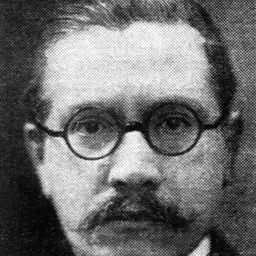

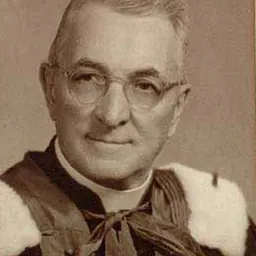

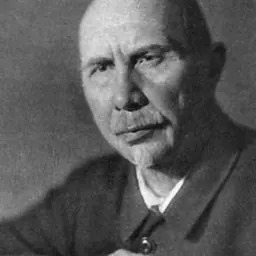

Contemporaries
People whose lives overlapped Biofilo Panclasta's
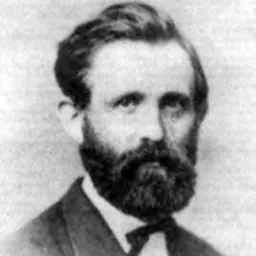


Frequently asked questions
Who was Biofilo Panclasta?
Political activist, writer, and Colombian individualist anarchist (1879-1942)
When was Biofilo Panclasta born?
Biofilo Panclasta was born on 26 October 1879 in Chinácota.
When did Biofilo Panclasta die?
Biofilo Panclasta died on 1 March 1942 in Pamplona.
What was Biofilo Panclasta's occupation?
Biofilo Panclasta was a writer and politician.
What nationality was Biofilo Panclasta?
Biofilo Panclasta was Colombian.
Sources & further reading
· Wikipedia: Biofilo Panclasta
Cite this page
APA: Biography.guide. (2026). Biofilo Panclasta. https://biography.guide/biofilo-panclasta/
MLA: "Biofilo Panclasta." Biography.guide, https://biography.guide/biofilo-panclasta/.
Chicago: "Biofilo Panclasta." Biography.guide. https://biography.guide/biofilo-panclasta/.
Data last updated: 2026-09-20 · Spot an error? Report a correction.
Page generated 2026-09-27 05:33 UTC