
About Billy Paul
Lived 1934 – 2016 (aged 81). Billy Paul was an American singer.
Paul Williams (December 1, 1934 – April 24, 2016),
He recalled: "That's how I really got indoctrinated into music. My mother was always...collecting records and she would buy everything from Jazz at Philharmonic Hall to Nat King Cole." He began singing along and tried to emulate the records he heard: "I always liked Nat King Cole. I always wanted to go my own way, but I always favored other singers like Dinah Washington, Sarah Vaughan, Ella Fitzgerald – I loved Ella Fitzgerald. There are so many of them. Nina Simone was one of my favorites – Johnny Mathis, They all had a style, a silkiness about them.... I wanted to sing silky, like butter – mellow. I wanted to sing mellow you know what I mean. One of my favorites is Jessie Belvin – they used to call him Mr. Easy. A lot of people forgot about him you know – Sam Cooke is another one of my favorites."
Billy Paul was heavily influenced by jazz vocalist Billie Holiday.
Paul explained why he was particularly influenced by female jazz singers: "I think the reason behind that is because of my high range. The male singers who had the same range I did, when I was growing up, didn't do much for me. But put on Nina Simone, Carmen McRae or Nancy Wilson, and I'd be in seventh heaven. Female vocalists just did more with their voices, and that's why I paid more attention to them." Billboard reviewed the tracks favorably, saying of "Why Am I" that it was "Expressive warbling of a moody ballad, by the label's new 16-year-old chanter", and of "That's Why I Dream": "Organ and piano lend the singer a hand in this slow-paced etching of a romantic number".
In June 1952, Paul released his second single – this time collaborating with the Buddy Lucas Orchestra – "You Didn't Know", backed with "The Stars Are Mine" (Jubilee Records 5086). Billboard was again positive, saying about "You Didn't Know" – "Billy Paul, new young singer, makes an impressive bow on the label with a strong performance of a weeper ballad which should pick up spins and plays. The Lucas ork furnishes okay backing. A good disk" and about "The Stars Are Mine" – "Paul sings this new tune more quietly, over a smooth ork reading. Side is not as exciting as flip and tune is not as strong." A few weeks later, Jubilee took out an ad in Billboard to promote their artists in anticipation of the annual NAMM Show – the music industry trade convention put on by the National Association of Music Merchants (NAMM). Jubilee plugged Paul's latest single and noted: "He's New – He's Hot!" Despite Jubilee's efforts, none of the tracks by the young singer made the charts.
Army years and resumption of professional career
Billy Paul served with Elvis Presley and a number of other musicians in post-World War II Germany.
Paul's career took an unexpected turn when he was drafted into the Armed Services. He recalled: quote|I went in, in 1957, and I was stationed with Elvis Presley and Gary Crosby – Bing Crosby's son. We were in Germany and we said we're going to start a band, so we didn't have to do any hard work in the service. We tried to get Elvis to join but he wanted to be a jeep driver. So me and Gary Crosby, we started it and called ourselves the Jazz Blues Symphony Band. Some famous people came out of that band; Cedar Walton, Eddie Harris and we toured all over Germany. Elvis didn't wanna join us. I used to see him every day but he drove the jeep for the Colonel. He didn't want to join our band. He wanted to get away from music for a while, while he was in the service you know.
After his discharge, Paul formed a jazz trio with hard bop pianist Sam Dockery and bassist Buster Williams.
Paul's second LP, Ebony Woman (1970), was a more commercial release on Gamble & Huff's Neptune label. Paul cut a new version of his 1959 single and made it the title track. Gamble & Huff were firmly in control of the production. Merging jazz and soul, the LP achieved some modest success reaching No. 12 on the Billboard soul chart and No. 183 on the pop chart.
Philadelphia International releases
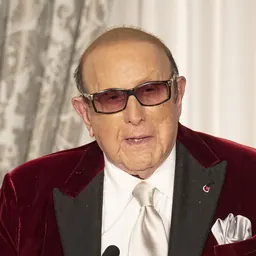
After Neptune folded, Gamble and Huff started their third label – Philadelphia International Records (PIR) – and brought Paul with them. Gamble and Huff signed a distribution deal with Clive Davis and CBS Records.
Going East (1971) was the first Billy Paul album released on the Philadelphia International Records label, making full use of the label's regular group of ace musicians MFSB at Sigma Sound Studios. As they had done on the previous LP, Gamble and Huff sought to find the balance between Paul's jazz roots and the funky soul that they hoped would bring mainstream success. Paul nearly reached the charts with the single "Magic Carpet Ride" (cover of the 1968 Steppenwolf hit) and the album climbed to No. 42 on the Billboard soul chart and No. 197 on the pop chart.
Decades later, Paul was more philosophical about the song: "That was what I had with 'Am I Black Enough.' I wanted – I'm gonna make it this time and come out. I think it's true to the audience, cos they look for something to come out compared to Mrs. Jones and that was Clive Davis' idea to do that. I think it was Kenny and Clive Davis, but I think it was mostly Clive Davis." Jesse Jackson and Operation PUSH led the movement against this song and others such as Hall & Oates's "Rich Girl" and the Four Tops' "Catfish". The disc jockeys – who refused to allow their names to be used for fear of reprisals – accused Jackson of being "absolutely dishonest" about the campaign, with one popular radio personality making reference to Richard Pryor's 1975 appearance at one of Jackson's events:
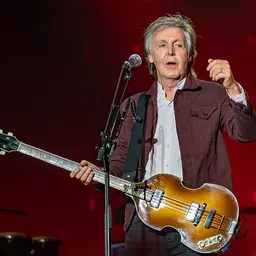
Billy Paul paid homage to fallen civil rights leaders including Martin Luther King Jr. and Malcolm X in his version of Paul McCartney's 1976 hit "Let 'Em In".
Surprisingly, the controversy only escalated with the release of Paul's next album, Let 'Em In in late 1976. The title track was a funky soul version of Paul McCartney's No. 3 U.S. hit from earlier that summer. While McCartney's version was heavy on personal references and comparatively light on political figures, Billy Paul's version turned the formula on its head to become a kind of civil rights anthem – albeit one with a personal touch due to the mention of his recently deceased twin sister Pauline Williams. As where McCartney only obliquely refers to "Brother John" (John Lennon or brother-in-law John Eastman or John F. Kennedy) and "Martin Luther" (the martyred civil rights leader or the 16th-century theologian), Billy Paul's version is far more explicit in reciting a list of deceased civil rights leaders (Elijah Muhammad, Malcolm X, Martin Luther King Jr., John F. Kennedy, Robert F. Kennedy, Medgar Evers, and Louis Armstrong). Furthermore, interspersed with Billy Paul's verses are memorable passages of speeches by Malcolm X and King.
Yet, just as they had done with "Let's Make a Baby", WVON – Chicago's oldest black-oriented radio station – altered the song. This time an engineer at the station spliced in a parts of a speech by Jesse Jackson as a substitute for parts of King's speech. Paul was furious and said that he had the "shock of my life" when he learned of the alteration. By contrast, Jason Ankeny said that the 1999 compilation Me & Mrs. Jones: Best of Billy Paul "goes far beyond the classic title track in restoring the singer to prominence, showcasing his versatility via superb covers of pop favorites.... [and] the inclusion of R&B chart hits.... it all adds up to a definitive portrait of Paul in his prime."
Paul was on the Philadelphia International label, in all, for nine years and while he enjoyed considerable success – especially with "Me and Mrs. Jones" – critics generally agree that he deserved better. Andrew Hamilton put it bluntly: "Gamble and Huff did a horrible job picking Paul's singles. Some better choices, and his career might have been Hall-of-Famish." Similarly, Jason Ankeny wrote: "Too easily dismissed as little more than a one-hit wonder, Billy Paul was, in fact, one of the most gifted and affecting talents to grace the Philadelphia International stable – the recipient of some of the Gamble and Huff team's most lush and sophisticated productions. His deeply soulful voice bridged the gap between jazz and soul, textured in equal measure by street-smart swagger and touching vulnerability." But like so many artists before him, he could not resist the temptation to continue to play live shows and record. In 2009 he was asked how he was enjoying his retirement in South Jersey: "Retired? Are you serious?"
Billy Paul regularly played live around the world including this 2006 concert at the Carthage Palace Hotel in Tunis, Tunisia.
Post-"retirement", Paul regularly toured in the U.S. and abroad playing small clubs, hotel ballrooms, Las Vegas showrooms, Jazz festivals, and theaters. Asked in 2012 whether playing in Philadelphia held special meaning to him, he said: "I try to feel comfortable wherever I play, but they call it being a native son and I do get a lot of respect there so it is special. The reaction internationally is great as well, so even in Paris or Brazil we have great audiences. Songs like Mrs. Jones are huge everywhere so I do perform a lot overseas."
quote=I've always worked hard to create my own style. Nobody sounds like me. I've heard them call me 'legendary.' That feels pretty good ... though the word is overused these days. — -Billy Paul, 2009
His show of June 12, 2011, in São Paulo, Brazil consisted of "Thanks for Saving My Life", "I Will Survive" (performed by backing vocalist Anna Jordan), "Hello", "Purple Rain", "Smile", "Mrs. Robinson", "Your Song", "Me and Mrs. Jones", and "You Are So Beautiful".
On September 2nd, 2012, Billy Paul performed for a crowd of some twenty-five thousand fans in a free concert at Rio de Janeiro's Madureira Park , which had been inaugurated during the Rio+20 conference weeks before.
"Me and Mrs. Jones" lawsuits Olympic athlete Marion Jones was featured in the Nike television commercial that used Billy Paul's "Me and Mrs. Jones" song without his consent.
In 2000, Nike began airing a commercial featuring track and field star Marion Jones – the face of Team USA for the 2000 Summer Olympics, winning five medals, which were all later stripped from her for cheating. The campaign, entitled "Mrs. Jones", depicted the athlete as a half-hidden DJ talking about issues such as education and better pay for female athletes. The ad also featured Paul's studio recording of "Me and Mrs. Jones". Paul sought $1 million in lost licensing fees, arguing that the company had cheated him by not obtaining his permission to use the song. A spokesperson for the ad agency called the decision to air the song without permission "a very stupid mistake". At the 2003 trial in a federal district court in Los Angeles, Joseph E. Porter, the attorney for Assorted Music, argued that Paul was only owed about $27,000, explaining that while the company had mistakenly failed to collect proper foreign royalties on the record, Paul actually owed the company about $314,000 for the costs of recording and producing the 10 albums he made for Philadelphia International from 1971 to 1980.
In the end, the jury deliberated for less than an hour and found that Paul did not owe the company anything. Instead, they awarded him half a million dollars in unpaid royalties for his recording of "Me and Mrs. Jones". Paul said through a statement issued by his attorney: "I'm so glad my path to justice has finally come to an end. I've been waiting years to be paid for my recordings." Seymour Straus, who testified at trial on Paul's behalf commented: "There is no question that Billy Paul's royalties had been improperly calculated for many years."
The O'Jays were among the artists who benefited from the precedent set by Billy Paul's lawsuit for unpaid royalties.
Paul's wife and manager Blanche Williams called the decision a "moral victory" and had especially harsh words for Kenny Gamble and Leon Huff: "The jury was...pissed off at the arrogance of G&H, the 'creative bookkeeping' done by Sony, and at discovering how blatantly and systematically Sony and PIR under-reported Billy's earnings.... In addition G&H will have to pay us interest on that money going back to '94 (statute of limitations). Oh yes, 'the chickens came home to roost.' Winning this case opens the door for all of those other artists whose royalties were withheld or under-accounted to go to court and seek justice, and to know that they have a good chance of winning their case. This is just the beginning of G&H's worst nightmare. The avalanche cometh." and the O'Jays who also sued Gamble & Huff for unpaid royalties.
Feature film
In 2009, the biographical feature film Am I Black Enough for You?, directed by Swedish director Göran Hugo Olsson, was released. Awarding the film three stars, Uncut magazine said "Olsson modelled his film on Let's Get Lost, Bruce Weber's 1989 portrait of Chet Baker, saying: "Paul is certainly no fallen demi-genius to set alongside Baker, but he proves an engaging, articulate subject, with a story that stretches back to playing alongside Charlie Parker, and peppered with the usual racial prejudice. His career is, in its way, emblematic of black America's struggles over the last half century, including a descent into cocaine addiction and recovery, both shared with his wife, who remains a quirky, willful presence throughout the movie. The pair come across as a jazzy Derby and Joan."
Paul explained why he had agreed to work with the filmmakers: "Well I'm not getting any younger and I wanted to express some things that might have been hidden. I wanted to release my heart and tell people about my highs and lows and I think you get that from this documentary.... It wasn't difficult to make. We were followed all over the world by this film crew from Europe and I got to be very good friends with the filmmakers. I would say things and do things as if the camera wasn't even there. They approached me about doing this film, and they are real fans. "Am I Black Enough for You?" is very popular in Sweden and these guys really knew their music. They were serious about it, they flew over and followed me and it got real personal...and I trusted them. It's very important like the relationship I have with my wife is based on trust. I wish everyone could have that level in their lives.... I am now at peace with myself, I think this movie has done a lot for me because it's helped me get rid of a lot of demons.
Awards and honors
In addition to receiving the Grammy for "Me and Mrs. Jones", Paul won several Ebby awards given by the readers of Ebony magazine; was a recipient of an American Music Award, the NAACP Image Award and numerous proclamations and keys to cities across the United States.
In 2010 Questlove of the Roots equated Paul with Marvin Gaye and Stevie Wonder, calling him "one of the criminally unmentioned proprietors of socially conscious post-revolution '60s civil rights music."
On April 27, 2026, Paul was inducted into the Atlantic City Walk of Fame at Brighton Park and presented by, The National R&B Music Society. On-air Radio personality Maurice "The Voice" Watts inducted Paul. Tavares, Sister Sledge, Melba Moore, Roy Ayers and Black Ivory were also inducted as part of the 2026 Class.
Death Paul died on the afternoon of April 24, 2016, at his home in the Blackwood section of Gloucester Township, New Jersey, from pancreatic cancer at the age of 81. He was buried at the West Laurel Cemetery in Bala Cynwyd, Pennsylvania, near labelmate Teddy Pendergrass, who died in 2010.
Discography Albums Year Album Label Peak chart positions US USR&B UK 1973 Philadelphia International 3526 "Am I Black Enough for You?" / "I'm Gonna Make It This Time" 79 29 — — Philadelphia International 3538 "Thanks for Saving My Life" / "I Was Married" 37 9 — 33 1974 Philadelphia International 3551 "Be Truthful to Me" / "I Wish It Were Yesterday" — 37 — — Philadelphia International 2225 "The Whole Town's Talking" / "I Was Married" (UK only) — — — — 1975 Philadelphia International 3563 "Billy's Back Home" / "I've Got So Much to Live For" — 52 — — Philadelphia International 3572 "July July July July" / "When It's Your Time to Go" — — — — 1976 Philadelphia International 3584 "Let's Make a Baby" / My Head's on Straight" 83 18 — 30 Philadelphia International 3593 "People Power" / "I Want Cha Baby" — 82 — — 1977 Philadelphia International 3613 "How Good is Your Game" / "I Think I'll Stay Home Today" — 50 — — Philadelphia International 3621 "Let 'em In" / "We All Got a Mission" — 91 — 26 Philadelphia International 3630 "I Trust You" / "Love Won't Come Easy" — 79 — — Philadelphia International 5038 "Without You" / "Word Sure Gets Around" (Italy only) — — — — Philadelphia International 5391 "Your Song" / "How Good is Your Game" (UK only) — — — 37 Philadelphia International 3635 "Only the Strong Survive" / "Where I Belong" — 68 — 33 Philadelphia International 3636 "Let's Clean Up the Ghetto" / "Let's Clean Up the Ghetto" 91 4 — — 1978 Philadelphia International 3639 "Sooner or Later" / "Everybody's Breaking Up" — — — — Philadelphia International 5983 "Everybody's Breaking Up" / "One Man's Junk" (UK only) — — — — Philadelphia International 3645 "Don't Give Up on Us" / "One Man's Junk" — — — — 1979 Philadelphia International 3676 "Bring the Family Back" / "It's Critical" — 90 — 51 Philadelphia International 3699 "False Faces" / "I Gotta Put This Life Down" — — — — 1980 Philadelphia International 3736 "You're My Sweetness" / "Me and Mrs. Jones" — 69 — — Philadelphia International 3737 "Jesus Boy (You Only Look Like a Man)" / "Love Buddies" — — — — 1985 Total Experience 49899 "Lately" / "I Search No More" (UK only) — — — — Total Experience 49934 "Sexual Therapy" / "I Only Have Eyes for You" (UK only) — — — 80 1988 Ichiban 88–141 "We Could Have Been" / "I'd Rather be Alone" — — — — Ichiban 88–150 "I Just Love You So Much" / "This May be Love" — — — — 2011 "Me and Mrs. Jones" — — — 177 "—" denotes releases that did not chart or were not released in that territory.
Filmography 2009, Am I Black Enough for You? (Cert 12A), director: Göran Hugo Olsson
Don’t just read it —
keep it.
Full-length biographies made to live with: read them, listen on the way to work, watch them tonight.
- E-book
- Audio
- Video
Instant download · yours to keep · every purchase keeps this site free
Important facts
People in Billy Paul's life
Named in this biography and alive at the same time





Related people
Same field, nearest in time





Contemporaries
People whose lives overlapped Billy Paul's


Frequently asked questions
Who was Billy Paul?
American singer-songwriter (1934-2016)
When was Billy Paul born?
Billy Paul was born on 1 December 1934 in Philadelphia.
When did Billy Paul die?
Billy Paul died on 24 April 2016 in Blackwood.
What was Billy Paul's occupation?
Billy Paul was a singer.
What nationality was Billy Paul?
Billy Paul was American.
Sources & further reading
Cite this page
APA: Biography.guide. (2026). Billy Paul. https://biography.guide/billy-paul/
MLA: "Billy Paul." Biography.guide, https://biography.guide/billy-paul/.
Chicago: "Billy Paul." Biography.guide. https://biography.guide/billy-paul/.
Data last updated: 2026-09-20 · Spot an error? Report a correction.
Page generated 2026-09-27 05:25 UTC