
About Bill Mauldin
Lived 1921 – 2003 (aged 81). Bill Mauldin was an American actor, caricaturist, screenwriter, journalist, comics artist and cartoonist.
William Henry Mauldin (; October 29, 1921 – January 22, 2003) was an American editorial cartoonist who won two Pulitzer Prizes for his work. He was most famous for his World War II cartoons depicting American soldiers, as represented by the archetypal characters Willie and Joe, two weary and bedraggled infantrymen who stoically endure the difficulties and dangers of duty in the field.
Mauldin's cartoons were popular with soldiers throughout Europe, and with civilians in the United States as well. His second Pulitzer Prize was for a cartoon published in 1958, and possibly his best-known cartoon was after the Kennedy assassination.
Early life Mauldin was born in Mountain Park, New Mexico, into a family with a tradition of military service. His father, Sidney Albert Mauldin (né Bissell, but adopted after being orphaned) served as an artilleryman in World War I. Bill's grandfather by way of his father's adoption, for whom Bill was named, had been a civilian scout in the Apache Wars. After his parents' divorce, Bill and his older brother Sidney moved to Phoenix, Arizona in 1937 and attended Phoenix Union High School. It was there that he began his career in editorial journalismwriting for PUHS's Coyote Journal. Bill did not graduate with his class (he was later granted a diploma in 1945)
World War II Shortly after returning to Phoenix in 1940, Mauldin enlisted in Company D, 120th Quartermaster Regiment, of the Arizona National Guard, at Phoenix, Arizona. During July 1943, Mauldin's cartoon work continued when, as a sergeant of the 45th Infantry Division's press corps, he landed with the division in the invasion of Sicily and later in the Italian campaign. Mauldin began working for Stars and Stripes, the American soldiers' newspaper; as well as the 45th Division News, until he was officially transferred to the Stars and Stripes in February 1944. His cartoons were viewed by soldiers throughout Europe during World War II, and were also published in the United States. The War Office supported their syndication, not only because they helped publicize the ground forces but also to show the grim side of war, which helped show that victory would not be easy. While in Europe, Mauldin befriended a fellow soldier-cartoonist, Gregor Duncan, and was assigned to escort him for a time. (Duncan was killed at Anzio in May 1944.)
Mauldin was not without his detractors. His images—which often parodied the Army's spit-shine and obedience-to-orders-without-question policy—offended some officers. After a Mauldin cartoon ridiculed Third Army commander General George Patton's decree that all soldiers be clean-shaven at all times—even in combat—Patton called Mauldin an "unpatriotic anarchist" and threatened to "throw [his] ass in jail" and ban Stars and Stripes from his command. General Dwight Eisenhower, Patton's superior, told Patton to leave Mauldin alone; he felt the cartoons gave the soldiers an outlet for their frustrations. "Stars and Stripes is the soldiers' paper," he told him, "and we won't interfere."
In a 1989 interview, Mauldin said, "I always admired Patton. Oh, sure, the stupid bastard was crazy. He was insane. He thought he was living in the Dark Ages. Soldiers were peasants to him. I didn't like that attitude, but I certainly respected his theories and the techniques he used to get his men out of their foxholes."
Mauldin's cartoons made him a hero to the common soldier. GIs often credited him with helping them to get through the rigors of the war. His credibility with the troops increased in September 1943, when he was wounded in the shoulder by a German mortar while visiting a machine gun crew near Monte Cassino. The first civilian compilation of his work, Up Front, a collection of his cartoons interwoven with his observations of war, topped the best-seller list in 1945. After the war's end, the character of Willie was featured on the cover of Time magazine for the June 18, 1945, issue. Mauldin made the cover of the July 21, 1961, issue.
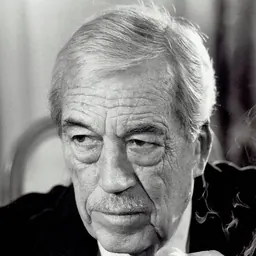
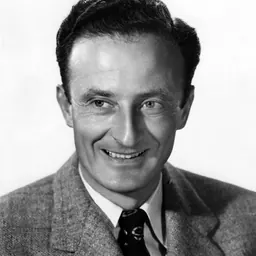
After the war, Mauldin turned to drawing political cartoons expressing a generally civil libertarian view associated with groups such as the American Civil Liberties Union. These were not well received by newspaper editors, who were hoping for apolitical cartoons. Mauldin's attempt to carry Willie and Joe into civilian life was also unsuccessful, as documented in his memoir Back Home in 1947. In 1951, he appeared with Audie Murphy in the John Huston film The Red Badge of Courage, and in Fred Zinnemann's Teresa.
In 1956, he ran unsuccessfully for the United States Congress as a Democrat in New York's 28th congressional district. Mauldin said about his run for Congress: I jumped in with both feet and campaigned for seven or eight months. I found myself stumping around up in these rural districts and my own background did hurt there. A farmer knows a farmer when he sees one. So when I was talking about their problems I was a very sincere candidate, but when they would ask me questions that had to do with foreign policy or national policy, obviously I was pretty far to the left of the mainstream up there. Again, I'm an old Truman Democrat, I'm not that far left, but by their lives I was pretty far left.
In 1959, Mauldin won a second Pulitzer Prize, while working at the St. Louis Post-Dispatch, for a cartoon depicting Soviet author Boris Pasternak in a Gulag, asking another prisoner, "I won the Nobel Prize for literature. What was your crime?"
On 7 February 1965, while visiting his son who was serving with the U.S. Army at Camp Holloway, South Vietnam Mauldin was present for the Vietcong Attack on Camp Holloway.
In 1969, Mauldin was commissioned by the National Safety Council to illustrate its annual booklet on traffic safety. These pamphlets were regularly issued without copyright, but for this issue the council noted that Mauldin's cartoons were under copyright, although the rest of the pamphlet was not.
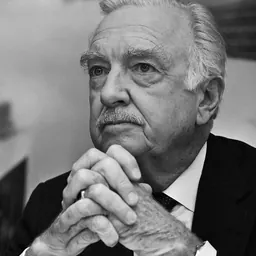
In 1985, Mauldin won the Walter Cronkite Award for Excellence in Journalism. Mauldin remained with the Sun-Times until his retirement in 1991.
He was inducted into the St. Louis Walk of Fame on May 19, 1991. On September 19, 2001, Sergeant Major of the Army Jack L. Tilley presented Mauldin with a personal letter from Army Chief of Staff General Eric K. Shinseki, and a hardbound book with notes from other senior Army leaders and several celebrities, including TV broadcasters Walter Cronkite and Tom Brokaw, and actor Tom Hanks. Tilley also promoted Mauldin to the honorary rank of first sergeant.
Death and legacy Mauldin died on January 22, 2003, from Alzheimer's disease and complications of injuries received in an accidental bathtub scalding. He was buried in Arlington National Cemetery on January 29, 2003. Married three times, he was survived by seven children. In June, 2000 Mauldin was inducted into the Oklahoma Military Hall of Fame.
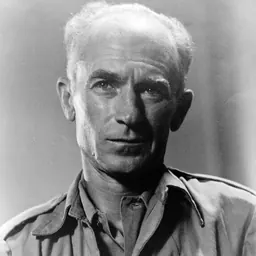
Peanuts From 1969 to 1998, cartoonist Charles M. Schulz (a veteran of World War II) regularly paid tribute to Bill Mauldin in his Peanuts comic strip on Veterans Day. In the strips, Snoopy, dressed as an army vet, would annually go to Mauldin's house to "quaff a few root beers and tell war stories." By the end of the strip, Schulz had depicted 17 of Snoopy's visits. Peanuts also paid tribute to Rosie the Riveter in 1976, and Ernie Pyle in 1997 and 1999.
Museum holdings The 45th Infantry Division Museum, located in Oklahoma City, Oklahoma, includes a substantial collection of cartoons by Mauldin.
The Pritzker Military Museum & Library includes a substantial collection of cartoons by Mauldin.
Don’t just read it —
keep it.
Full-length biographies made to live with: read them, listen on the way to work, watch them tonight.
- E-book
- Audio
- Video
Instant download · yours to keep · every purchase keeps this site free
Important facts
People in Bill Mauldin's life
Named in this biography and alive at the same time




Related people
Same field, nearest in time



Contemporaries
People whose lives overlapped Bill Mauldin's

Frequently asked questions
Who was Bill Mauldin?
American editorial cartoonist (1921–2003)
When was Bill Mauldin born?
Bill Mauldin was born on 29 October 1921 in Mountain Park.
When did Bill Mauldin die?
Bill Mauldin died on 22 January 2003 in Newport Beach.
What was Bill Mauldin's occupation?
Bill Mauldin was an actor, caricaturist, screenwriter, journalist, comics artist and cartoonist.
What nationality was Bill Mauldin?
Bill Mauldin was American.
Sources & further reading
Cite this page
APA: Biography.guide. (2026). Bill Mauldin. https://biography.guide/bill-mauldin/
MLA: "Bill Mauldin." Biography.guide, https://biography.guide/bill-mauldin/.
Chicago: "Bill Mauldin." Biography.guide. https://biography.guide/bill-mauldin/.
Data last updated: 2026-09-20 · Spot an error? Report a correction.
Page generated 2026-09-27 05:20 UTC