
About Bharati Krishna Tirthaji
Lived 1884 – 1960 (aged 75). Bharati Krishna Tirthaji was a mathematician and philosopher.
Saraswati P. Venkataraman Sastri (IAST: P. Veṅkatarāmaṇ Śāstrī), hieratically titled H.H. Jagadguru Shankaracharya Swami Bharatikrishna Tirtha (IAST: Jagadguru Śaṅkarācārya Svāmī Bhāratīkṛṣṇa Tīrtha) (1884–1960), was Shankaracharya and officiating pontiff of Dwaraka Math, and then the 143rd Shankaracharya and supreme pontiff of Govardhana Math in Puri in the Indian state of Odisha, from 1925 through 1960. He is particularly known for his book Vedic Mathematics, being the first Sankaracarya in history to visit the West, and for his connection with nationalist aspirations, thus earning him the title 'Father of the Vedic Mathematics'.
Early life
Venkataraman Shastri (IAST: Veṅkatarāmaṇ Śāstrī) was born on 14 March 1884 to a Tamil Brahmin family. His father P. Narasimha Shastri was a tehsildar at Tirunelveli in Madras Presidency, who later became the Deputy Collector of the Presidency. His uncle C. Chandrasekhara Sastri was the Principal and Professor of English and Sanskritat the Maharaja's College in Vizianagaram, while his great-grandfather Justice C. V. Runganada Sastri was a judge in the Madras High Court. His cousins Dewan Bahadur Sir C. V. Kumaraswami Sastri and Dewan Bahadur Viswanatha Sastri were also justices of the High Court. Other cousins and cousins-in-law included Sir C.P. Ramaswami Iyer, C. R. Pattabhiraman, M. R. Srinivasan, and C. V. Ranganathan.
Education
Venkataraman joined the National College in Trichinopoly. After this, he moved to the Church Missionary Society College and eventually the Hindu College, both in Tirunelveli. Venkataraman passed his matriculation examination from Madras University in January 1899, where he also finished first.
Although Venkataraman always performed well in subjects such as mathematics, sciences and humanities, he was also proficient in languages and particularly skillful in Sanskrit. According to his own testimonials, Sanskrit and oratory were his favourite subjects. Due to his knowledge of the language, he was conferred the title "Saraswati" at the age of 16 by the Madras Sanskrit Association in July 1899. At about that time, Venkataraman was profoundly influenced by his Sanskrit guru Vedam Venkatrai Shastri.
Venkataraman passed the B.A. examination in 1902. He then appeared for the M.A. examination for the American College of Sciences in Rochester, New York from the Bombay centre in 1903. He also contributed to W. T. Stead's Review of Reviews on diverse topics in religion and science. During his college days, he also wrote extensively on history, sociology, philosophy, politics, and literature.
Spiritual path
Returning to Sringeri, Venkataraman spent the next eight years studying Advaita Vedanta and Sastra (scripture) under Jagadguru Sankaracarya Satcitananda Sivabhinava Nrisimha Bharati.
During those years, the Jagadguru initiated Venkatraman into yogic practices. Venkataraman also practiced meditation, Brahma-sadhana and Yoga-sādhāna, in the nearby forests. He is said to have attained self-realisation during his years at Sringeri Math. He would leave society and practice meditation in seclusion for many days. During those eight years, he also taught Sanskrit and philosophy at local schools and ashrams. He delivered a series of sixteen lectures on Adi Shankara's philosophy at Shankar Institute of Philosophy, Amalner (Khandesh). During that time, he also lectured as a guest professor at institutions in Mumbai, Pune and Khandesh.
Initiation into Sannyasa
After Venkataraman's eight-year practice and study of Vedanta, he was initiated into sannyasa, in the Tirtha sub-order of the Dashanami Sampradaya, in Varanasi by Jagadguru Shankaracharya (IAST: Jagadguru Śaṅkarācārya) Swami Trivikrama Tirtha (IAST: Svāmī Trivikrāma Tīrtha) of Dwarka Sharada Peetham in Dwarka on July 4, 1919, receiving the name "Swami Bharatikrishna Tirtha".
Politics
In 1921, Bharatikrishna was one of the seven people arrested in what became known as the "Karachi case". Mohammad Ali Jouhar, Shaukat Ali, Saifuddin Kitchlew, Maulana Hussain Ahmed, Pir Ghulam Mujaddid, Maulana Nisar Ahmed, and Bharatikrishna were charged with preaching in favor of a fatwa issued by the Muslim religious heads of India advocating all Muslims to not cooperate with the government. While Bharatikrishna was eventually acquitted, the other six, who were all Muslim, were sentenced to two years imprisonment.
Jagadguru Shankaracharya
As Shankaracharya of Govardhana Matha, Bharatikrishna toured several countries in thirty-five years to promote Dharma and Indian culture.
In February 1958, Bharatikrishna went to Britain and the United States to speak on Vedanta, staying for three months in Los Angeles, California. This was the first trip outside India by a Sankaracarya. The tour was sponsored by the Self-Realization Fellowship, the yoga society founded by Paramahansa Yogananda. At that time, Albert Rudolph, or "Rudi", reportedly became one of Bharatikrishna's students.
Bharatikrishna also attended various national and international conferences on yoga and on religion. He served as Sankaracarya of Govardhana Matha until his death in 1960.
In 1965, a Chair of Vedic Studies was founded at Banaras Hindu University by Arvind N. Mafatlal, a generous Mumbai business magnate and devotee of Bharatikrishna.
Vedic Mathematics
Bharatikrishna's book, Vedic Mathematics, is a list of sixteen terse sūtras, or "aphorisms", discussing strategies for mental calculation. Bharatikrishna claimed that he found the sūtras after years of studying the Vedas, a set of sacred ancient Hindu scriptures.
Don’t just read it —
keep it.
Full-length biographies made to live with: read them, listen on the way to work, watch them tonight.
- E-book
- Audio
- Video
Instant download · yours to keep · every purchase keeps this site free
Important facts
People in Bharati Krishna Tirthaji's life
Named in this biography and alive at the same time

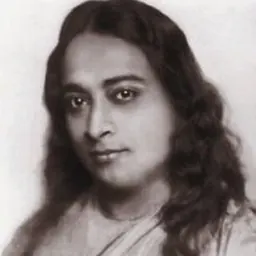


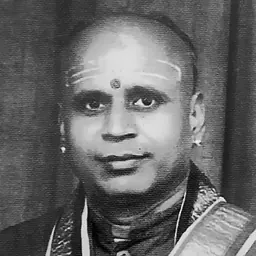


Related people
Same field, nearest in time
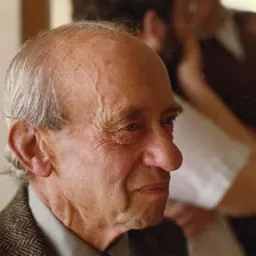
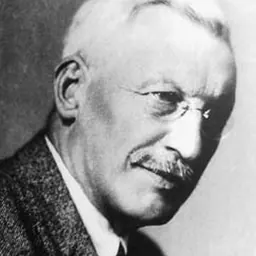
Contemporaries
People whose lives overlapped Bharati Krishna Tirthaji's


Frequently asked questions
Who was Bharati Krishna Tirthaji?
Indian mathematician
When was Bharati Krishna Tirthaji born?
Bharati Krishna Tirthaji was born on 14 March 1884 in British India, Madras Presidency, Tirunelveli.
When did Bharati Krishna Tirthaji die?
Bharati Krishna Tirthaji died on 2 February 1960.
What was Bharati Krishna Tirthaji's occupation?
Bharati Krishna Tirthaji was a mathematician and philosopher.
Sources & further reading
· Wikipedia: Bharati Krishna Tirthaji
· DBpedia: Bharati Krishna Tirtha
Cite this page
APA: Biography.guide. (2026). Bharati Krishna Tirthaji. https://biography.guide/bharati-krishna-tirthaji/
MLA: "Bharati Krishna Tirthaji." Biography.guide, https://biography.guide/bharati-krishna-tirthaji/.
Chicago: "Bharati Krishna Tirthaji." Biography.guide. https://biography.guide/bharati-krishna-tirthaji/.
Data last updated: 2026-09-20 · Spot an error? Report a correction.
Page generated 2026-09-27 05:11 UTC