
About Bhai Ram Singh
Lived 1858 – 1916 (aged 57–58). Bhai Ram Singh was an Indian architect.
Bhai Ram Singh (1858–1916) was one of pre-partition Punjab's foremost architects, dominating the scene for nearly two decades from the 1890s. Amongst his works is the Durbar Room, Osborne House, on the Isle of Wight, England; Lahore Museum and Governor's House in Simla.
Amongst Bhai Ram Singh's most famous works are: the Lahore Museum, the Mayo School of Arts, Aitchison College, Chamba House and Punjab University, all in Lahore, and Islamia College, Peshawar. He designed Khalsa College, Amritsar.
Most of his work fits under the style of Indo-Saracenic architecture, of which he was the most significant Indian architect. Many of his commissions were built by the leading contractor Sir Ganga Ram, and also involved Lockwood Kipling, father of Rudyard Kipling, to some extent Singh's mentor. The precise contributions of these can be hard to estimate; Ram was mainly an engineer and contractor, but is sometimes given credit as the architect of his buildings.
Biography Singh came from Ramgarhia Sikh family of Rasulpur, near Batala, Punjab, British India, and showed early talent. He is supposed to have repaired the piano of the Deputy Commissioner of Amritsar when he was 13, despite being unfamiliar with the instrument. He became a student at the Mayo School of Arts (now National College of Arts), in Lahore, founded in 1875, and became a protege of the principal Lockwood Kipling, father of Rudyard Kipling. He became assistant drawing master at the school, and eventually, its principal from 1903 to 1913, as well as designing its building.
In 1885-7 he worked with Kipling, decorating the "Indian Passage" and ballroom at Bagshot Park for the Duke of Connaught, Queen Victoria's third son, who he had met in India when the duke was Commander-in-Chief of the Bombay Army from December 1886 to March 1890. This led to the Osborne House commission, and other work in Britain. Queen Victoria met him when he was working at Osborne in January 1891 and her diaries describe him as "a very intelligent, pleasant, nice man, a Seikh [sp. 'Sikh']; we looked at sketches he had made for the decoration of the room". He became Principal of Mayo School of Arts in 1910 and the following year he was made an MVO (Member of the Royal Victorian Order by King George V. He retired in 1913 and died in Lahore, three year later in 1916 aged 58.
Don’t just read it —
keep it.
Full-length biographies made to live with: read them, listen on the way to work, watch them tonight.
- E-book
- Audio
- Video
Instant download · yours to keep · every purchase keeps this site free
Important facts
People in Bhai Ram Singh's life
Named in this biography and alive at the same time

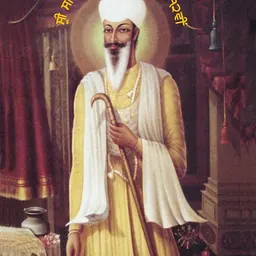

Related people
Same field, nearest in time

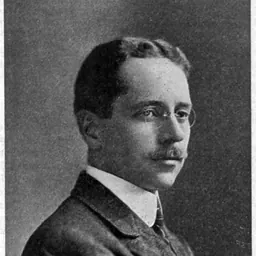



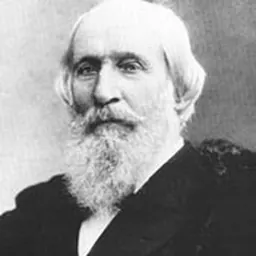
Contemporaries
People whose lives overlapped Bhai Ram Singh's

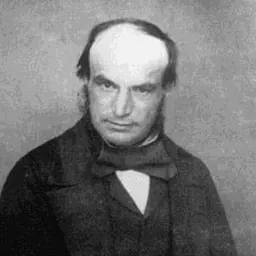
Frequently asked questions
Who was Bhai Ram Singh?
Indian architect
When was Bhai Ram Singh born?
Bhai Ram Singh was born in 1858 in Rasulpur.
When did Bhai Ram Singh die?
Bhai Ram Singh died in 1916 in Lahore.
What was Bhai Ram Singh's occupation?
Bhai Ram Singh was an architect.
What nationality was Bhai Ram Singh?
Bhai Ram Singh was Indian.
Sources & further reading
Cite this page
APA: Biography.guide. (2026). Bhai Ram Singh. https://biography.guide/bhai-ram-singh/
MLA: "Bhai Ram Singh." Biography.guide, https://biography.guide/bhai-ram-singh/.
Chicago: "Bhai Ram Singh." Biography.guide. https://biography.guide/bhai-ram-singh/.
Data last updated: 2026-09-20 · Spot an error? Report a correction.
Page generated 2026-09-27 05:22 UTC