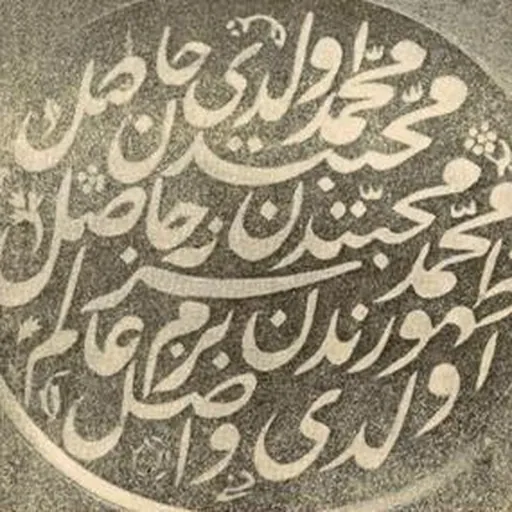
Bezmiâlem Sultan
Consort of Mahmud II, mother and Valide Sultan of Abdülmejid I
About Bezmiâlem Sultan
Lived 1807 – 1853 (aged 45–46). Bezmiâlem Sultan was a Turkish valide sultan.
Bezmiâlem Sultan (also spelled Bazimialam, ; 1807 – 2 May 1853), was a consort of Sultan Mahmud II, and Valide sultan to their son, Sultan Abdülmecid I of the Ottoman Empire.
Early years Bezmiâlem Kadın, called also Bazimialam, was born in 1807 in Georgia. She had been educated by Esma Sultan, a half-sister of Mahmud II and her favorite advisor, and was said to have been buxom and a bath attendant before entering the imperial harem. She was considered very intelligent, although not formally educated. She became a consort of Sultan Mahmud in 1822, and was given the title of "Third Kadın" and, in 1832, "Second Kadın". On 25 April 1823, she gave birth to her only son, Şehzade Abdulmecid, later Abdulmecid I.
As Valide Sultan
Early years Bezmiâlem became Valide Sultan, after Abdulmecid I ascended to the throne in 1839. Since her son was only sixteen, Bezmialem, who Abdulmecid loved very much, although not a regent, assisted him in the administration of the state.
She was thirty-one and was still young enough to despise and mistrust the elder non-statesman who had made himself minister. She was known for her extremely pale complexion and her reddish blonde hair. She was slender, with very good-looking fingers. She was very pale, and looked very young when she became the Valide Sultan. She advised her son to allow Koca Hüsrev Mehmed Pasha to incur the odium of seeking terms from Muhammad Ali of Egypt but urged him to resist the Grand Vizier's attempts to advance his nominees to important offices of the state. Abdulmecid duly played for time, awaiting Mustafa Reşid Pasha's return from England before taking any major decisions on policy. She gave sound counsel. So shrewd was her judgement of men and their motives that she continued to influence the choice of ministers until shortly before her death fourteen years later. She also recommended Reşid to Abdulmecid because she believed he understood what Mahmud had been seeking to achieve in his reform programme. Charles White reported in 1844 that the revenues of Bezmiâlem came partly as an annuity from the civil list, and partly from real property, "the fruits of gifts and accumulation". He estimated her entirely yearly income at 100,000 British pounds.
Bezmiâlem was a lady of deep religious conviction, and benevolent nature. She belonged to the Naqshbandi, a major Sunni spiritual order of Sufism. She was a believer, and follower of the Indian Muhammad Jan (died 1850). Muhammad Jan was active as of the 1830s and succeeded in gaining many followers in Istanbul.
Like Valide Sultan, she favored Georgian Circassians like herself in choosing consorts for her son.
Bezmiâlem earned a reputation as an intelligent, amiable and charitable woman, and she was among the most loved and respected Valid Sultans in history. Additionally, some ambassadors referred to her as the most influential Valide Sultan in centuries.
Influence over Abdulmecid A considerable influence was exercised over Abdülmecid by Bezmiâlem. The same year, she commissioned the "Gurebâ-yi Müslimîn" hospital, fountain, and a mosque in Yenibahçe. She also built another "Gurebâ-yi Müslimîn" hospital in Mecca.
Bezmiâlem commissioned Çeşmes (fountains) throughout Istanbul. The first was built in Beşiktaş-Maçka in 1839, just after Abdulmecid ascended the throne. The second was built in 1841 in the Uzunyusuf neighborhood of Silivrikapı. The third known as the "Ülçer Fountain" was built in the Ülçer neighborhood of Sultanahmet in 1843. The same year she built another fountain in Topkapı. In 1846, another fountain was built in the Cihannüma neighbourhood of Beşiktaş. In 1852–3, another fountain was built in Tarabya. Two another were built in Alibeyköyü, and near the Galata Tower known as the "Bereketzade Fountain". The construction of the mosque began before her death was completed after her death.
Death Bezmiâlem Sultan died in the Beşiktaş Palace on 2 May 1853, of Tuberculosis then raging in Istanbul and was buried in the mausoleum of her husband Sultan Mahmud II located on the Divanyolu Street, Istanbul.
Her son Abdülmecid honored her with a magnificent funeral, costing 79,000 kuruş, a fortune, and well described by Sir Adolphus Slade in his Turkey and the Crimean War: A Narrative of Historical Events (1867): Female screams at dawn in the palace of Beshik-tash, one morning in early May, announced her mourning [of Abdülmecid I] to the passing guards and caiks, and greeted the body which at that early hour was being transported to the caik empire, followed by other caiks with the retinue of the late lady [Bezmialem], to the old menagerie. He was there washed and perfumed according to custom, and lying on a coffin covered with clothing of gold and silver. Preceded by censers and choristers, he was then brought out from inside the palace and placed in the shade of the trees in the central courtyard for a few minutes, while the court imam recited a prayer for the souls of the dead. During his recital, the spectators, taking off their slippers, remained standing on their soles upside down:
The procession was then formed. Military pashas on horseback, in single file, flanked by their grooms and tchiaushe on foot, led the way, followed by a compact body of Arab dervishes singing vigorously. Then three legal dignitaries rode, also in single file, the cazi-inquirers of Europe and Asia with the evcaf nazir. A body of Khamedes (royal servants) marched later in order. Then the ministers of state rode in single file; the last three are the Captain Pasha, the Scheick ul Islam and the Grand Vizier. After them rode a body of the Sultan's eunuchs, the leader of which, the kislar agasi, a melancholy-looking Nubian elder, immediately preceded the body. The eunuchs of the deceased, scattering newly minted silver coins among the crowd, closed the procession. As the procession passed through the streets, flanked at intervals by troops, numerous spectators in the open spaces sobbed loudly; and although oriental women always have tears and smiles on command, those shed on this occasion were sincere, since sex had lost a lawyer that day, the poor friend.
The procession stopped in front of the garden of Mahmoudieh's mausoleum, where, on an elevated slope, the children of the adjacent schools lined up, chanting hymns, and, reforming on foot, proceeded through gilded gates and rose gardens, slowly towards the tomb. When its portals opened, the women of the valeh gathered inside the building to pay the final tribute of respect to their gracious mistress uttered, sad and plaintive; mingle, strangely harmonious, with the songs of the dervishes and the neighing of the driven horses. The body was buried next to that of Sultan Mahmoud II.
Issue Together with Mahmud, Bezmiâlem had one son: Abdulmecid I (25 April 1823 – 25 June 1861, buried in Yavuz Selim Mosque, Fatih). 31st Sultan of the Ottoman Empire.
Don’t just read it —
keep it.
Full-length biographies made to live with: read them, listen on the way to work, watch them tonight.
- E-book
- Audio
- Video
Instant download · yours to keep · every purchase keeps this site free
Important facts
Family & relationships
People in Bezmiâlem Sultan's life
Named in this biography and alive at the same time




Related people
Same field, nearest in time



Contemporaries
People whose lives overlapped Bezmiâlem Sultan's





Frequently asked questions
Who was Bezmiâlem Sultan?
consort of Mahmud II, mother and Valide Sultan of Abdülmejid I (1807–1853)
When was Bezmiâlem Sultan born?
Bezmiâlem Sultan was born in 1807 in Caucasus.
When did Bezmiâlem Sultan die?
Bezmiâlem Sultan died on 2 May 1853 in Dolmabahçe Palace.
What was Bezmiâlem Sultan's occupation?
Bezmiâlem Sultan was a valide sultan.
What nationality was Bezmiâlem Sultan?
Bezmiâlem Sultan was Turkish.
Sources & further reading
Cite this page
APA: Biography.guide. (2026). Bezmiâlem Sultan. https://biography.guide/bezmialem-sultan/
MLA: "Bezmiâlem Sultan." Biography.guide, https://biography.guide/bezmialem-sultan/.
Chicago: "Bezmiâlem Sultan." Biography.guide. https://biography.guide/bezmialem-sultan/.
Data last updated: 2026-09-22 · Spot an error? Report a correction.
Portrait: Wikimedia Commons · author & licence
Page generated 2026-09-27 05:03 UTC