About Beverly Loraine Greene
Lived 1915 – 1957 (aged 41). Beverly Loraine Greene was an American architect.
Beverly Lorraine Greene (October 4, 1915 – August 22, 1957), was an American architect. According to architectural editor Dreck Spurlock Wilson, she was believed to be the first female African-American licensed architect in the United States. She was also involved in the drama club Cenacle and was a member of the American Society of Civil Engineers. The following year, 1937, she earned a master's degree from UIUC in city planning and housing.
Career Greene returned to Chicago and worked for Kenneth Roderick O'Neal's architecture firm in 1937, the first architectural office led by an African American in downtown Chicago, before she was hired by the Housing Authority in 1938. She became the first licensed African-American woman architect in the United States when she registered with the State of Illinois on December 28, 1942. Despite her credentials, she found it difficult to surmount race barriers to find work in the city. She and other black architects were routinely ignored by the mainstream Chicago press.
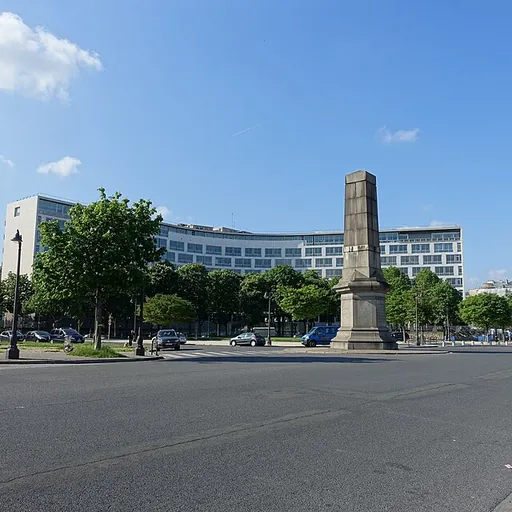
A 1945 newspaper report about the Metropolitan Life Insurance Company's development project at Stuyvesant Town led Greene to move to New York City. She submitted her application to help design it, in spite of the developer's racially segregated housing plans; and much to her surprise, she was hired. After only a few days, she quit the project to accept a scholarship at Columbia University. She earned a master's degree in architecture in June of 1945. After completing her degree she took a job with the firm of Isadore Rosenfield, which primarily designed health facilities. Though she remained in Rosenfield's employ until 1955, Greene worked with Edward Durell Stone on at least two projects in the early 1950s. In 1951, she was involved with the project to build the theater at the University of Arkansas and in 1952, she helped plan the Arts Complex at Sarah Lawrence College. After 1955, she worked with Marcel Breuer, assisting on designs for the UNESCO United Nations Headquarters in Paris and some of the buildings for the University Heights Campus of New York University, though both of those projects were completed after Greene's death.
Death and legacy Greene passed away on August 22, 1957, in New York City, at age 41. Her memorial service took place at the Unity Funeral Home in Manhattan, one of the buildings she had designed.
Her career was dedicated to showing young women that they can be successful and to serve as a role model for them, as well as people of different racial and ethnic groups who dream big, while facing backlash for joining or even just considering joining the career. She stated in a 1945 interview, "I wish that young women would think about this field. Never did I have one bit of trouble because I was a Negro but there have been arguments about hiring a woman. However, the War has ended that, and Negro women in the post-war world will have a fertile field in architecture. I wish some others would try it.” Using her knowledge in urban planning and architecture, she was widely respected among recognizable firms in Chicago and New York, and used her success to advocate for professional opportunities for others who have gone through the same experiences as her.
Projects Projects Greene worked on while working at Marcel Breuer's office (1951– 1957):
Grosse Point Public Library, 1951 In the Grosse Point Public Library project in Grosse Point, Michigan, Greene worked as a draftsperson, which means she contributed to technical drawings, design development and translating Breuers ideas into buildable plans. Some important design choices Greene made were finding ways to help form to blend with function in a modernist way.
The library was designed to promote efficient and usable public space within a geometric layout. The library's rectangular layout includes large amounts of glass to allow natural light to enter the building, giving the open reading spaces a large amount of light.
This project was important to Greene’s career because it showed how she had an involvement in modernist architecture and public buildings. It’s also important to note that the Grosse Point Public Library became a key example of post WWII suburban Modernism, and reflects Greene’s dedication to that. Some design choices in this project, included a simple form with a focus on natural light. This addition was more contemporary, which was a way that it contrasted the original buildings on the Harvard Campus. In the project for New York University Building Complex, University Heights campus in the Bronx, she collaborated with Edward Durell Stone and Associates to help modernize NYU’s campus. Goals of this project include more support for the growing student population on campus, to create efficient residential and academic spaces for the students, and to create a more modernized campus appearance. .
Her role in this project shows that most of the time, while working on large modernist projects, there is a large number of architects contributing behind the scenes. Her work also reflects the historical context of racial and gender barriers. Because of this, Greene's design priorities focused on creating a respectful spatial experience for mourning and gathering, as well as creating a space that felt modern but not cold, therefore balancing professionalism with emotional interpretation of the space.
This project is one of the few documented built works by Greene and contrasts with her other works, such as the UNESCO Headquarters .
Don’t just read it —
keep it.
Full-length biographies made to live with: read them, listen on the way to work, watch them tonight.
- E-book
- Audio
- Video
Instant download · yours to keep · every purchase keeps this site free
Important facts
People in Beverly Loraine Greene's life
Named in this biography and alive at the same time


Related people
Same field, nearest in time

Contemporaries
People whose lives overlapped Beverly Loraine Greene's




Frequently asked questions
Who was Beverly Loraine Greene?
American architect
When was Beverly Loraine Greene born?
Beverly Loraine Greene was born on 4 October 1915 in Chicago.
When did Beverly Loraine Greene die?
Beverly Loraine Greene died on 22 August 1957 in New York City.
What was Beverly Loraine Greene's occupation?
Beverly Loraine Greene was an architect.
What nationality was Beverly Loraine Greene?
Beverly Loraine Greene was American.
Sources & further reading
· Wikipedia: Beverly Loraine Greene
· DBpedia: Beverly Lorraine Greene
Cite this page
APA: Biography.guide. (2026). Beverly Loraine Greene. https://biography.guide/beverly-loraine-greene/
MLA: "Beverly Loraine Greene." Biography.guide, https://biography.guide/beverly-loraine-greene/.
Chicago: "Beverly Loraine Greene." Biography.guide. https://biography.guide/beverly-loraine-greene/.
Data last updated: 2026-09-22 · Spot an error? Report a correction.
Portrait: Wikimedia Commons · author & licence
Page generated 2026-09-27 05:02 UTC