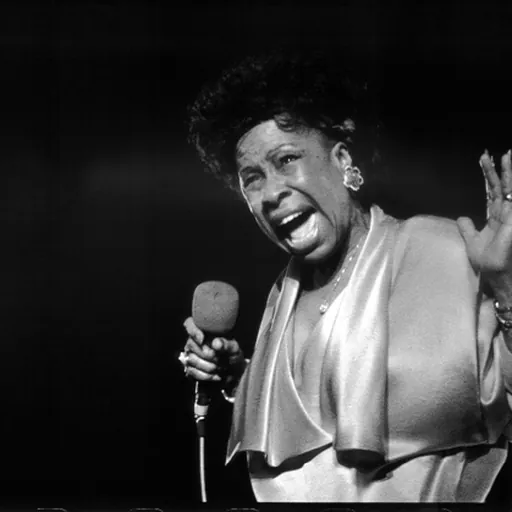
Betty Carter
American jazz singer, recording artist, songwriter
About Betty Carter
Lived 1929 – 1998 (aged 69). Betty Carter was an American jazz singer, recording artist, singer-songwriter, singer and musician.
Early life Carter was born in Flint, Michigan, and grew up in Detroit, where her father, James Jones, was the musical director of a Detroit church and her mother, Bessie, was a housewife. As a child, Carter was raised to be extremely independent and to not expect nurturing from her family. Even 30 years after leaving home, Carter was still very aware of and affected by the home life she was raised in, and was quoted saying: I have been far removed from my immediate family. There's been no real contact or phone calls home every week to find out how everybody is...As far as family is concerned, it's been a lonesome trek...It's probably just as much my fault as it is theirs, and I can't blame anybody for it. But there was...no real closeness, where the family urged me on, or said...'We're proud'...and all that. No, no...none of that happened.
At the age of 16, Carter began singing. When she began performing live, she was too young to be admitted into bars, so she obtained a forged birth certificate to gain entry in order to perform.
Career Even at a young age, Carter was able to bring a new vocal style to jazz. The breathiness of her voice was a characteristic seldom heard before her appearance on the music scene. She also was well known for her passion for scat singing and her strong belief that the throwaway attitude that most jazz musicians approached it with was inappropriate and wasteful. Her scatting was known to display a degree of spontaneity and basic inventiveness that was seldom seen elsewhere.
Detroit, where Carter grew up, was a hotbed of jazz growth. After signing with a talent agent after her win at amateur night, Carter had opportunities to perform with famous jazz artists such as Dizzy Gillespie, who visited Detroit for an extensive amount of time. Gillespie is often considered responsible for her strong passion for scatting. In earlier recordings, it is apparent that her scatting had similarities to the qualities of Gillespie's.
At the time of Gillespie's visit, Charlie Parker was receiving treatment in a psychiatric hospital, delaying her encounter with him. However, Carter eventually performed with Parker, as well as with his band consisting of Tommy Potter, Max Roach, and Miles Davis. After receiving praise from both Gillespie and Parker for her vocal prowess, Carter felt an upsurge in confidence and knew that she could make it in the business with perseverance. thumb Carter at the Great American Music Hall, San Francisco, California, 1979Carter's confidence was well-founded. In 1948, she was asked by Lionel Hampton to join his band. She finally had her big break. Working with Hampton's group gave her the chance to be bandmates with artists such as Charles Mingus and Wes Montgomery, as well as with Ernest Harold "Benny" Bailey, who had recently vacated Gillespie's band, and Albert Thornton "Al" Grey who would later go on to join Gillespie's band. Hampton had an ear for talent and a love for bebop. Carter too had a deep love for bebop as well as a talent for it. Hampton's wife Gladys gave her the nickname "Betty Bebop", a nickname she reportedly detested. Despite her good ear and charming personality, Carter was fiercely independent and tended to attempt to resist Hampton's direction, while Hampton had a temper and was quick to anger. Hampton expected a lot from his players and did not want them to forget that he was the band's leader. She openly hated his swing style, refused to sing in a swinging way, and she was far too outspoken for his tastes. Carter honed her scat singing ability while on tour, which was not well received by Hampton as he did not enjoy her penchant for improvisation. They did a second concert at Lane Field in San Diego on September 3, 1949. They also performed at the sixth famed Cavalcade of Jazz concert on June 25, 1950. Also featured on the same day were Roy Milton & His Solid Senders, Pee Wee Crayton's Orchestra, Dinah Washington, Tiny Davis & Her Hell Divers, and other artists. As many as 16,000 people were reported to be in attendance and the concert ended early because of a fracas taking place while Hampton's band played "Flying High".
Being a part of Hampton's band provided a few things for "The Kid" (a nickname bestowed upon Carter that stuck for the rest of her life): connections, and a new approach to music, making it so that all future musical attitudes that came from Carter bore the mark of Hampton's guidance. Because Hampton hired Carter, she also goes down in history as one of the last big band era jazz singers in history. However, by 1951, Carter left the band. After a short recuperation back home, Carter was in New York, working all over the city for the better part of the early 1950s, as well as participating in an extensive tour of the south, playing for "camp shows". This work made little to no money, but Carter believed it was necessary to develop as an artist and was a way to "pay her dues".
Very soon after Carter arrived in New York City, she was allowed to record with King Pleasure and the Ray Bryant Trio, becoming more recognizable and well-known and subsequently being granted the chance to sing at the Apollo Theatre. This theatre was known for giving up-and-coming artists the final shove into becoming household names. Carter was propelled into prominence, recording with Epic label by 1955, and was a well-known artist by the late 1950s. Her first solo LP, Out There, was released on the Peacock label in 1958. Carter began touring with Charles in 1960, then making a recording of duets with him in 1961 (Ray Charles and Betty Carter), Carter took a hiatus from recording to marry.
The 1960s became an increasingly difficult time for Carter as she began to slip into fame, refusing to sing contemporary pop music, and her youth fading. Carter was nearly forty years old, which at the time was not conducive to a career in the public eye. Rock and roll, like pop, was steadily becoming more popular and provided cash flow for labels and recording companies. Carter had to work extremely hard to continue to book gigs because of the jazz decline. and mainly performing live with a small group consisting of merely a piano, drums, and a bass. By 1975, Carter's life and work prospects began to improve, and Carter was beginning to be able to pick her jobs once again, touring in Europe, South America, and the United States. In the last decade of her life, Carter began to receive even wider acclaim and recognition. In 1987, she signed with Verve Records, who reissued most of her Bet-Car albums on CD for the first time, making them available to wider audiences. In 1988, she won a Grammy for her album Look What I Got! and sang in a guest appearance on The Cosby Show (episode "How Do You Get to Carnegie Hall?"). In 1994, she performed at the White House and was a headliner at Verve's 50th-anniversary celebration in Carnegie Hall. She was the subject of a 1994 short film by Dick Fontaine, Betty Carter: New All the Time.
In 1997, she was awarded a National Medal of Arts by President Bill Clinton. This award was one of the thousands, but Carter considered this medal to be the most important that she had received in her lifetime. Her body was cremated and she was survived by her two sons.
Legacy Carter often recruited young accompanists for performances and recordings, insisting that she "learned a lot from these young players, because they're raw and they come up with things that I would never think about doing."
1993 was Carter's biggest year of innovation, creating a program called Jazz Ahead, which took 20 students who were given the opportunity to spend an entire week training and composing with Carter, a program that still exists and is hosted in The Kennedy Center.
Discography Date Album title Label Notes 1955 Meet Betty Carter and Ray Bryant Columbia with Ray Bryant Trio, Carter on 6 of the 12 tracks; reissued with bonus material 1956 Social Call Columbia with big band led by Gigi Gryce on 5 previously unreleased tracks; this material first released in 1980 coupled with the 6 Meet Betty Carter tracks 1958 Out There with Betty Carter Peacock with big band led by Gigi Gryce 1960 The Modern Sound of Betty Carter ABC-Paramount 1961 Ray Charles and Betty Carter ABC-Paramount with Ray Charles 1963 'Round Midnight Atco 1964 Inside Betty Carter United Artists reissued in 1993 on Capitol with 7 previously unreleased tracks from a 1965 session with Kenny Burrell 1970 At the Village Vanguard Bet-Car; Verve (MK 1001) live; originally titled Betty Carter 1975 Finally, Betty Carter Roulette live; material recorded 1969 1975 Round Midnight Roulette live; more material recorded from the same 1969 concert 1976 Now It's My Turn Roulette 1976 What a Little Moonlight Can Do ABC Impusle! 2LP; reissues the Out There and The Modern Sound albums 1976 The Betty Carter Album Bet-Car; Verve (MK 1002) 1979 The Audience with Betty Carter Bet-Car; Verve (MK 1003) live; 2LP 1982 Whatever Happened to Love? Bet-Car; Verve (MK 1004) live; Grammy nomination for Best Jazz Vocal Performance, Female 1987 The Carmen McRae – Betty Carter Duets Bet-Car/Verve live, duo with Carmen McRae (vocal & piano); originally released on Great American Music Hall/Fantasy 1988 Look What I Got! Bet-Car/Verve Grammy Award for Best Jazz Vocal Performance, Female 1989 Live at De Werf, Bruges, 1989 Caryout Productions live; released in 2020 1990 Droppin' Things Bet-Car/Verve live; Grammy nomination for Best Jazz Vocal Performance, Female 1992 The Music Never Stops Blue Engine live; released in 2019 1992 It's Not About the Melody Bet-Car/Verve 1993 Feed the Fire Bet-Car/Verve live 1996 I'm Yours, You're Mine Bet-Car/Verve
CD compilations 1990: Compact Jazz – (PolyGram) – Bet-Car and Verve recordings from 1976 to 1987 1992: I Can't Help It – (Impulse!/GRP) – the Out There and The Modern Sound albums on one compact disc 1999: Priceless Jazz – (GRP) – Peacock and ABC-Paramount recordings from 1958 and 1960 2003: Betty Carter's Finest Hour – (Verve) – recordings from 1958 to 1992
On multi-artist compilations 1988: "I'm Wishing" on Stay Awake: Various Interpretations of Music from Vintage Disney Films 1997: "Lonely House" on September Songs – The Music of Kurt Weill
Don’t just read it —
keep it.
Full-length biographies made to live with: read them, listen on the way to work, watch them tonight.
- E-book
- Audio
- Video
Instant download · yours to keep · every purchase keeps this site free
Important facts
People in Betty Carter's life
Named in this biography and alive at the same time





Related people
Same field, nearest in time


Contemporaries
People whose lives overlapped Betty Carter's
Frequently asked questions
Who was Betty Carter?
American jazz singer, recording artist, songwriter (1929–1998)
When was Betty Carter born?
Betty Carter was born on 16 May 1929 in Flint.
When did Betty Carter die?
Betty Carter died on 26 September 1998 in Brooklyn.
What was Betty Carter's occupation?
Betty Carter was a jazz singer, recording artist, singer-songwriter, singer and musician.
What nationality was Betty Carter?
Betty Carter was American.
Sources & further reading
Cite this page
APA: Biography.guide. (2026). Betty Carter. https://biography.guide/betty-carter/
MLA: "Betty Carter." Biography.guide, https://biography.guide/betty-carter/.
Chicago: "Betty Carter." Biography.guide. https://biography.guide/betty-carter/.
Data last updated: 2026-09-21 · Spot an error? Report a correction.
Portrait: Wikimedia Commons · author & licence
Page generated 2026-09-27 04:59 UTC