
About Astrud Gilberto
Lived 1940 – 2023 (aged 83). Astrud Gilberto was a Brazilian jazz singer, songwriter, musician and singer.
Early life Astrud Gilberto was born Astrud Evangelina Weinert on March 29, 1940, in Salvador, Bahia. She was one of three daughters of a Brazilian mother, Evangelina Weinert (née Lobão), and a German immigrant father, Fritz Weinert. The naming of Astrud and her sisters Eda and Iduna were inspired by Germanic mythology. Her father was a language teacher and taught German and English, and she became fluent in several languages. He also had a minor reputation as a painter. Her mother played several instruments and ensured that Astrud was musically educated. In 1947, the family relocated to Rio de Janeiro, residing on the Avenida Atlântica in the Copacabana district. In her late teens, she studied at Rio's demanding Colégio de Aplicação. on the UFRJ Praia Vermelha campus, and attracted an audience of 3000 people. The billing included numerous stars of the still-young bossa nova scene, with João Gilberto headlining. Astrud performed two songs alongside her husband, "Lamento" and "Brigas Nunca Mais", singing the lead vocals with João playing guitar and lending vocal harmonies. The performance was well received by the audience.
The Girl from Ipanema João Gilberto had begun touring in the United States in 1962. A landmark bossa nova concert at Carnegie Hall on November 21, 1962 led to an invitation for João and Antônio Carlos Jobim to record an album with Stan Getz in New York City for the Verve label. Astrud joined João on this trip, acting as his interpreter, as he spoke no English. The recording sessions took place on March 18-19, 1963. On the second day of the recording, Norman Gimbel handed producer Creed Taylor English-language lyrics for "The Girl from Ipanema", a rough translation of the lyrics for the Jobim and Vinicius de Moraes composition "Garota de Ipanema". After considering and dismissing the idea of recording the song separately as a Sarah Vaughan vehicle, Taylor settled on the idea of adding English-language vocals to the recording alongside João's Portuguese ones to enhance its marketability for an American audience.
Accounts vary as to exactly how Astrud was selected as vocalist on "The Girl from Ipanema". However, according to the account given by bossa nova historian Ruy Castro, the idea was Astrud's, with João at first being hesitant about it, but warmed up to the idea after hearing her sing the lyrics. Other accounts claim Getz or Taylor had the idea to have Astrud sing, sometimes with the added claim that they had "discovered" her. as his first royalties after the release in early 1964. However, Gene Lees relates in his memoir that Getz contacted producer Creed Taylor and demanded that Astrud was to be paid no royalties. She reportedly received a flat payment $120 for the recording (about $1250 in 2025 dollars), Unlike her billing on Getz/Gilberto as a guest vocalist, she was given full performer credits on the single.
Tour with Stan Getz and end of marriage Stan Getz and Astrud Gilberto, 1964Stan Getz, in spite of denying her any royalties for the recording, was enthusiastic about her performance on Getz/Gilberto and asked her to sing for his band. She relocated to the United States, as it would turn out, permanently. Initially hired to appear with Getz for a two-week engagement at the Carter Barron Amphitheatre in Washington, DC, the gig was extended to a six-month engagement in which she toured extensive with Getz through 1964. The two would marry in 1965, and as had been the case with Astrud Gilberto, João and Miúcha would eventually begin performing together and Miúcha would go on to become a successful singer in her own right. At the press conference, Astrud also stated that there was no truth to the rumors about a relationship with Frank Sinatra, and that she and Stan Getz were now going their separate ways, although they maintained a "good friendship".
Solo career
Her first solo album was The Astrud Gilberto Album (1965) on Verve Records. She would go on to record eight more albums for the label by 1970. Beginning as a singer of bossa nova and American jazz standards, Gilberto branched out stylistically in the 1970s, with her album Now (1972) featuring more contemporary música popular brasileira and tropicália influences, covering artists such as Jorge Ben and Milton Nascimento. Through her career, she would record songs in Portuguese, English, Spanish, Italian, French, German, and Japanese.
In 1965, she performed in São Paulo, her first performance in Brazil since relocating to the United States. She was well-received by her audience, but the Brazilian press treated her harshly. Gilberto never performed again in Brazil after this, though she's also stated that she continued to enjoy visiting Brazil as an incognito traveler rather than as a performer. After her marriage, she scaled back her touring and live appearances, and those performances were more often in Europe and Japan than the United States. Most offers she received from the United States were for nightclub gigs, which was a venue she did not want to perform in at the time. However, she continued a steady album release schedule into the early 1970s.
Career hiatus Following the release of Now in 1972, her album releases and live performances became more sporadic, and she was largely inactive in music for much of the mid- to late-1970s. In a later interview, she said that during this period there was an approximately six-year period where she did not sing at all, and had transitioned into raising her children and living the life of a suburban housewife.
Nevertheless, she recorded an album in 1977 (released in 1978), That Girl from Ipanema. The album failed to chart
In 1982, Gilberto's son Marcelo joined her group, touring with her for more than a decade as a bassist. He also served as her road manager, sound technician and personal assistant. In 1990 Gilberto and her two sons, João Marcelo and Gregory Lasorsa, together established Gregmar Productions, Inc., a production company aimed at promoting Gilberto's music and developing new material.
In 1996, she made several guest appearances with other artists, singing duets. The first was with George Michael at his invitation, performing the bossa nova standard "Desafinado" on the AIDS benefit album Red Hot + Rio.
Gilberto's last foray into music was the 2002 album Jungle, released on her own label, Magya Productions. a label she disputed, saying that she was simply someone who had a high regard for her privacy. Gregory Lasorsa notes about her later life, "...once she stopped being an artist, she never wanted to be in the public eye again. She didn’t want to be Astrud Gilberto anymore."
In the early 2000s, Gilberto put together a website to stay in touch with her fanbase. Her website devoted a notable portion of its content to animal rights advocacy. She also briefly sold original artwork via the website. Updates to the website were infrequent after the mid-2000s.
Astrud Gilberto died at home in Philadelphia, on June 5, 2023, aged 83.
Gilberto received the Latin Jazz USA Award for Lifetime Achievement in 1992, was inducted into the International Latin Music Hall of Fame in 2002, and was the recipient of the Latin Grammy Lifetime Achievement Award in 2008.
Selected discography
Getz/Gilberto (Stan Getz and João Gilberto; Verve, 1964. Astrud Gilberto, vocals on two tracks) Getz Au Go Go (Stan Getz; Verve, 1964. Astrud Gilberto, vocalist) The Astrud Gilberto Album (Verve, 1965) Look to the Rainbow (with Gil Evans; Verve, 1966) Her recording "Who Can I Turn To?" was sampled by the Black Eyed Peas in the song "Like That" from their 2005 album Monkey Business. Gilberto's vocals on "Berimbau" were sampled by Cut Chemist in his song "The Garden". Her recording of "Once I Loved" was featured in the 2007 film Juno. On Basia's 1987 debut album, Time and Tide, the track "Astrud" is a tribute to her idol Gilberto.
Don’t just read it —
keep it.
Full-length biographies made to live with: read them, listen on the way to work, watch them tonight.
- E-book
- Audio
- Video
Instant download · yours to keep · every purchase keeps this site free
Important facts
People in Astrud Gilberto's life
Named in this biography and alive at the same time

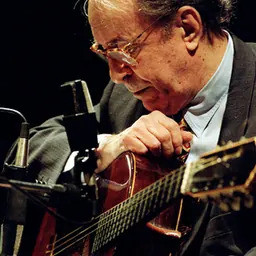


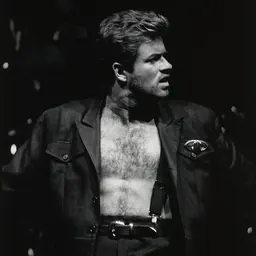


Related people
Same field, nearest in time
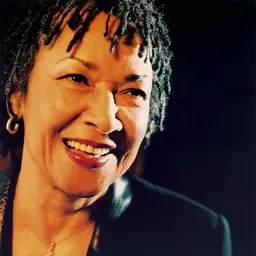

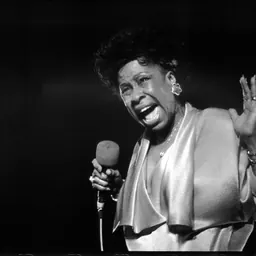

Contemporaries
People whose lives overlapped Astrud Gilberto's


Frequently asked questions
Who was Astrud Gilberto?
Brazilian-American singer and songwriter (1940–2023)
When was Astrud Gilberto born?
Astrud Gilberto was born on 29 March 1940 in Salvador.
When did Astrud Gilberto die?
Astrud Gilberto died on 5 June 2023 in Philadelphia.
What was Astrud Gilberto's occupation?
Astrud Gilberto was a jazz singer, songwriter, musician and singer.
What nationality was Astrud Gilberto?
Astrud Gilberto was Brazilian.
Sources & further reading
Cite this page
APA: Biography.guide. (2026). Astrud Gilberto. https://biography.guide/astrud-gilberto/
MLA: "Astrud Gilberto." Biography.guide, https://biography.guide/astrud-gilberto/.
Chicago: "Astrud Gilberto." Biography.guide. https://biography.guide/astrud-gilberto/.
Data last updated: 2026-09-20 · Spot an error? Report a correction.
Page generated 2026-09-27 05:17 UTC