
About Bessie Van Vorst
Lived 1873 – 1928 (aged 54). Bessie Van Vorst was an American and French writer and journalist.
Bessie Van Vorst (née McGinnis; September 2, 1873 – May 19, 1928), also known as Mrs. John Van Vorst, was an American author and journalist. She is best known as a co-author of the magazine series and the book The Woman Who Toils: Being the Experiences of Two Ladies as Factory Girls with a preface by US President Theodore Roosevelt, an influential example of social investigation. Her study of women and child labor in the mills of Alabama and New Hampshire helped stir reform sentiment.
Early life and family Bessie McGinnis was born in 1873 in New York City. She was educated in New York private schools. In 1898, she started working for the New York Evening Post. The marriage lasted only twelve hours – it was the groom's last wish to marry the bride before his death. His father Judge Hopper Cornelius Van Vorst was a president of the Holland Society and served on the United States Circuit Court. Upon her husband's death, she moved to Paris with her sister-in-law Marie Van Vorst, and the two co-authored the novel Bagsby's Daughter, published in 1901. Bessie worked in a plant in Perry, New York, a knitting mill near Buffalo, and a Pittsburgh pickle factory, among other places, using the name "Esther Kelly". Marie Van Vorst found employment in a shoe factory in Lynn, Massachusetts, and a cotton mill in Columbia, South Carolina, under the alias "Bell Ballard". The Van Vorsts began writing a column detailing their experiences in Everybody's Magazine.
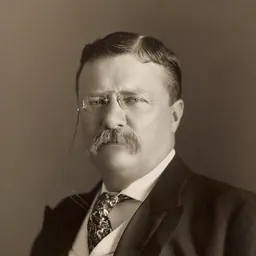
Their writings attracted the attention of the President of the United States, Theodore Roosevelt, who was interested in demographic issues. Roosevelt's primary concern in his letter was race suicide that he believed was more important than any other issue in the country.
When the publisher saw the letter he asked Van Vorst to compile her magazine work on laboring women into a book and use the president's note for the preface. The idea of race suicide would become a favorite Roosevelt topic on his lecture tours, in which he urged white women to have babies.
In their book the Van Vorsts portrayed the troublesome working and living conditions they had observed, and their consequences for women and girls. Bessie appealed for a more compassionate attitude towards these employees. "I never saw a baby nor heard of a baby while I was in town", Van Vorst wrote after nearly three weeks spent in Perry.
The book, with the same title and title page but containing only Bessie's contributions, was reprinted in 1974.
Some contemporary authors criticize Bessie and Marie Van Vorst for having a condescending attitude toward the working class, and indeed they themselves described working-class women as "degrading to look upon and odorous to approach".
Later work In 1908, Van Vorst wrote the book The Cry of the Children, in which she described child labor in wool and cotton mills in New Hampshire and Alabama. Van Vorst's study of child labor in the mills of Alabama and New Hampshire helped stir reform sentiment. Van Vorst continued writing on social issues as a correspondent for US and French publications, including Harper's Magazine, Revue des deux Mondes, and Journal des débats. 1903 – The woman who toils: being the experiences of two gentlewomen as factory girls 1903 – L'ouvrière aux États-Unis 1904 – The issues of life: a novel of the American woman of today 1907 – Magda, queen of Sheba, from the ancient royal Abyssinian manuscript, "The glory of the kings" — translator 1908 – The cry of the children; a study of child-labor 1918 – Popular history of France 1918 – On the field of honor (Au champ d'honneur) 1918 – A popular history of the war from 1914 to 1918 1919 – A popular geography of France, industries, principal cities 1919 – To the homeward-bound Americans 1926 – A girl from China (Soumay Tcheng) — translator
Don’t just read it —
keep it.
Full-length biographies made to live with: read them, listen on the way to work, watch them tonight.
- E-book
- Audio
- Video
Instant download · yours to keep · every purchase keeps this site free
Important facts
People in Bessie Van Vorst's life
Named in this biography and alive at the same time

Related people
Same field, nearest in time



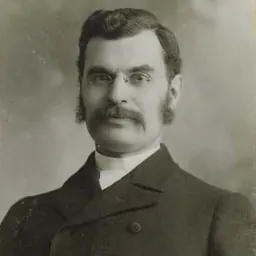
Contemporaries
People whose lives overlapped Bessie Van Vorst's

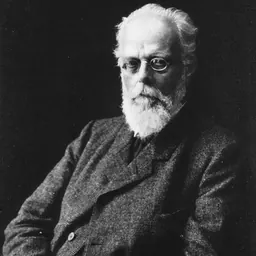
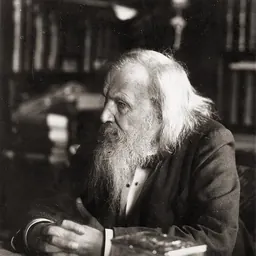
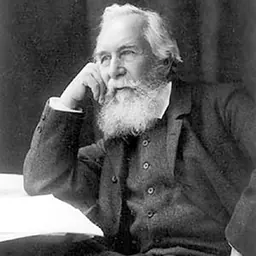

Frequently asked questions
Who was Bessie Van Vorst?
American author and journalist
When was Bessie Van Vorst born?
Bessie Van Vorst was born on 2 September 1873 in New York City.
When did Bessie Van Vorst die?
Bessie Van Vorst died on 18 May 1928 in Paris.
What was Bessie Van Vorst's occupation?
Bessie Van Vorst was a writer and journalist.
What nationality was Bessie Van Vorst?
Bessie Van Vorst was American and French.
Sources & further reading
Cite this page
APA: Biography.guide. (2026). Bessie Van Vorst. https://biography.guide/bessie-van-vorst/
MLA: "Bessie Van Vorst." Biography.guide, https://biography.guide/bessie-van-vorst/.
Chicago: "Bessie Van Vorst." Biography.guide. https://biography.guide/bessie-van-vorst/.
Data last updated: 2026-09-22 · Spot an error? Report a correction.
Page generated 2026-09-27 05:17 UTC