
About Bertha Quinn
Lived 1873 – 1951 (aged 77–78). Bertha Quinn was a British suffragist, laborer, politician, catholic Church in England and Wales and socialism.
Bertha Quinn (1873–1951) was a British suffragette and socialist, from Leeds, who was arrested five times and once went to prison, becoming one of the first Catholic suffragette prisoners to be force-fed after going on hunger strike. Quinn became a Labour councillor from 1929 to 1943, and was a trades union representative of the Tailors and Garment Workers from 1915 to 1943. Quinn was awarded the Papal Bene Merenti Medal in 1946. Quinn was born in Middlesbrough in 1873, to Irish Catholic brutally prevented from entering the venue by police, and resulting in five days in Armley Prison, Leeds in October 1908. and as far afield as New Zealand.
One hundred years afterwards, 78 M.Ps signed an early day motion to commemorate Quinn and the other women's action in favour of women's rights, and to continue encouraging all women to use their vote, and for Parliament to move towards gender balance.
Political life Quinn was among a large proportion of Catholics (a minority in the country at that time), in the Tailors and Garment Workers Union. That influenced her stance on a number of topical matters. At the Labour Women's Congress in May 1925, Quinn declared birth control as a 'crime against God', and information supporting it was 'filth', only to be reprimanded by 'Red Ellen' Wilkinson for being insulting, urging Quinn not to assume impure motives from delegates who 'hold equally sincere but opposing views. The motion was passed there, but sentiment went to and fro on the matter, for a number of years, across different Labour party conventions and votes, as the party was split. During the General Strike of 1926, Quinn was a leading member of the Leeds Council of Action, and later elected as a Labour councillor from 1929 to 1943, although at one point she was expelled from the party.
Internationalism and faith In 1917, Quinn was one of the two delegates sent to the Leeds Convention of the Independent Labour Party and the British Socialist Party, with 1,150 people joining leading politicians of the day including Keir Hardie, Asquith, Lloyd George, Ramsay MacDonald, Bernard Russell, Ernest Bevin which was controversially inciting action in solidarity with Russian workers and soldiers after the Russian revolution. The event had been resisted by the city dignitaries, but gone ahead due to pressure of numbers. It carried motions on world peace, a charter of human rights, and congratulated Russian workers revolutionaries, and even encouraging organised activism in the British working class.
At the 1936 Trades Union Congress, Quinn for the Tailors and Garment Workers Union, was one of the Catholic workers' leaders however who opposed the Spanish Civil War, and decried outrages on both sides of that conflict saying 'Red outrages had been perpetrated in Spain.' Quinn objected at her own union's congress that British workers groups were being asked to formally express solidarity with the Spanish trades unions, a point taken up by the Catholic press.' Quinn had also prevented clothing being collected and shipped out to the revolutionary side.
Death Quinn died in Leeds, in 1951, "[Quinn] would neither be frightened out of her convictions, nor laughed out of them. She would stand in all weathers outside the cathedral and sell tickets for good causes.
" In spite of her caustic tongue, she was a loyal friend to anyone in trouble, very womanly. good living, straightforward, thinking of everyone before herself. Her life was an example to the younger generation."
Don’t just read it —
keep it.
Full-length biographies made to live with: read them, listen on the way to work, watch them tonight.
- E-book
- Audio
- Video
Instant download · yours to keep · every purchase keeps this site free
Important facts
People in Bertha Quinn's life
Named in this biography and alive at the same time
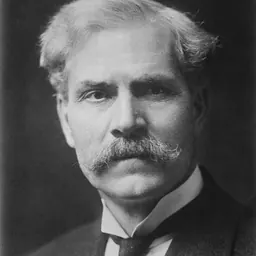
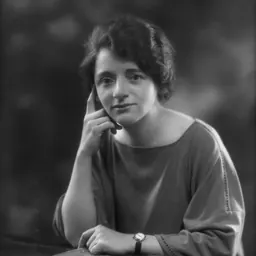

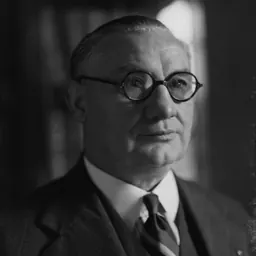
Related people
Same field, nearest in time
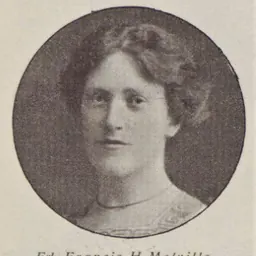

Contemporaries
People whose lives overlapped Bertha Quinn's


Frequently asked questions
Who was Bertha Quinn?
British suffragette and socialist (1873-1951)
When was Bertha Quinn born?
Bertha Quinn was born in 1873 in Middlesbrough.
When did Bertha Quinn die?
Bertha Quinn died in 1951 in Leeds.
What was Bertha Quinn's occupation?
Bertha Quinn was a suffragist, laborer, politician, catholic Church in England and Wales and socialism.
What nationality was Bertha Quinn?
Bertha Quinn was British.
Sources & further reading
Cite this page
APA: Biography.guide. (2026). Bertha Quinn. https://biography.guide/bertha-quinn/
MLA: "Bertha Quinn." Biography.guide, https://biography.guide/bertha-quinn/.
Chicago: "Bertha Quinn." Biography.guide. https://biography.guide/bertha-quinn/.
Data last updated: 2026-09-22 · Spot an error? Report a correction.
Page generated 2026-09-27 05:03 UTC