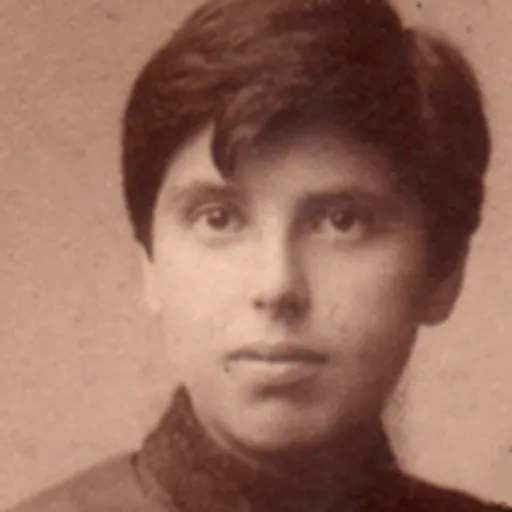
About Bertha Katscher
Lived 1860 – 1903 (aged 43). Bertha Katscher was a Hungarian translator, children's writer, journalist and writer.
Bertha Katscher (also spelled, Berta; pseudonyms: Ludwig Ungar, Albert Kellner, Ludwig Kölle, Ludmilla Kölle; 12 June 1860 – 16 September 1903) was an Austrian Empire-born Hungarian writer.
Biography Katscher was born at Trencín, Slovakia, June 12, 1860, to an affluent Jewish family. She was educated by her aunt, by whom she was taken to Herzegovina, where in 1881 she was married to her cousin, Leopold Katscher, the writer and peace activist. Up to this time she had been occupied mostly with household affairs, but at the wish of her husband, she embarked on a literary career. Her first attempts were fairy-tales for children, but she soon turned her efforts to the advocacy of universal peace and various economic reforms. She wrote also against cruelty to animals. She contributed articles on a great variety of subjects to the “Frankfurter Zeitung,” the “Wiener Mode,” “Die Heimat,” “Münchener Allgemeine Zeitung,” “Kölnische Zeitung,” “Prochaska's Monatsbände,” etc. Her first work in book form was “Die Kunst ein Mensch zu Sein,” written in 1887 with Edward John Hardy. Her other works included: “Weinachtsgeschichte” (1890); “Aus Bädern und Sommerfrischen” (1890); “Hermann Vámbérys Leben und Reiseabenteuer” (1892); “Soldatenkinder,” a romance of universal peace (1897); “Die Studentin" (1900); and “Der Stychoos” (1901). She also translated English literature into German, such as the novels by Hardy, Donnelly, Boyesen, Meadows, Stevenson, and Buckley.
Katscher had been operated upon twice for cancer of the right breast. Shortly after the second operation, she consulted, for blindness of the left eye, Dr. Wilhelm Goldzieher, of Budapest, who sent her to Dr. Adamkiewicz with a diagnosis of cancerous infiltration of the choroid and partial detachment of the retina. This diagnosis was confirmed by Dr. Sachs, assistant in the ophthalmological clinic of the University of Vienna. Sachs also followed up his ophthalmoscopic examinations during the treatment by cancroine, and certified to actual resorption of a cancerous process and restoration of vision to two thirds of normal. The conditions in the breast cicatrix were also improved.
The feminist and pacifist, Rosika Schwimmer, was her niece. Rosika Schwimmer's mother was also named Berta, but she was the sister of Leopold and this Berta Katscher was the wife of Leopold. Katscher died in Budapest in 1903.
Don’t just read it —
keep it.
Full-length biographies made to live with: read them, listen on the way to work, watch them tonight.
- E-book
- Audio
- Video
Instant download · yours to keep · every purchase keeps this site free
Important facts
People in Bertha Katscher's life
Named in this biography and alive at the same time



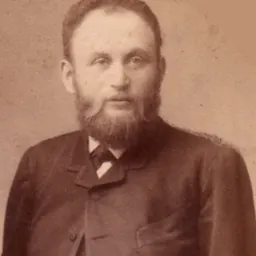
Related people
Same field, nearest in time

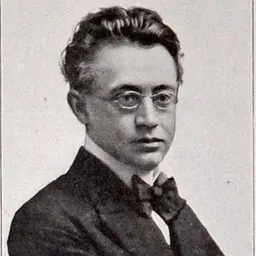

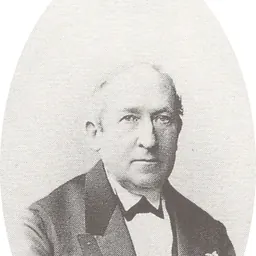
Contemporaries
People whose lives overlapped Bertha Katscher's


Frequently asked questions
Who was Bertha Katscher?
Slovak-born Hungarian writer (1860–1903)
When was Bertha Katscher born?
Bertha Katscher was born on 12 June 1860 in Trenčín.
When did Bertha Katscher die?
Bertha Katscher died on 16 September 1903 in Budapest.
What was Bertha Katscher's occupation?
Bertha Katscher was a translator, children's writer, journalist and writer.
What nationality was Bertha Katscher?
Bertha Katscher was Hungarian.
Sources & further reading
Cite this page
APA: Biography.guide. (2026). Bertha Katscher. https://biography.guide/bertha-katscher/
MLA: "Bertha Katscher." Biography.guide, https://biography.guide/bertha-katscher/.
Chicago: "Bertha Katscher." Biography.guide. https://biography.guide/bertha-katscher/.
Data last updated: 2026-09-20 · Spot an error? Report a correction.
Page generated 2026-09-27 05:10 UTC