
About Bernhard Rensch
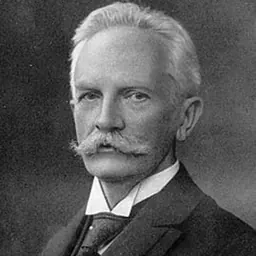
Lived 1900 – 1990 (aged 90). Bernhard Rensch was a German biologist, zoologist, autobiographer, university teacher, geneticist and malacologist, known for Modern synthesis (20th century).
Bernhard Rensch (21 January 1900 – 4 April 1990) was a German evolutionary biologist and ornithologist who did field work in Indonesia and India. Starting his scientific career with pro-Lamarckian views, he shifted to selectionism and became one of the architects of the modern synthesis in evolutionary biology, which he popularised in Germany. Besides his work on how environmental factors influenced the evolution of geographically isolated populations and on evolution above the species level, which contributed to the modern synthesis, he also worked extensively in the area of animal behavior (ethology) and on philosophical aspects of biological science. His education and scientific work were interrupted by service in the German military during both World War I and World War II.
Biography Rensch was born in Thale and as a young boy, he took an interest in observing the natural world and discovered a talent for drawing and painting. He served in the German army from 1917 to 1920 and began to observe natural phenomena while he was held prisoner in France. He returned to Germany and began his studies on feather structure under Valentin Haecker (1864–1927) who had himself studied under August Weismann. Until the 1930s Rensch held anti-Darwinian and Lamarckian views. Rensch also took an interest in the philosophy of science and was fascinated by Theodor Ziehen (1862–1950). Rensch also studied expressionist painting and in later life examined the biological roots of art. He received his Ph.D. from the University of Halle in 1922. He joined the zoological museum of the University of Berlin as an assistant in 1925. In 1927 he participated in a zoological expedition to the Sunda Islands. He studied the geographical distribution of subspecies of polytypic species and of complexes of closely related species with attention to how local environmental factors, especially climate, influenced their evolution. In 1929 he published the book Das Prinzip geographischer Rassenkreise und das Problem der Artbildung that discussed the relationship between geography and speciation. His work in this area would influence Ernst Mayr, who was also an assistant at the museum from 1927 to 1930, and would contribute to the development of the modern evolutionary synthesis. In 1937 he was forced to leave the museum because he refused to join the Nazi party, and took a position at a zoological garden in Münster.
In 1947 he published a book that would later be translated into English under the title Evolution above the species level. The book discussed how the evolutionary mechanisms that drove speciation could also explain the differences between higher taxa. He introduced the concept of Artenkreis (which Mayr translated as a "superspecies" and defined as "a monophyletic group of closely related and largely or entirely allopatric species”). It was considered a major document in the modern synthesis. That same year he became chairman of the zoology department and director of the zoological institute at the University of Münster. In 1953 he would take part in a zoological expedition to India. Later in his career he would work extensively in the areas of animal behavior (ethology), learning, and memory. It is an allometric law about the relationship between sexual size dimorphism and which sex is larger. It observes that across species size dimorphism increases with increasing body size when the male is the larger sex, and decreases with increasing average body size when the female is the larger sex.
Awards and recognition He was awarded the Linnean Society of London's prestigious Darwin-Wallace Medal in 1958.
Since 2004, the German Society for Biological Systematics (GfBS) has awarded the Bernhard Rensch prize for achievements of young scientists, writing in German or English, in the field of systematics and biodiversity research.
A species of Indonesian lizard, Cryptoblepharus renschi, is named in his honor.
Works This is a select list of books alone and includes English translations. (1930) Eine biologische Reise nach den kleinen Sunda-Inseln. Berlin: Bornträger (1947) (1947) Evolution above the Species Level. London: Methuen. (German original 1947; 3rd enlarged ed. 1972.) (1971) Biophilosophy. New York: Columbia University Press. (German original 1968.) (1972) Homo sapiens: From Man to Demigod. London: Methuen. (German original 1959.) (1973) Gedächtnis, Begriffsbildung und Planhandlungen bei Tieren. Berlin: Parey. (1979) Lebensweg eines Biologen in einem turbulenten Jahrhundert. Stuttgart: Fischer. (1979) Gesetzlichkeit, psychophysischer Zusammenhang, Willensfreiheit und Ethik. Berlin: Duncker and Humblot. (1984) Psychologische Grundlagen der Wertung bildender Kunst. Essen: Die blaue Eule. (1985) Biophilosophical Implications of Inorganic and Organismic Evolution. Essen: Die blaue Eule.
Don’t just read it —
keep it.
Full-length biographies made to live with: read them, listen on the way to work, watch them tonight.
- E-book
- Audio
- Video
Instant download · yours to keep · every purchase keeps this site free
Important facts
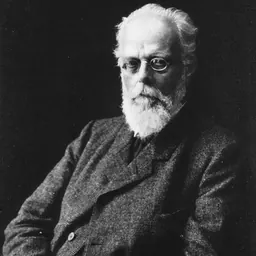
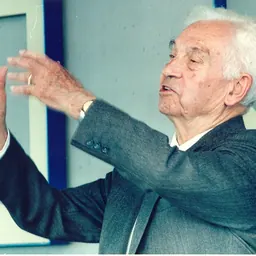
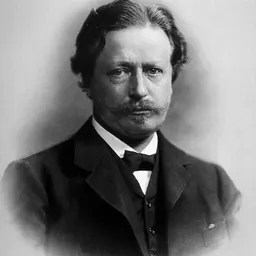
People in Bernhard Rensch's life
Named in this biography and alive at the same time

Related people
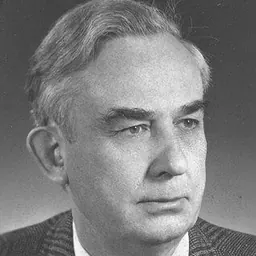
Same field, nearest in time





Contemporaries
People whose lives overlapped Bernhard Rensch's



Frequently asked questions
Who was Bernhard Rensch?
German zoologist (1900-1990)
When was Bernhard Rensch born?
Bernhard Rensch was born on 21 January 1900 in Thale.
When did Bernhard Rensch die?
Bernhard Rensch died on 4 April 1990 in Münster.
What was Bernhard Rensch's occupation?
Bernhard Rensch was a biologist, zoologist, autobiographer, university teacher, geneticist and malacologist.
What was Bernhard Rensch known for?
Bernhard Rensch was known for Modern synthesis (20th century).
What nationality was Bernhard Rensch?
Bernhard Rensch was German.
Sources & further reading
Cite this page
APA: Biography.guide. (2026). Bernhard Rensch. https://biography.guide/bernhard-rensch/
MLA: "Bernhard Rensch." Biography.guide, https://biography.guide/bernhard-rensch/.
Chicago: "Bernhard Rensch." Biography.guide. https://biography.guide/bernhard-rensch/.
Data last updated: 2026-09-20 · Spot an error? Report a correction.
Page generated 2026-09-27 05:16 UTC