
About Bernhard Grzimek
Lived 1909 – 1987 (aged 77). Bernhard Grzimek was a German zoologist, television presenter, writer, film director, veterinarian and photographer.
Bernhard Klemens Maria Hoffbauer Pius Grzimek (; 24 April 1909 – 13 March 1987) was a German zoo director, zoologist, book author, editor, and animal conservationist in postwar West Germany. During the Third Reich, he served as a veterinarian in the army. After World War II, he popularized the study of animals and an interest in wildlife in Germany, becoming the public face of Frankfurt Zoo, producing a popular German magazine called Das Tier, giving radio talks and appearing on a popular television series Ein Platz für Tiere [A place for animals] in the 1950s and 60s, apart from producing a multi-volume encyclopedia on animals. He wrote another book Kein Platz für wilde Tiere [No Place for Wild Animals] which was later produced as a documentary on the problems of African wildlife. Along with his son Michael Grzimek he produced a documentary Serengeti Shall Not Die which won an Oscar. He was involved in popularizing African wildlife and was involved in wildlife conservation in Africa, particularly in the Serengeti. He served as a government advisor on conservation and campaigned against the use of animal furs for fashion. He sometimes wrote under the pseudonym "Clemens Hoffbauer".
Biography Early years and education Grzimek was born in Neisse (Nysa), Prussian Silesia. His father Paul Franz Constantin Grzimek was a lawyer, judicial councilor, and civil law notary. Paul Franz had been married in 1888 to Maria née Schmook who died in 1897 at the age of 28. From this first marriage he had a daughter Barbara who moved with her father on his second marriage to Margarete "Margot" (nee Wanke). Bernhard was the fifth born from this second marriage after Brigitte (1902), Franziska (1904), Notker (1905) and Ansgar (1907). The Polish speaking Grzimek family came from Upper Silesia where they were farmers and landowners. His grandfather Joseph had learned brewing and lived at Schwesterwitz. The first in the family to move from the village to the city was Bernhard's father. He had been educated at Breslau, Marburg, and Berlin. Their home in Neisse had maids, a cook and a nanny. His father was politically active, a debater, and a supporter of the Catholic Center Party. He had been offered a position in the Reichstag but had refused it due to a heart condition. He opposed many of Bismarck's policies including the separation of the church and state. His mother was a devout Catholic. The home had an extensive library which Bernhard explored from an early age. His father however died on April 6, 1912 when Bernhard was just three years old. After the death of his father, his mother Margot moved to a large apartment in Ratibor where Bernhard suffered from an episode of scarlet fever. His grandmother Maria helped in the care of the children. Bernhard also spent time in the country on holidays with "aunt" Hedwig, the second wife of his grandfather Joseph, stepmother of his father.
Grzimek initially studied at St. Rochus monastery boarding school. His step-sister Barbara gave some of her share of the family inheritance to support her step-mother and the children. A fascination with animals came early from visits to the circus and with their neighbour's stuffed parrot. In 1915 he went to the Catholic elementary school in Neisse. At the age of eight he took a hedgehog to class and he got the nickname "Igel". The hedgehog would later become his mascot, appearing on his visiting card and other media. He joined an animal breeding association where he took a special interest in Antwerp Bearded Bantams. In 1919, after World War I, Margot and her five children moved to an apartment in Neisse. The inflation until 1923 strained the family finances and Bernhard's older siblings began to take up jobs – Fränze trained as a bookseller and moved to Dresden. Ansgar went to Innsbruck to study law and Notker went to study medicine. Bernhard spent two more years with his mother, travelling around by bicycle and learning to ride a horse. He also contributed articles to the magazine Geflügel-Börse and wrote a pamphlet on breeding bantams. He passed his abitur in 1928, not doing well in mathematics but excelling in German. After studying veterinary medicine from 1928, first at Leipzig and later in Berlin. While studying he also helped his second cousin Günther Grzimek, a member of the Prussian State Parliament, set up a poultry farm on his newly purchased estate in Stäbchen, southeast of Berlin. He often took his cousin's children to Berlin zoo and received free tickets from the zoo director Ludwig Heck. Günther's son Waldemar would later become an animal sculptor of renown and the younger son Günther (jr) became involved in zoo landscaping.
Zoo director
Grzimek was appointed director of the Frankfurt Zoological Garden on 1 May 1945 by Hollbach. The previous zoo director Georg Steinbacher was thought to have died but when he returned he was denied his former position. Steinbacher was dismissed from service on June 2, 1945 for having been a member of the Nazi party. In 1947 Steinbacher took up a position in Augsburg zoo with support from Munich Zoo director Heinz Heck but held a grudge against Grzimek. He spent several years studying its wildlife there alongside his son Michael, especially on observation and counts of large scale annual migrations. The documentary film Serengeti Shall Not Die was written and directed by Bernard and Michael Grzimek with footage shot by Alan Root (who replaced the German photographer Richard Graf who Grzimek had initially hired) and Hermann Gimbel. It won the Academy Award for Documentary Feature in 1959.
The Zebra-patterned Do 27B-2 used by Bernhard and his son Michael.
On January 10, 1959, Michael was killed in an air crash over Ngorongoro crater while flying the Dornier Do 27 (registered as D-ENTE) possibly due to a collision with a Rüppell's griffon vulture. Grzimek wrote a best-selling book, Serengeti Shall Not Die, which first appeared in German in 1959 and later in 20 other languages. Its popularity was key in driving the creation of the Serengeti National Park. In the book he prophesied:
In 1961 he created a demand for German tourists by suggesting on his TV show that a three-week trip package should be possible for 2100 Deutsche Marks to visit the Serengeti on safaris. This led many tour operators to begin such packages and he used the potential of tourism incomes to force African leaders to heed his advice.
Grzimek began a campaign against the use of furs in fashion in 1965. He wrote an open letter about the use of a leopard coat by the Italian actress Gina Lollobrigida and this was widely reprinted. He received support from the wife of the German president Wilhelmine Lübke who agreed not to use fur coats. He also began a campaign against the killing of harp seal pups in Canada. He made a donation of $5,000 to the New Brunswick Society for the Prevention of Cruelty to Animals. He showed footage on the killing of skins which led to outrage and the creation of legislation in Canada to protect harp seals. of the then-largest popular magazine on animals and wildlife in German language, Das Tier (German for "The Animal") and of a very popular television series on wildlife. He also authored a large number of popular books based on his countless experiences with animals which he raised since his student days, managed as zoo director, and encountered in the wild during many research trips.
Awards and honors 1956: 2 Golden Bear´s for Kein Platz für wilde Tiere in the categories International Documentary and Audience Award 1956: German Film Award for Kein Platz für wilde Tiere 1960: Academy Award (Oscar) for Serengeti darf nicht sterben in the category Documentary 1960: Honorary Professor at the Veterinary Faculty Justus-Liebig-Universität Gießen 1960: Honorary doctorate from Humboldt University of Berlin, "Dr. med. vet. h. c." 1981: Honorary Professor of Lomonosov University 2008: Renaming of a portion of the Frankfurt street Am Tiergarten in Bernhard-Grzimek-Allee
Works
Films 1956 - Kein Platz für wilde Tiere 1959 - Serengeti shall not die (Original German title: Serengeti darf nicht sterben) 1956 - 1980 - Ein Platz für Tiere (German TV series)
Books 1941 - Wir Tiere sind ja gar nicht so! Franckh'sche Verlagshandlung 1943 - Wolf Dschingis: Neue Erlebnisse, Erkenntnisse und Versuche mit Tieren, Franckh'sche Verlagshandlung 1951 - Affen im Haus und andere Tierberichte, Franckh'sche Verlagshandlung 1952 - Flug ins Schimpansenland: Reise durch ein Stück Afrika von heute, Franckh'sche Verlagshandlung 1956 - 20 Tiere und ein Mensch 1956 - Thulo aus Frankfurt - Rund um die Giraffe, Franckh'sche Verlagshandlung 1959 - Serengeti darf nicht sterben (über die Arbeit am Film) 1960 - Kein Platz für wilde Tiere 1961 - Unsere Brüder mit den Krallen 1963 - Wir lebten mit den Baule. Flug ins Schimpansenland 1965 - Wildes Tier, weißer Mann 1968 - Grzimeks Tierleben, 16 vol. 1969 - Grzimek unter Afrikas Tieren: Erlebnisse, Beobachtungen, Forschungsergebnisse 1974 - Auf den Mensch gekommen: Erfahrungen mit Leuten 1974 - Vom Grizzlybär zur Brillenschlange: Ein Naturschützer berichtet aus vier Erdteilen, Kindler 1974 - Einsatz für Afrika: Neue Erlebnisse mit Wildtieren, Kindler 1974 - Tiere, mein Leben: Erlebnisse und Forschungen aus fünf Jahrzehnten, Harnack 1975 - Grzimek's Animal Life Encyclopedia, 13 vol., Van Nostrand Reinhold Company, New York [translation of 1968 work] 1977 - Und immer wieder Pferde. Kindler 1988 - Grzimeks Enzyklopädie der Säugetiere, Kindler Verlag, München. 1990 - Grzimek's Encyclopedia of Mammals, 5 vol., McGraw-Hill, New York, [translation of 1988 work] 2004 - Grzimek's Animal Life Encyclopedia, 2nd. Ed., 17 vol., Thomson-Gale, Detroit, [revision of 1975 work]
Magazines since 1960 - Das Tier (joint editor with Konrad Lorenz und Dr. Heini Hediger)
Don’t just read it —
keep it.
Full-length biographies made to live with: read them, listen on the way to work, watch them tonight.
- E-book
- Audio
- Video
Instant download · yours to keep · every purchase keeps this site free
Important facts
Family & relationships
People in Bernhard Grzimek's life
Named in this biography and alive at the same time

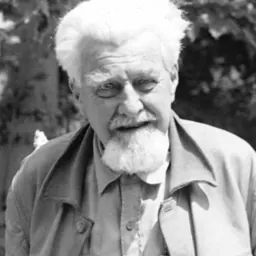
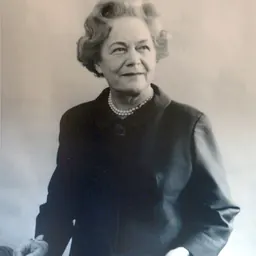


Related people
Same field, nearest in time
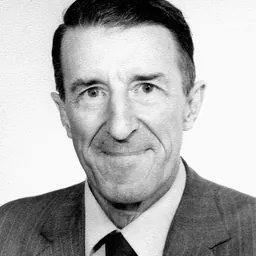


Contemporaries
People whose lives overlapped Bernhard Grzimek's




Frequently asked questions
Who was Bernhard Grzimek?
German zoo director and author (1909–1987)
When was Bernhard Grzimek born?
Bernhard Grzimek was born on 24 April 1909 in Nysa.
When did Bernhard Grzimek die?
Bernhard Grzimek died on 13 March 1987 in Frankfurt.
What was Bernhard Grzimek's occupation?
Bernhard Grzimek was a zoologist, television presenter, writer, film director, veterinarian and photographer.
What nationality was Bernhard Grzimek?
Bernhard Grzimek was German.
Sources & further reading
Cite this page
APA: Biography.guide. (2026). Bernhard Grzimek. https://biography.guide/bernhard-grzimek/
MLA: "Bernhard Grzimek." Biography.guide, https://biography.guide/bernhard-grzimek/.
Chicago: "Bernhard Grzimek." Biography.guide. https://biography.guide/bernhard-grzimek/.
Data last updated: 2026-09-20 · Spot an error? Report a correction.
Page generated 2026-09-27 05:25 UTC