
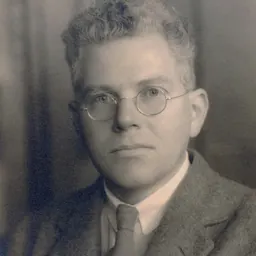
Bernd Eisenfeld
German writer and historian
About Bernd Eisenfeld
Lived 1941 – 2010 (aged 69). Bernd Eisenfeld was a German historian, civil rights advocate, construction soldier and business manager.
Bernd Eisenfeld (9 January 1941 – 12 June 2010), also known by the pseudonym Fred Werner, was an opponent of the East German dictatorship who became a writer and an historian.
Early years Bernd Eisenfeld and his twin brother Peter were born in Falkenstein, a small industrial town with a tradition of metals mining and textiles production in the south-west of Saxony. The twins' birth came just over a year after the outbreak of the Second World War. There were two older brothers and a younger sister who became an opera singer, born in 1945. Brigitte Eisenfeld. The father, who worked as a court official, was a member of the NSDAP (Nazi Party) who as the war ended became an American prisoner of war. The winning powers had already designated the entire central part of Germany the Soviet occupation zone, however, and the Americans handed him over to the Soviets after which the father was interned in the NKVD Special Camp No. 1. Eisenfeld would later describe the experience as the beginning of his "immunization process(es) against the [ruling SED] party". He also noticed that the virulently anti-American propaganda produced by the SED (party) contrasted with his own experiences of American soldiers whom he had met in the immediate aftermath of war, before the US forces had withdrawn to the internal German borders agreed between Roosevelt and Stalin at Yalta, and whom he had encountered more recently when visiting his Godmother in the western part of Berlin (which during the 1950s was still not as starkly divided, physically, as it became after 1961). He was also prevented from completing his school final exams and from pursuing his chosen career by training as a teacher. Instead between 1955 and 1958 he trained to become a bank clerk. A second period of further study followed at the Economics Academy in Gotha where between 1959 and 1961 he studied Finance.
Thwarted academic career From 1962 he was employed in Karl-Marx-Stadt by the East German central bank and by the bank's specialist division in Schkopau, which focused on the electro-chemical sector. Meanwhile, the Ministry for State Security listed him, along with three others, for its by now well-rehearsed "career spoiling" ("Zersetzung") programme. Eisenfeld had also attracted attention to himself by filing (unsuccessfully) an appeal for clemency on behalf of a colleague. Following the Warsaw Pact invasion of Czechoslovakia on 20/21 August 1968, on 23 August 1968 Eisenfeld sent a telegram of solidarity to the Czechoslovak Embassy, containing the exhortations to "Stand firm and not give up hope" ("Halten Sie stand – Behalten Sie Hoffnung").
The next month, using a type-writer and carbon paper, he produced approximately 180 critical fly-sheets which he distributed in the Theaterplatz in Halle on 20 September 1968. The fly-sheets quoted Lenin's Decree on Peace, to which Eisenfeld had added his own plea, "Please think about it! Please don't stay silent!" ("Denk bitte nach! bitte, schweig nicht!!"). The next day he was preparing to distribute another batch of leaflets at the cinema, but instead he was arrested and detained in the Stasi "Red Ox" detention prison. More than two days later the Stasi archives from this period were accessed and it became apparent that Eisenfeld's arrest had already been planned, days before he had distributed any of the leaflets. By this time his wife was very pregnant. Bernd Eisenfeld was held in detention without access to a lawyer for the next three months.
From 1985 he worked for the "Whole German Institute" ("Gesamtdeutsches Institut"). Almost till the demise of the GDR in 1989/90 he was the target of a special Stasi "career spoiling" ("Zersetzung") operation, which identified him with the code name "Erz" and his twin brother Peter, still in East Germany, as "Polyp". In 1984/85 his travel ban to East Germany was lifted, but as matters turned out the ban was to be replaced by a secret (at that stage) plan to kidnap/arrest him on a visit made to Dresden in East Germany in connection with the Confirmation of his nephew.
In November 1989 the breach of The Wall and the absence of a military response from the Soviet Union triggered a succession of events that led to German reunification in October 1990. This (widely unforeseen) turn of events led to the dissolution of the "Whole German Institute" for which he had worked, and Bernd Eisenfeld switched to the Bonn based Federal Agency for Civic Education, while at the same time continuing with his writing career. Then, in 1992, he obtained a job back in Berlin with the Gauck Agency (as the BStU was known at that time). From 2000 he held a position at the agency as a Research Director, with particular focus on a project covering the use of X-rays by the Stasi in their anti-opposition work.
In October 2001 Bernd Eiesenfeld was one of the academics, historians and other writers who signed an open letter from the Bürgerbüro organisation of formerly East German civil rights activists which called on voters not to vote for the Party of Democratic Socialism (PDS), a successor political party to East Germany's Socialist Unity Party (SED), then in the process of trying to reinvent itself for a multi-party democratic future: Bernd Eisenfeld was not alone in finding the party's reinvention process unpersuasive and the party has subsequently renamed itself again.
Bernd Eisnefeld died suddenly on 12 June 2010, thereby predeceasing his wife and children.
Don’t just read it —
keep it.
Full-length biographies made to live with: read them, listen on the way to work, watch them tonight.
- E-book
- Audio
- Video
Instant download · yours to keep · every purchase keeps this site free
Important facts
People in Bernd Eisenfeld's life
Named in this biography and alive at the same time


Related people
Same field, nearest in time



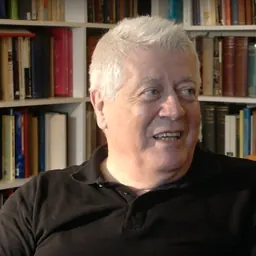
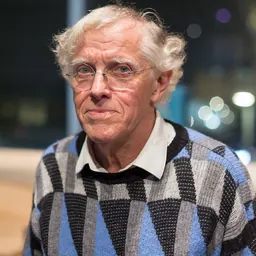
Contemporaries
People whose lives overlapped Bernd Eisenfeld's
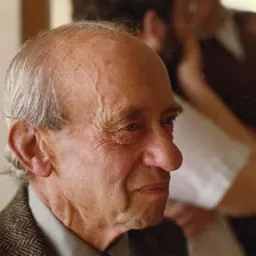
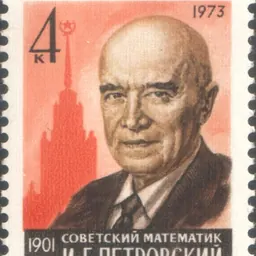


Frequently asked questions
Who was Bernd Eisenfeld?
German writer and historian (1941-2010)
When was Bernd Eisenfeld born?
Bernd Eisenfeld was born on 9 January 1941 in Falkenstein.
When did Bernd Eisenfeld die?
Bernd Eisenfeld died on 12 June 2010 in Berlin.
What was Bernd Eisenfeld's occupation?
Bernd Eisenfeld was a historian, civil rights advocate, construction soldier and business manager.
What nationality was Bernd Eisenfeld?
Bernd Eisenfeld was German.
Sources & further reading
Cite this page
APA: Biography.guide. (2026). Bernd Eisenfeld. https://biography.guide/bernd-eisenfeld/
MLA: "Bernd Eisenfeld." Biography.guide, https://biography.guide/bernd-eisenfeld/.
Chicago: "Bernd Eisenfeld." Biography.guide. https://biography.guide/bernd-eisenfeld/.
Data last updated: 2026-09-22 · Spot an error? Report a correction.
Page generated 2026-09-27 05:00 UTC